- Coastal doors corrode first at the bottom brackets, cables and springs.
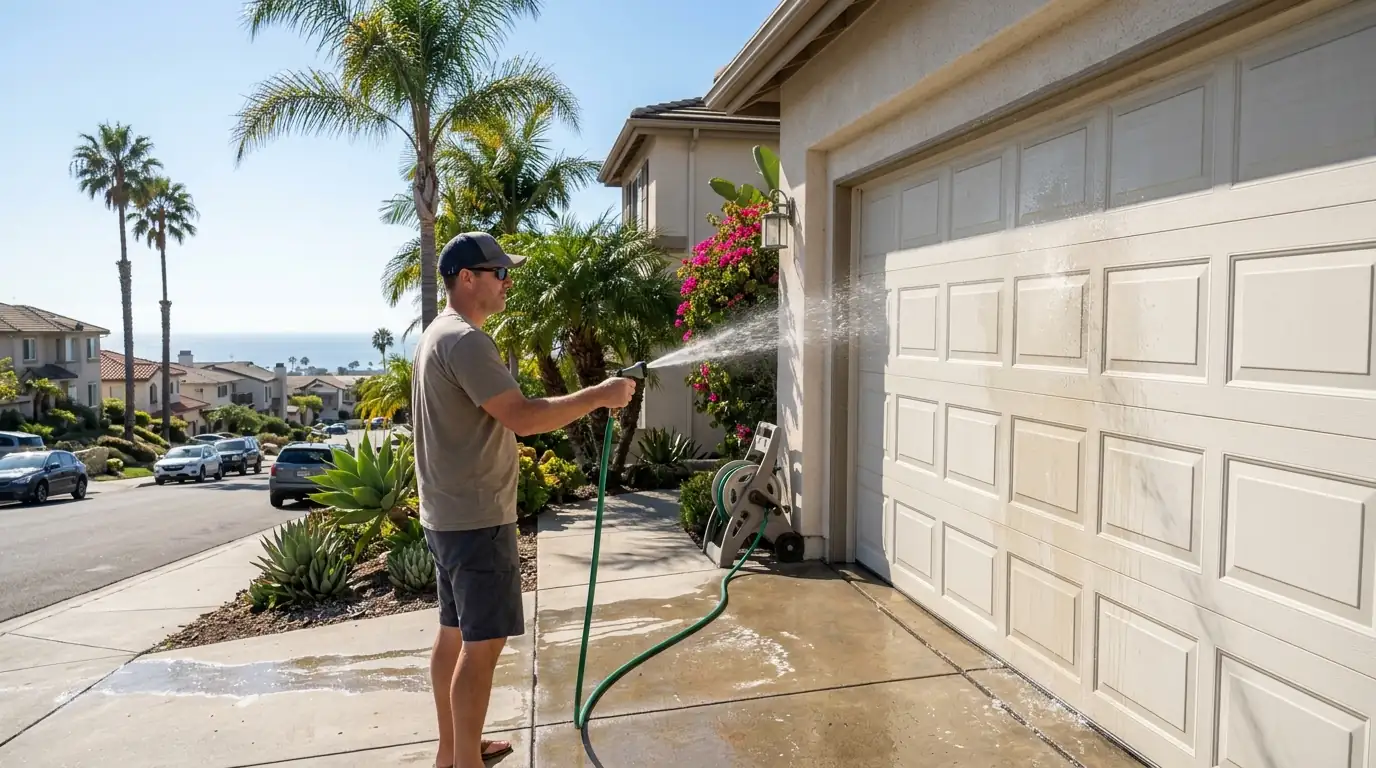
- Rinse the door and wipe the hardware a few times a year.
- Lubricate rollers, hinges and springs, never the track.
- Inspect cables every six months and choose corrosion-resistant parts when replacing.
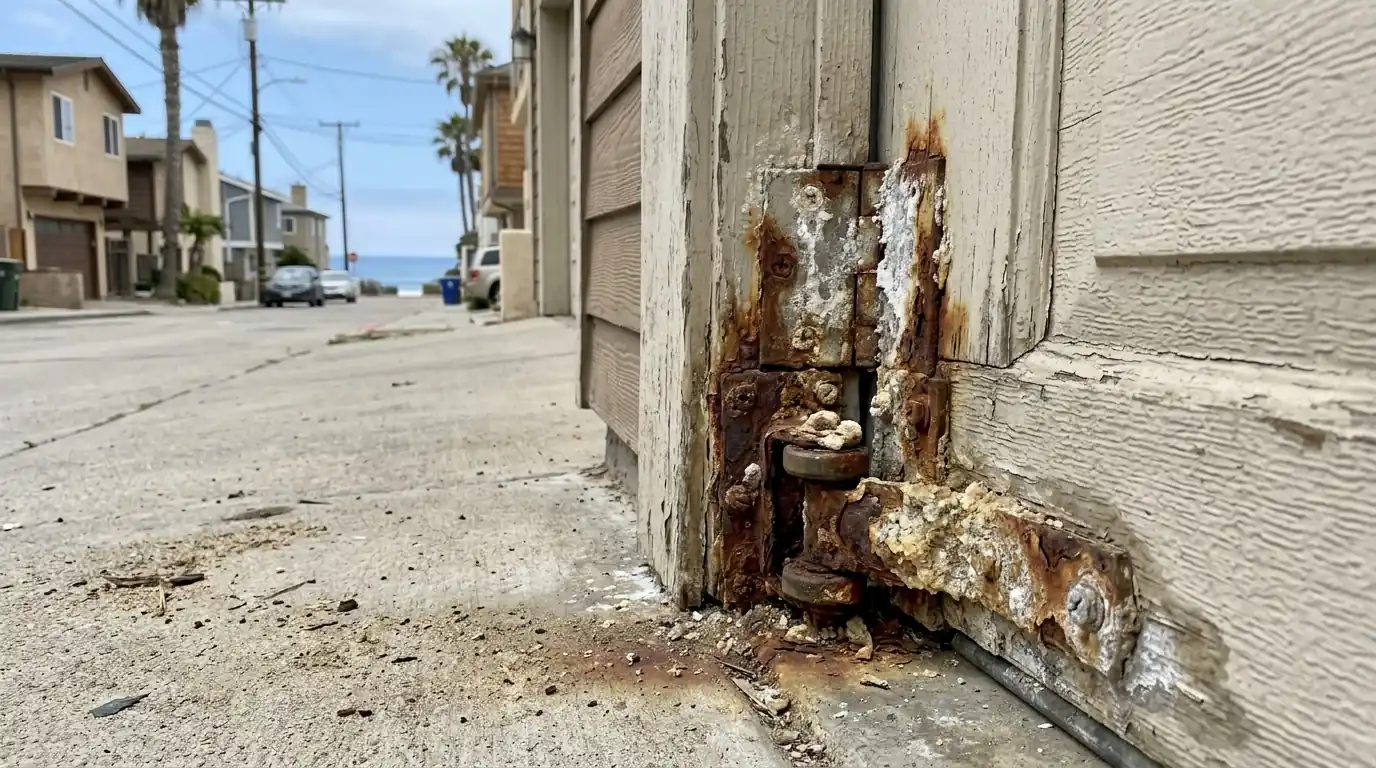
What salt air does to a door
Garage doors near the water face salt-laden moisture every day. It settles in hinges, collects at the bottom of the door and works into the strands of the lift cables, which is why cables and bottom brackets are usually the first parts to fail. Service experience across San Diego shows coastal, central and inland homes facing noticeably different conditions, with coastal systems taking the most corrosion.
A coastal maintenance calendar
| When | Task |
|---|---|
| Every few months | Rinse the door face and wipe hardware with fresh water |
| Every few months | Lubricate rollers, hinges, bearings and springs with a garage door lubricant |
| Every six months | Inspect cables for fraying at the bottom brackets and check seals |
| Every year | Professional tune-up with balance and safety tests |
Keep the tracks clean and dry; grease in the track collects grit and does more harm than good.
Parts that hold up better
- Galvanized or coated springs and cables resist rust longer than bare steel.
- Sealed nylon rollers have no open bearings for salt to reach.
- Corrosion-resistant hinges and fasteners slow the creep of rust through the hardware.
- Quality factory finishes on steel doors protect the skin; touch up scratches promptly.
Seals, finishes and sun
Bottom seals take a beating from both sun and salt. Once they crack, sand and moisture get in and the bottom section suffers. Replacing seals is inexpensive and protects the most vulnerable part of the door. Painted and stained finishes also last longer when the door is rinsed regularly.
Inland homes are not off the hook
Move a few miles inland and salt gives way to stronger sun and heat. Bottom seals bake stiff, finishes fade on south and west faces and lubricant dries out faster. The calendar above still works away from the coast; the emphasis just shifts from rinsing salt to replacing seals and keeping moving parts lubricated. Either way, the yearly balance check matters most, because a door that has drifted out of balance quietly wears out the opener.
When corrosion becomes a repair
Frayed cable strands, rust flaking from springs, or a bottom bracket that looks pitted all mean it is time for service, not more lubricant. Those parts carry the door's weight under tension, and a failure can drop a corner of the door. Most corrosion repairs fall within HomeAdvisor's typical $150 to $400 repair range when caught early.
Questions readers ask
The closer the home, the stronger the effect, but homes within reach of the marine layer generally benefit from coastal-style maintenance.
A garage door or silicone-based lubricant is a better choice for rollers, hinges and springs. Keep lubricants out of the track.
Look for galvanized steel with a quality factory finish, or aluminum frames, plus corrosion-resistant hardware.
Sources
Figures on this page come from the sources below, checked on October 1, 2026. Prices are national or statewide ranges; your quote depends on the door in front of us.
About the author
Gilbert Dorsey edits the Door Guides for Master Overhead Doors, turning the questions callers bring to dispatch into plain-language guides. Cost figures are linked to their published sources and revisited when those sources change.