Steel garage doors come in three basic builds: single-layer steel, double-layer with insulation bonded to the back, and triple-layer with steel on both faces. Thicker steel and better insulation buy rigidity, quiet and comfort. Woodgrain-embossed and printed finishes give a wood look without a refinishing schedule. We match the build to how you use the garage and how close you live to the water.
What the visit covers
- Thickness, insulation and finish compared at your driveway
- Window and decorative options matched to the house style
- Springs sized to the chosen door's actual weight
- Track, seals and hardware installed new with the door
- Old door removed and hauled away
- Opener paired or replaced, then safety-tested
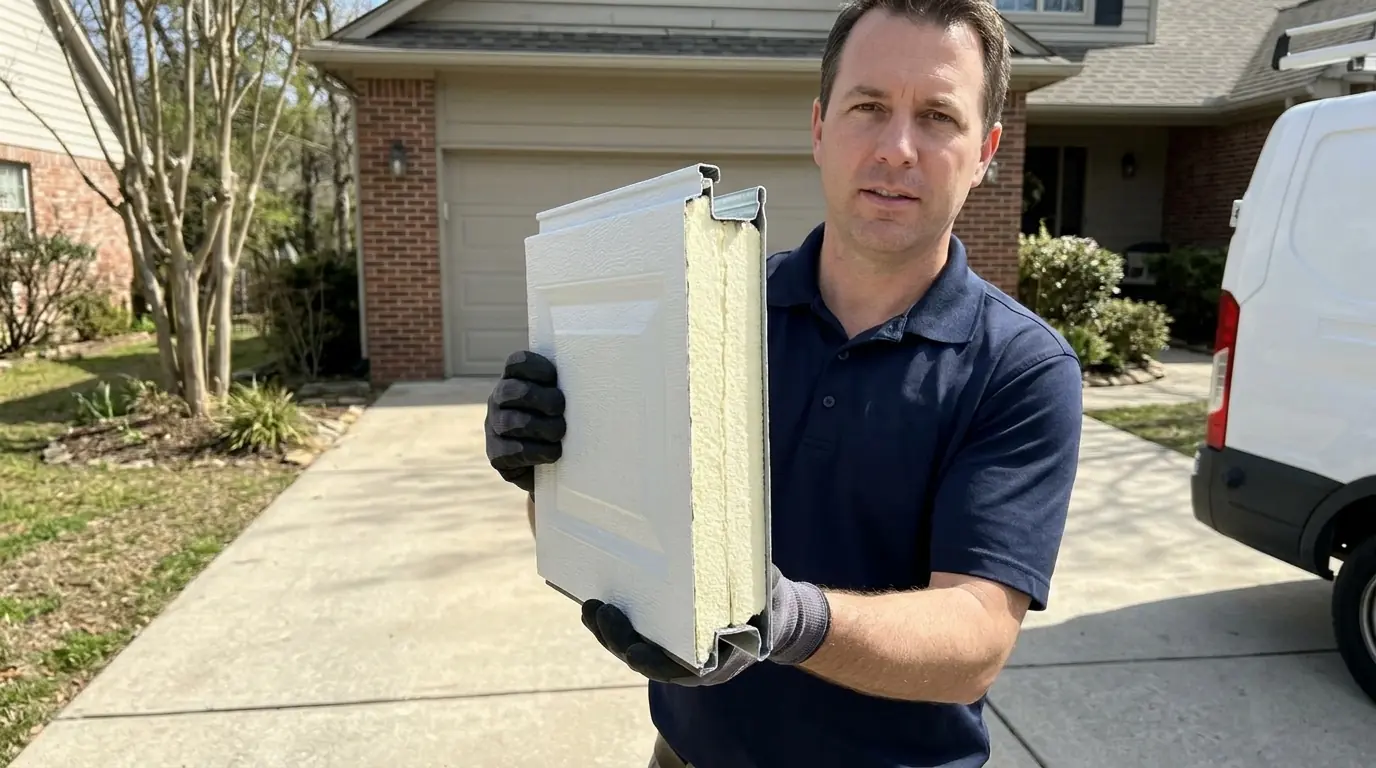
Insulated double-skin steel
Insulated steel bonds foam to the door's skin, and the best builds sandwich it between two steel faces. The result is stiffer, quieter and far more comfortable in an attached garage that takes afternoon sun. Polyurethane foam insulates and stiffens better than polystyrene panels of the same thickness, and we bring a cutaway so the difference is visible rather than a number on a spec sheet.
Non-insulated single layer
Single-layer steel is the light, budget-friendly option. For a detached garage, a storage space or a rental it makes sense. It dents more easily and passes more noise and heat, so we steer away from it for garages that double as gyms, offices or play space.
Woodgrain-finish steel
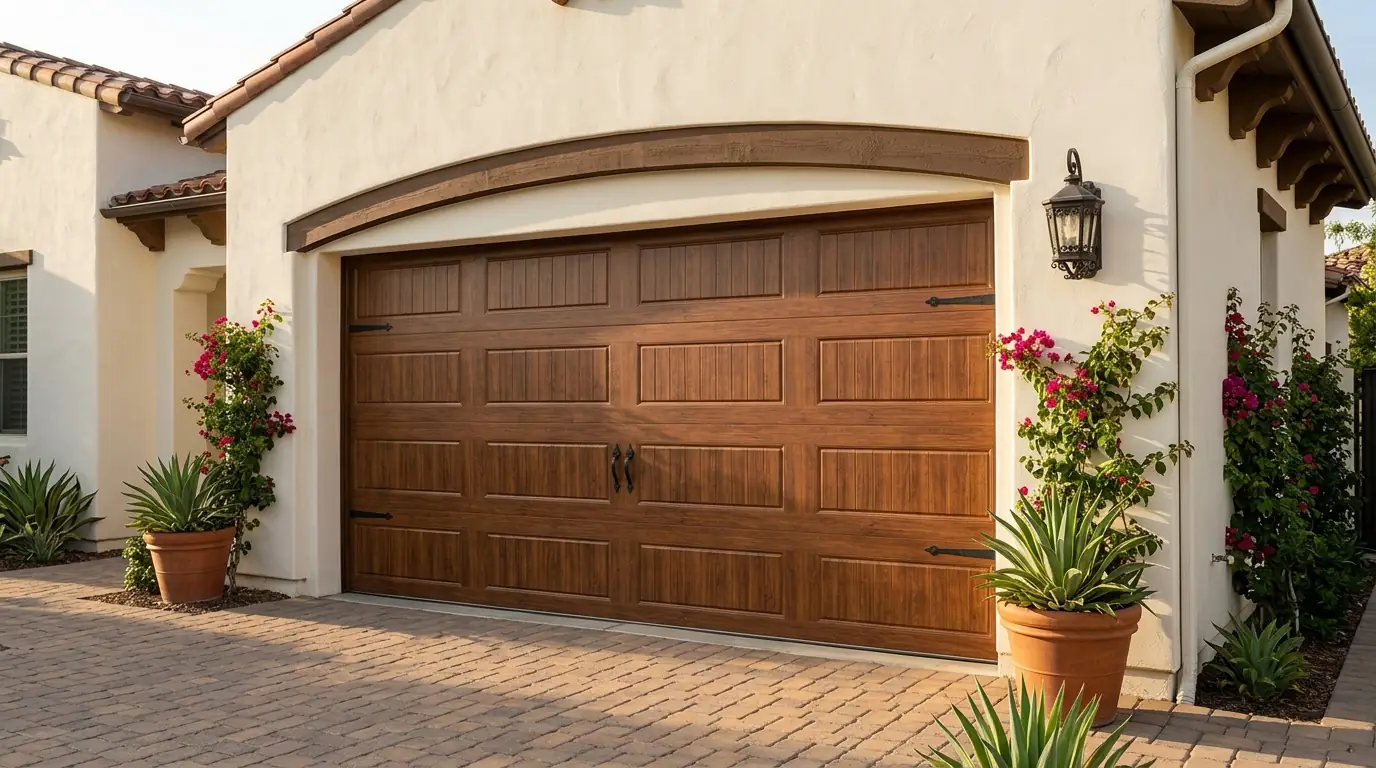
Embossed and printed woodgrain finishes have come a long way, and from the curb many now read convincingly as wood. You get the warm look over a steel core that will not warp, check or demand refinishing. Add carriage overlays and decorative hardware and the same door becomes a credible barn or Craftsman look.
On the job
Steel near the water versus inland
San Diego's garages do not all live in one climate. Coastal homes face salt air that corrodes steel faster, central neighborhoods sit in between, and inland valleys trade salt for stronger heat and sun, as garage service experience across the region shows. For coastal addresses we lean toward galvanized skins, quality factory finishes and corrosion-resistant hardware; inland, insulation and lighter colors earn their keep. The right steel door for a beach bungalow is not automatically the right one for a valley ranch house.
What a steel door costs
Steel spans most of the published replacement range: HomeAdvisor's figures run $400 to $10,000 with about $1,500 typical, and the bulk of standard steel doors sit in the lower and middle parts of that spread. The specific number turns on:
Questions callers ask about this job
Any steel can, given time and salt. Quality doors use galvanized steel under a baked factory finish; rinsing the door now and then and touching up scratches promptly keeps it sound for many years. Corrosion-resistant hardware helps too.
For attached garages, sunny exposures and anyone using the garage as living space, generally yes. It also makes the door quieter and more dent-resistant. A detached storage garage near the coast can do without.
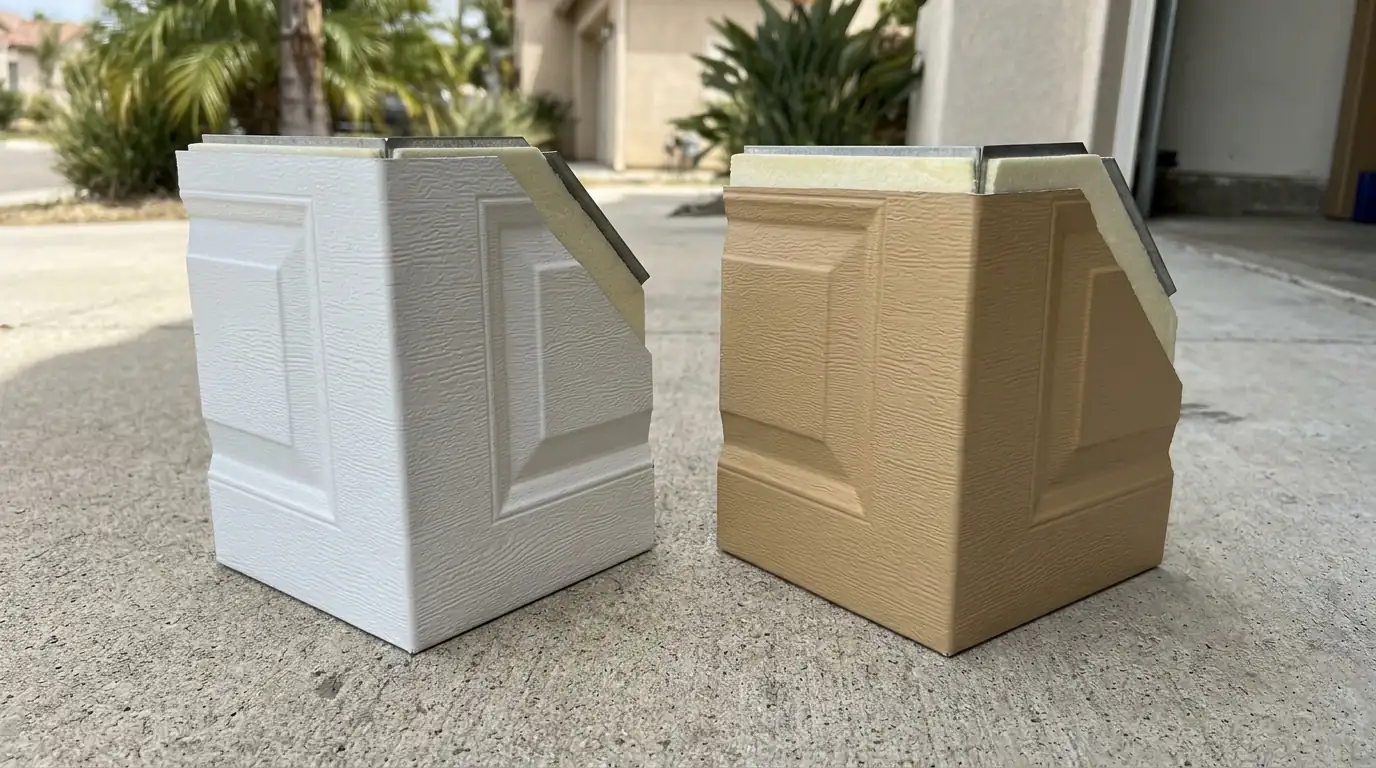
Yes. Embossed and printed woodgrain finishes, plus carriage overlays and decorative handles, produce a convincing wood look without the upkeep. We bring sample corners so you can judge them in your own light.
Generally lighter, which is easier on springs and openers. Insulated double-layer steel weighs more than single-layer, and we size the springs to the actual door rather than a generic chart.
Often by replacing just that section, as long as the model is still produced. That is one reason we record the exact model on every install.