Springs do the lifting; the opener only steers. When one breaks, the right fix is replacing the pair with springs sized to the door's measured weight, re-tensioning to balance, and testing that the door floats on its own. High-cycle springs cost modestly more and multiply the service life, which is why we quote them alongside standard on every visit.
What the visit covers
- Door weighed and measured, not guessed, before springs are sized
- Torsion springs wound to spec with proper winding bars
- Extension springs replaced with safety cables through the coils
- Both springs replaced on two-spring doors, so tension stays matched
- Center and end bearings checked while the shaft is unloaded
- Full balance and opener force test before the truck leaves
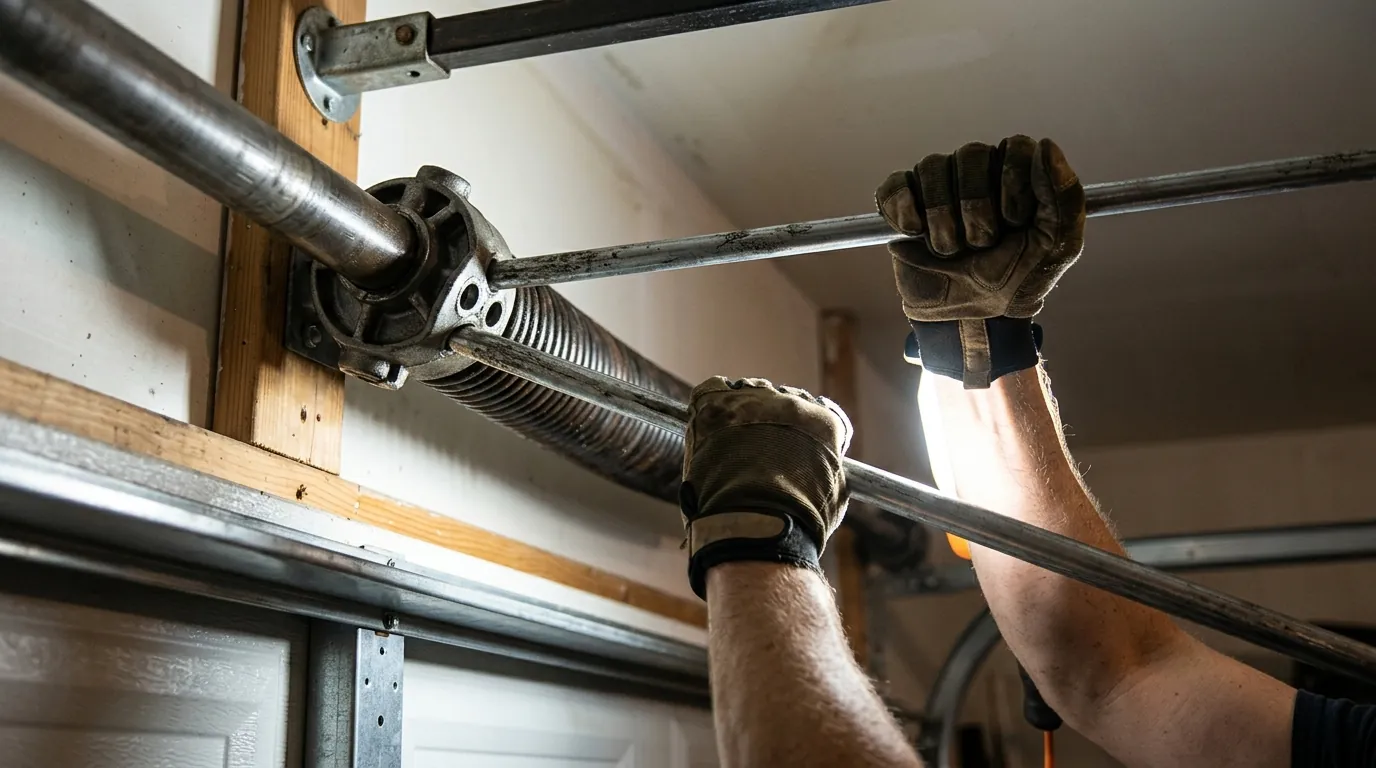
Torsion springs, the shaft above the door
Most doors here run one or two torsion springs on a shaft over the opening. They store brutal torque and are not a homeowner job: winding bars, correct wire gauge and a measured door weight are the difference between a balanced door and an injury. Replacement takes a practiced tech about an hour.
Extension springs, the stretchers beside the track
Older and lighter doors stretch a spring along each horizontal track. When one fails without a safety cable inside it, the loose end whips. We replace them in matched pairs and thread safety cables through both as standard, which turns a future failure into a non-event.
Standard cycles or high-cycle springs
Builder-grade springs are rated near 10,000 cycles; at four openings a day that is roughly seven years. High-cycle springs at 25,000 or more cost somewhat more once and push the next failure a decade or two out. On a door you open daily, they are the quiet bargain of this trade.
On the job
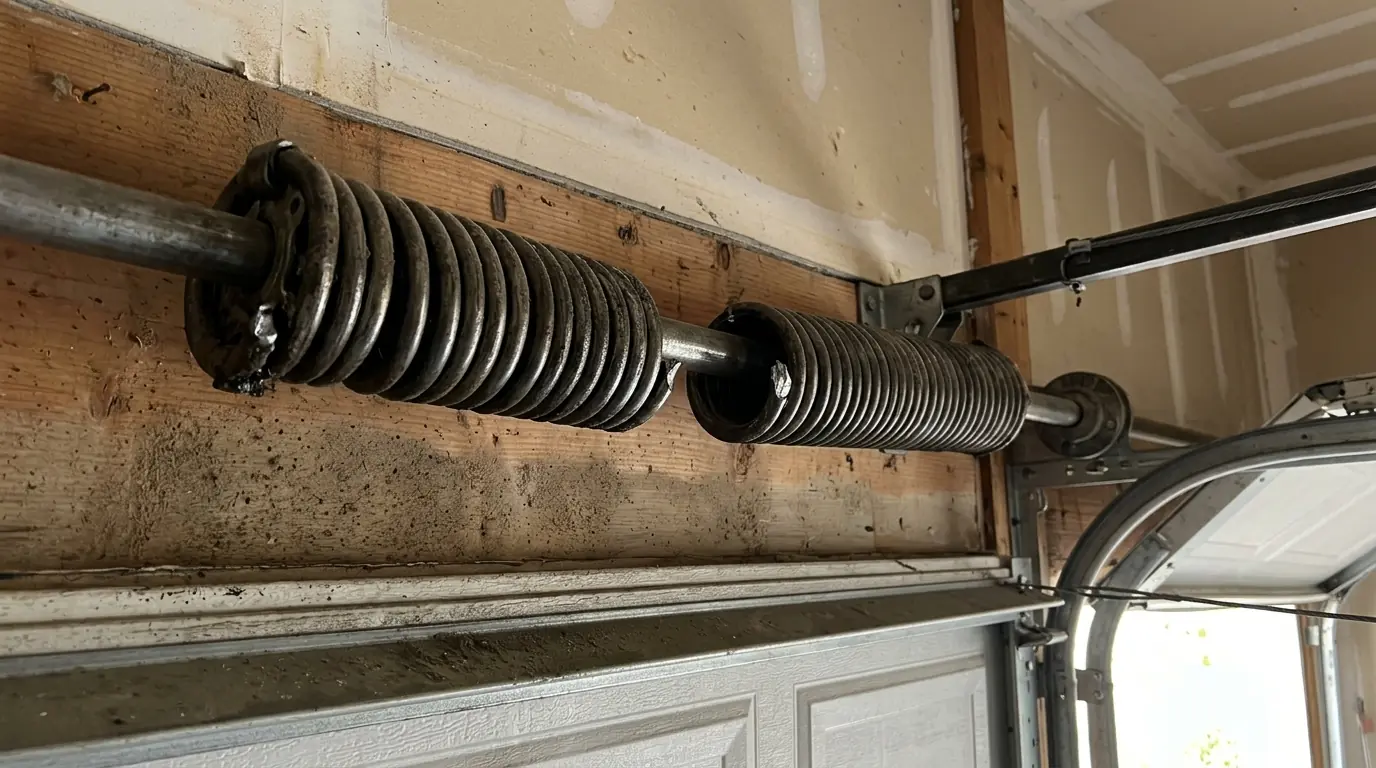
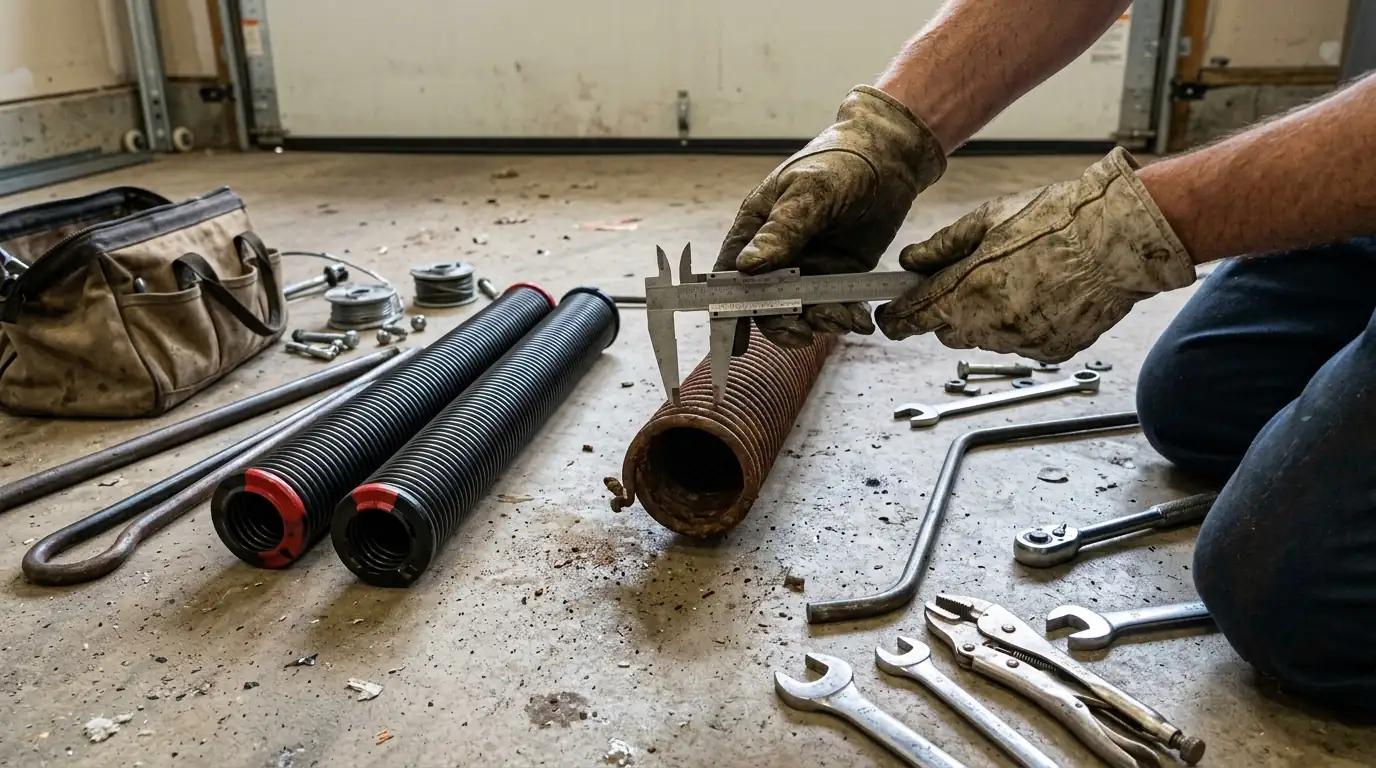
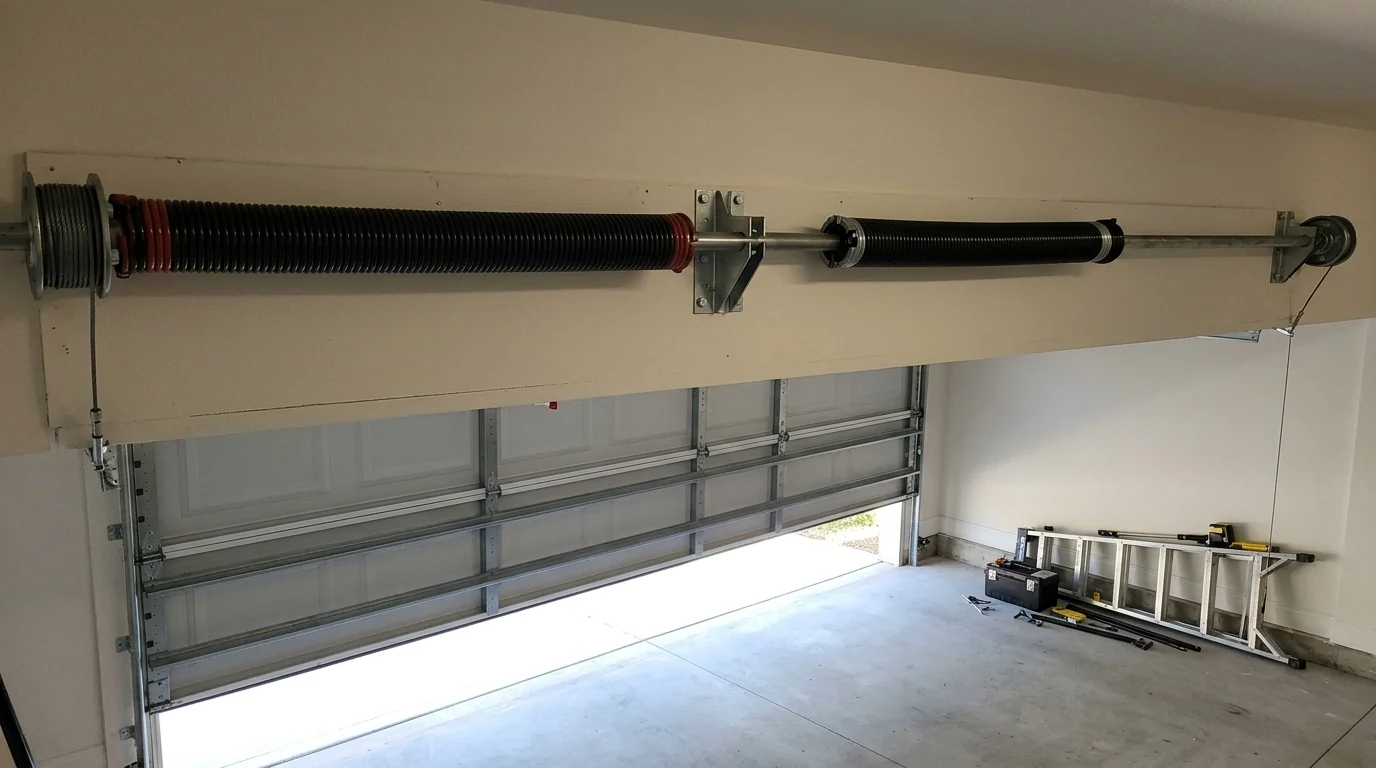
Why spring calls dominate San Diego dispatch
This county's garages are mostly on original or second-generation hardware: the median home was built in 1980 and the median home sold in 2024 was 43 years old. A 10,000-cycle builder spring installed decades ago has spent its budget several times over, so the morning bang-and-stuck-door call is our single most common ticket. Mild coastal weather hides the age; the cycle count does not care.
What spring replacement costs
Angi's published range puts spring replacement at $150 to $350 for typical jobs, trending toward $500 where heavier parts are involved, and HomeAdvisor's broader repair data averages $250. We quote the exact number at the door, before winding bars come out. What moves it:
Questions callers ask about this job
We will always say no, and mean it. A wound torsion spring stores enough torque to break a wrist, and sizing errors leave the door unbalanced in ways that wear everything else. This is the one garage job that earns its labor bill.
They were installed together and have the same mileage. A new spring paired with a tired one pulls unevenly, the door climbs crooked, and the old spring's break is weeks away regardless. Pairs keep the door square and save a second service call.
Leave it down. With the spring broken the opener cannot lift the true weight and the manual release just hands that weight to you. If a car is trapped, say so; freeing it safely is part of the visit.
Standard springs run about 10,000 open-close cycles, high-cycle versions 25,000 and up. Lifespan is cycles, not years, so a daily-use family door burns through them fastest.
Yes, and we do it as standard. Months of lifting an unbalanced door strains the opener's gear and motor, so every spring job ends with a force, travel and balance test to confirm the opener is back to steering instead of hauling.