An emergency visit puts the door in a safe, secure state first, then fixes what broke. Most late-night calls are snapped springs, doors off their tracks or openers that quit with the door up, and most are finished in that one visit because torsion springs, cables, rollers and opener boards in the common sizes ride on the truck.
What the visit covers
- Securing a door stuck open so the house is not exposed overnight
- Releasing a car trapped behind a dead opener, safely, without forcing the door
- Snapped torsion and extension springs replaced on the spot
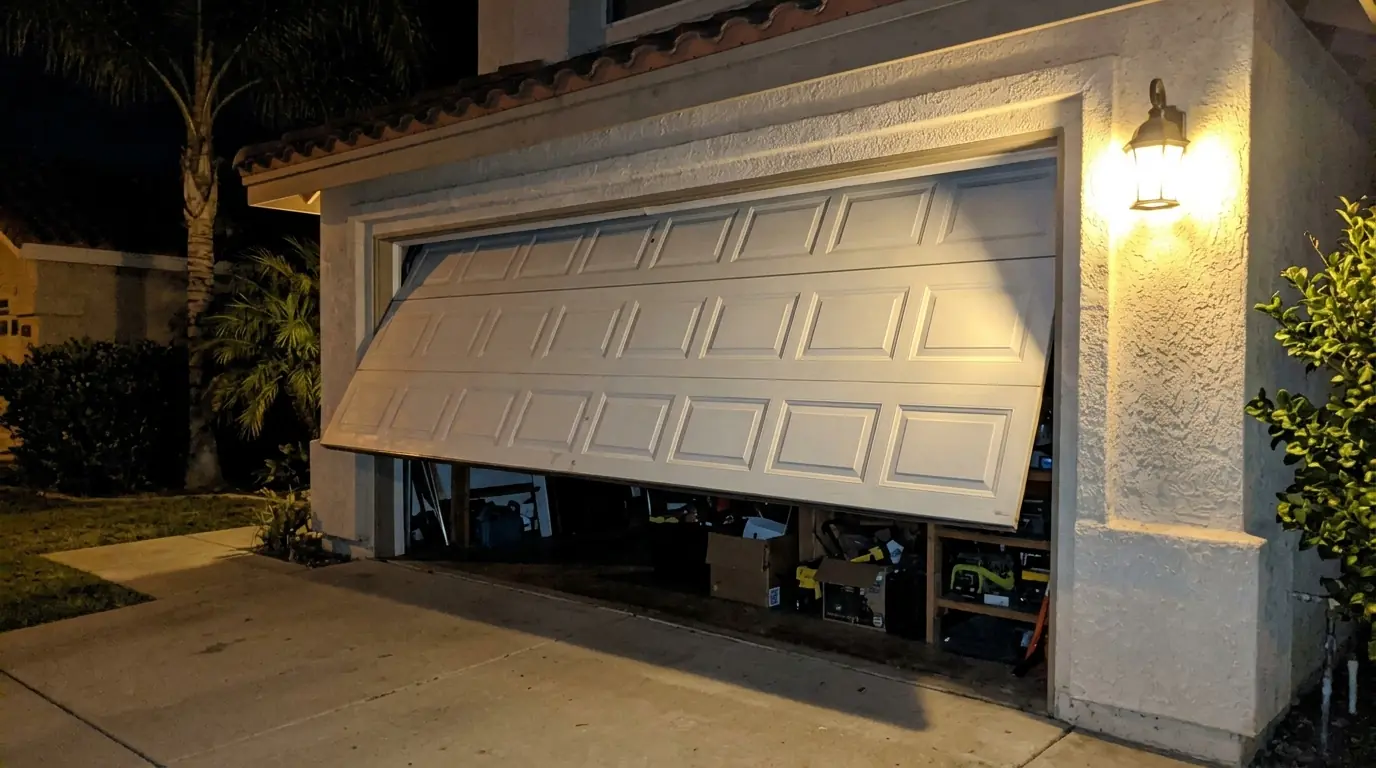
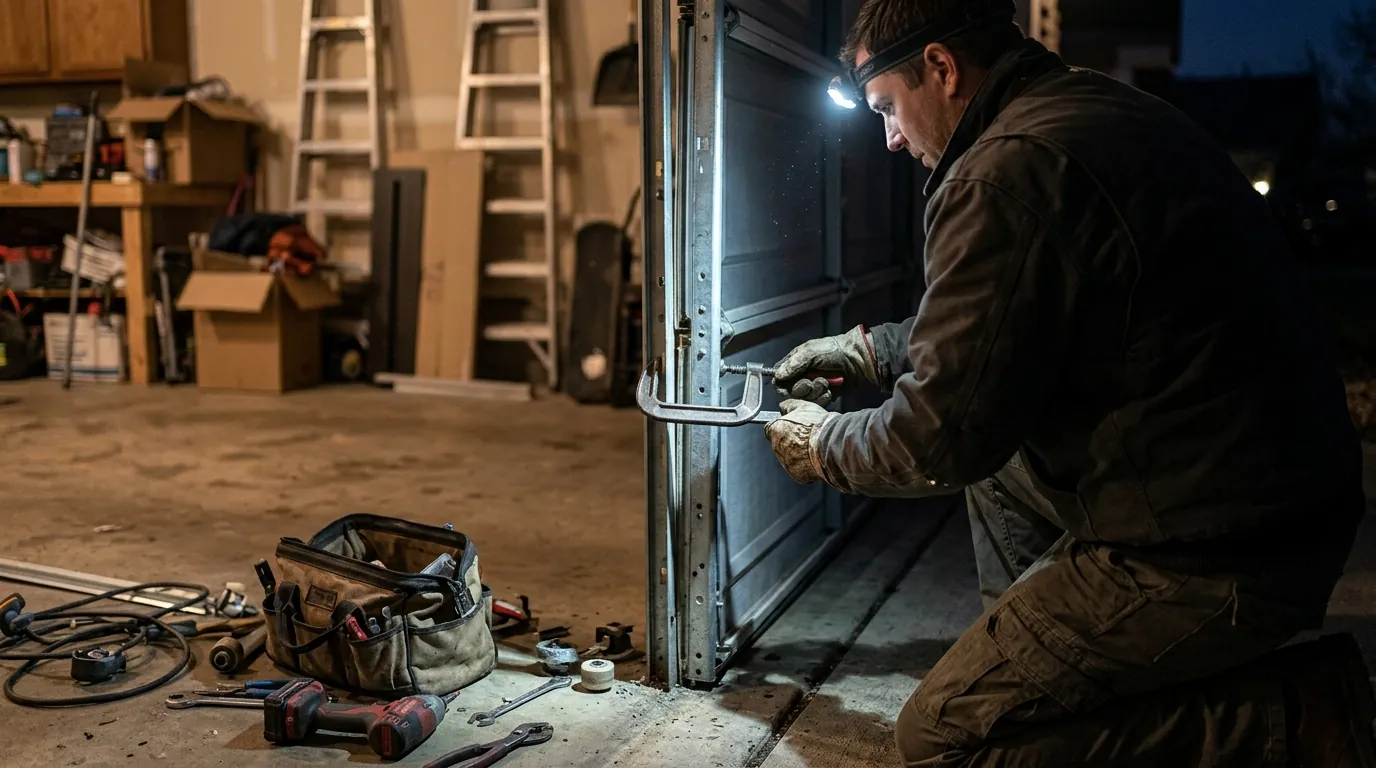
- Cables, rollers and hinges that failed and dropped a corner of the door
- Doors knocked off track by a bumper tap or a binding roller
- A balance, force and photo-eye safety test before the tech leaves
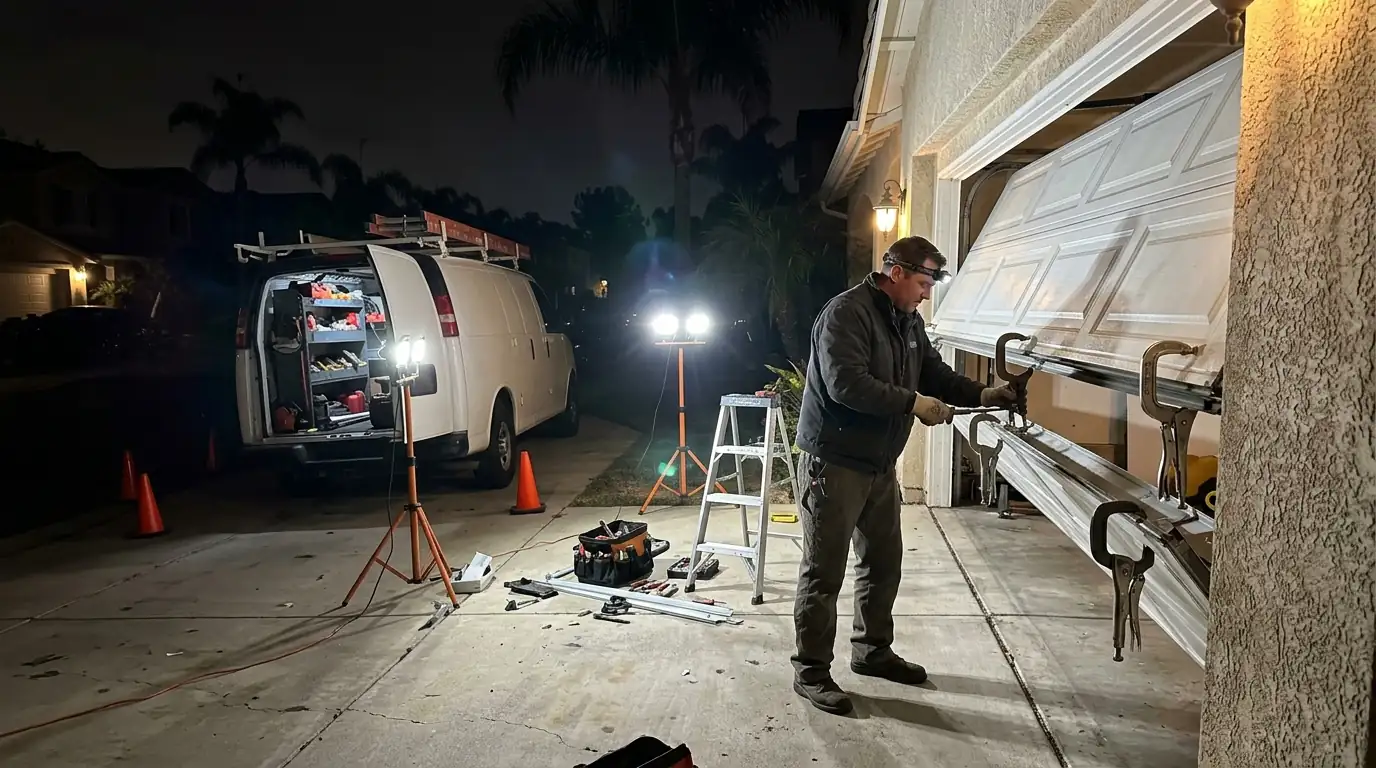
Stuck open and the house is exposed
A door frozen in the up position is the call we treat with the most urgency, because an open garage at night is an open invitation. The tech's first move is to bring the door down under control and lock it, even if the full repair waits for a part. Nobody should sleep with the garage gaping at the street.
Car trapped before work
Pulling the red release cord sounds simple, but with a broken spring the door's full weight comes with it, and on some older openers the trolley will not re-engage cleanly. The tech disengages the opener, lifts the door with proper equipment, gets the car out, and then fixes the actual failure instead of leaving you to wrestle it twice.
Storm and impact damage
Santa Ana winds rattle loose hardware until something lets go, and a distracted three-point turn can fold a bottom section. Emergency visits stabilize impact damage, straighten or replace track, and board the opening if a section has to be ordered, so the garage is weather-tight and secure in the meantime.
On the job
Why San Diego emergencies skew old-hardware
The county's housing is older than its paint jobs: the median home here was built in 1980, and the median home sold in 2024 was 43 years old. Builder-grade springs from those decades were rated around 10,000 cycles, so a huge share of the doors we rescue at 2am are simply original hardware reaching the end of a forty-year count. If your door and opener came with the house, the emergency is usually a matter of when.
What an emergency call costs
National figures put a typical garage door repair at $150 to $400, with $250 about average, per HomeAdvisor's 2026 data; springs commonly run $150 to $350 installed per Angi's published range. After-hours work can carry a dispatch premium, which is part of the price you hear on the phone, before the truck leaves. These are the factors that move the number:
Questions callers ask about this job
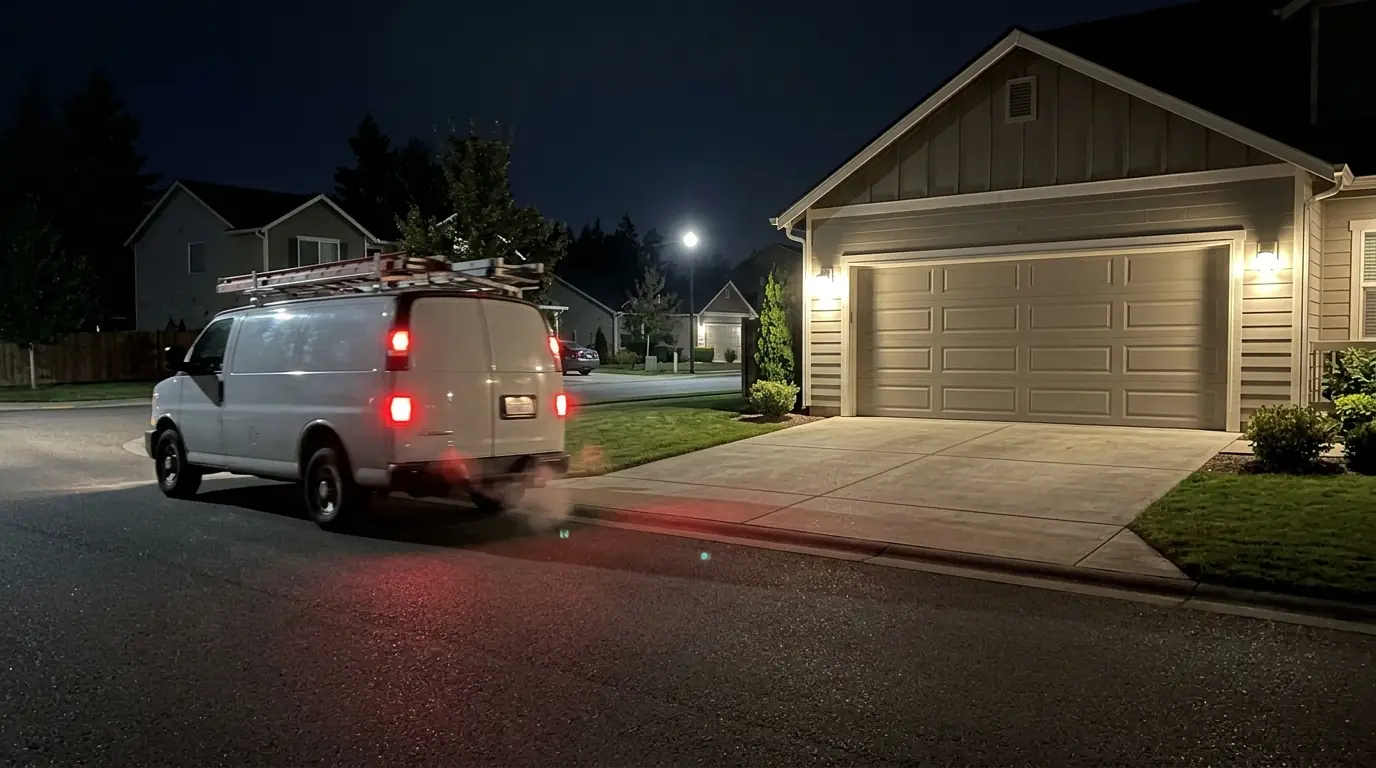
A dispatcher for this company answers around the clock, every day of the year. On the rare night every truck is already committed, we may hand a single emergency to another trusted local door company rather than leave anyone waiting until morning, and we tell you that on the call.
The service office sits in Kearny Mesa beside the 15, 805 and 163, so most of the city and inner suburbs are a short run. Dispatch quotes a real window based on where the trucks are the moment you call.
If the door is down and the spring is intact, yes, the manual release is safe. If a spring snapped, do not: the door's full weight is no longer counterbalanced and it can come down hard. Tell dispatch and let the tech lift it with equipment.
Yes. Securing the opening is the first job of every emergency visit. If a discontinued section or an odd spring has to be ordered, the door leaves locked and the house closed up, and the return visit is scheduled before the tech drives off.
The repair itself is priced the same way; after-hours dispatch adds a stated premium. You hear the full number before work starts, so a 2am call never turns into a sunrise surprise.