Garage door repair covers the mechanical system around the door: springs, cables, rollers, hinges, track, sections and the hardware tying them together. A tech diagnoses the symptom you describe, fixes the failed part, and corrects whatever wear caused it, then balance-tests the door so the opener is not left lifting weight it was never built to move.
What the visit covers
- Full-system inspection, not just the part that squeaked
- Torsion and extension spring faults, from stretch to clean breaks
- Frayed or jumped lift cables rewound and replaced
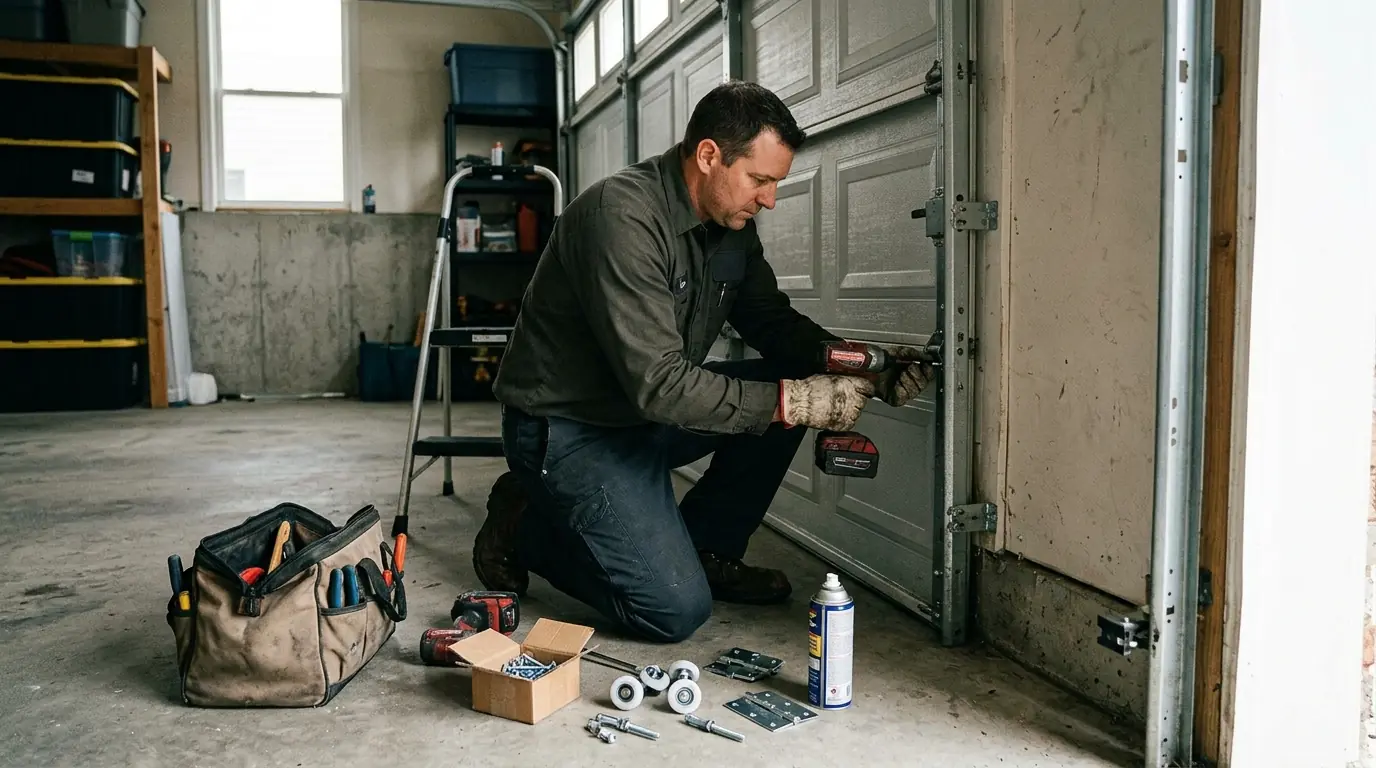
- Worn steel rollers upgraded to sealed nylon
- Bent hinges, loose lag bolts and cracked end brackets
- Balance, travel and photo-eye tests to close out every job
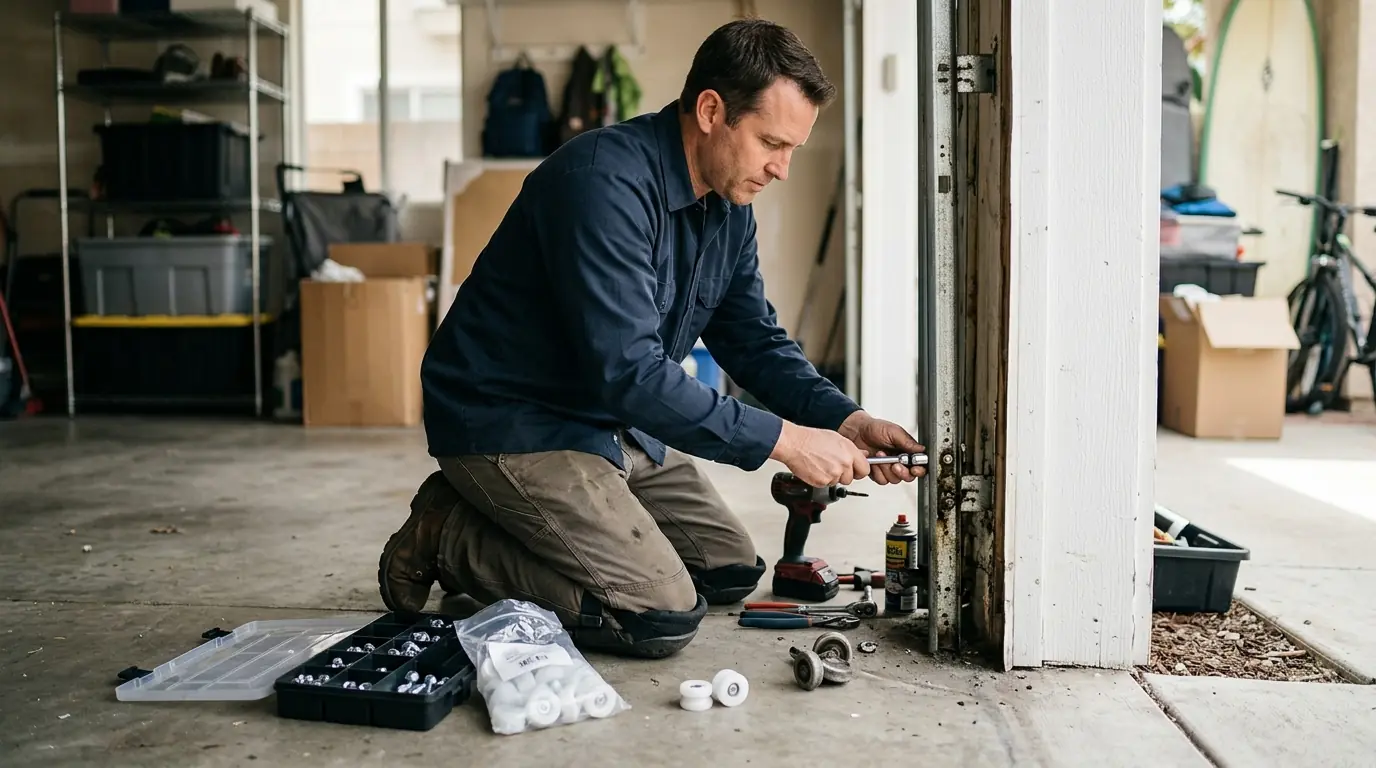
Noisy, shaky or slow doors
Grinding usually means dry or flat-spotted rollers, popping means a hinge working loose, and a shudder on the way up often points at a spring losing its wind. These are the cheap visits, and the ones that prevent the expensive ones, because every one of those symptoms ends in a stuck door if it is left to run.
Doors that stop, reverse or refuse to move
When a door reverses at the floor, the culprit is usually the photo eyes or the close-force setting; when it will not move at all, suspect a spring or a dead opener. The tech tests in order, from the simple to the serious, so you never pay for a board when the fix was a sensor bracket.
Crooked and sagging doors
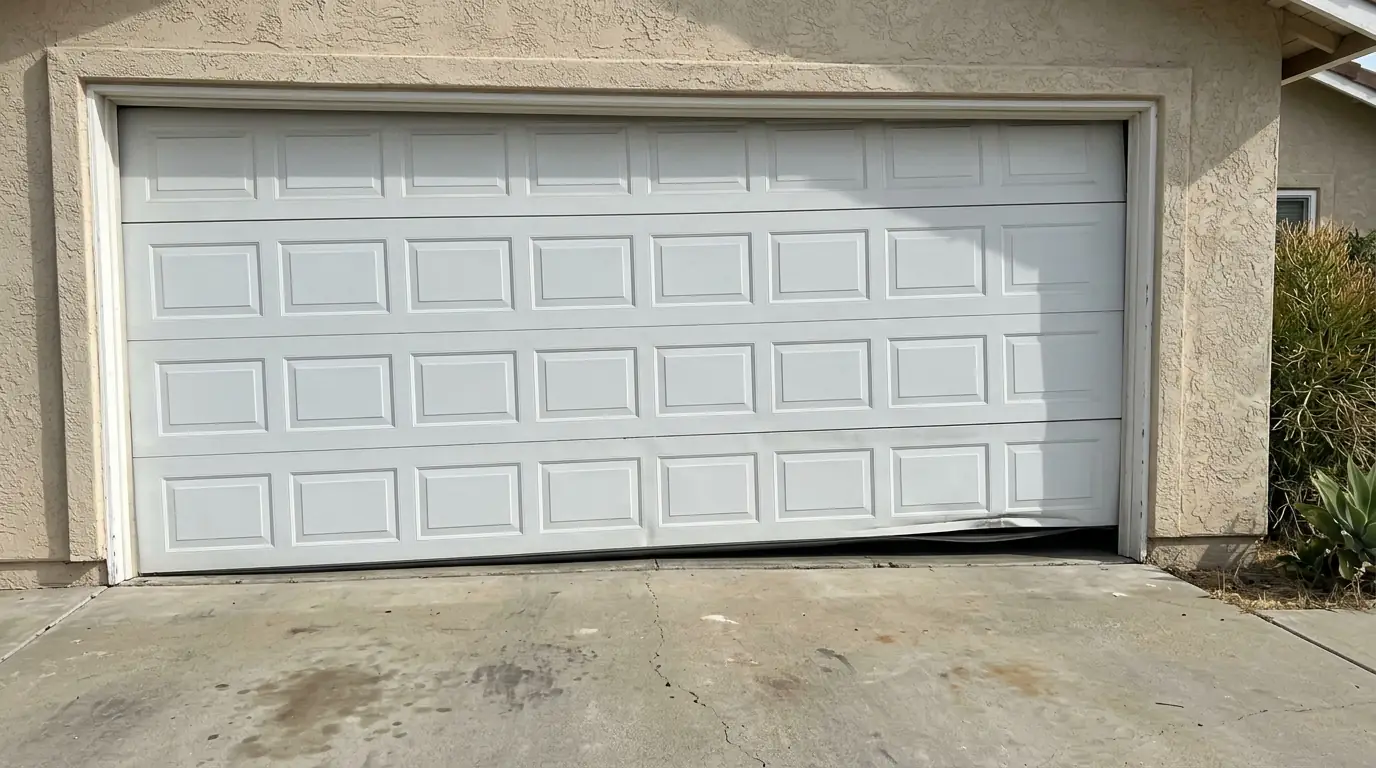
A door hanging lower on one side means a cable has slipped or stretched, and running it that way grinds the rollers against the track until something jams. We re-tension or replace the cables as a pair, square the door in its opening, and check the track bolts the vibration loosened.
On the job
Repair pressure in an older county
Across San Diego County the median home dates to 1980, and 71 percent of homes sold in 2024 were more than 30 years old. That math shows up in our dispatch log: original springs past their cycle rating, first-generation openers straining against unbalanced doors, and steel rollers worn oval after decades of daily runs. On housing this age, a single repair visit that corrects the root wear routinely buys the door several more quiet years.
What garage door repair costs
HomeAdvisor's 2026 figures put typical garage door repairs at $150 to $400, averaging about $250. One-visit fixes on common parts land in that band; what moves a job above it is usually plural failures, a heavy custom door, or damage that spread while the first symptom was ignored. The price drivers:
Questions callers ask about this job
Rule of thumb: one failed part on a structurally sound door gets repaired; rust-through, multiple cracked sections or a third repeat failure starts the replacement conversation. We price both paths when it is genuinely close, and tell you which we would choose at our own house.
Briefly, carefully. Noise is the system asking for help, and the failure it predicts usually happens with the door in motion. Keep people and cars clear and get it looked at within days, not months.
Yes. Clopay, Amarr, Wayne Dalton, C.H.I., Raynor, Martin and the rest share standardized hardware, and for discontinued doors we source compatible sections and parts where they exist.
Because an unbalanced door killed the part you just paid to replace. If the door will not float at waist height on the manual release, the springs are doing too little and the opener too much, and the next failure is already scheduled.
Most days, yes. The dispatch line is answered around the clock, trucks stage from Kearny Mesa, and the common springs, cables and rollers are stocked on board, which is what makes one-visit completion the norm rather than the pitch.