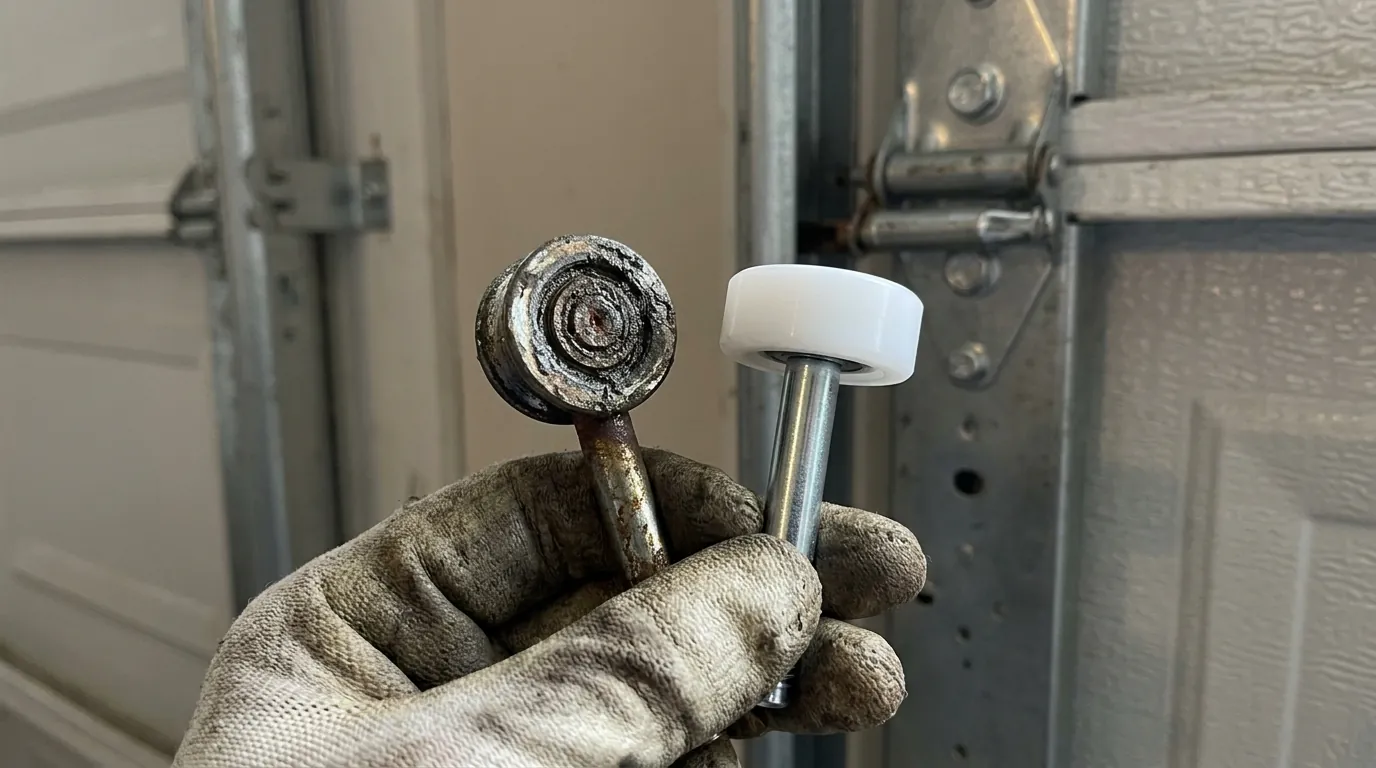
Roller replacement swaps the wheels that carry the door through its track. Builder-grade steel rollers with open bearings wear oval, dry out and grind; sealed-bearing nylon rollers run quieter, need no lubrication schedule, and spare the track. A full set on a standard door is under an hour, and the before-and-after is the most audible result in this trade.
What the visit covers
- Every roller inspected, including the hard-to-see top fixtures
- Worn wheels and wobbling stems replaced as a full set
- Sealed 13-ball nylon rollers fitted as the standard upgrade
- Hinges checked while each roller is out of its stem hole
- Track wiped clean of old grease and grit
- Travel and balance test to confirm the smooth run
Steel, nylon and what to pick
Open-bearing steel rollers are what most doors were born with: cheap, loud, and thirsty for lubricant they never get. Sealed nylon with a proper ball count costs modestly more per wheel and simply ends the maintenance argument. For heavy wood and oversized doors we spec heavier-duty rollers rather than pretending one wheel fits all.
The sounds that mean rollers
Grinding on travel, a squeal at the curve, a door that chatters in the horizontal track overhead: those are flat-spotted wheels and dry bearings. Popping is usually a hinge; banging is a spring. Describing the noise to dispatch genuinely helps the truck arrive with the right parts bin open.
Why worn rollers cost more than rollers
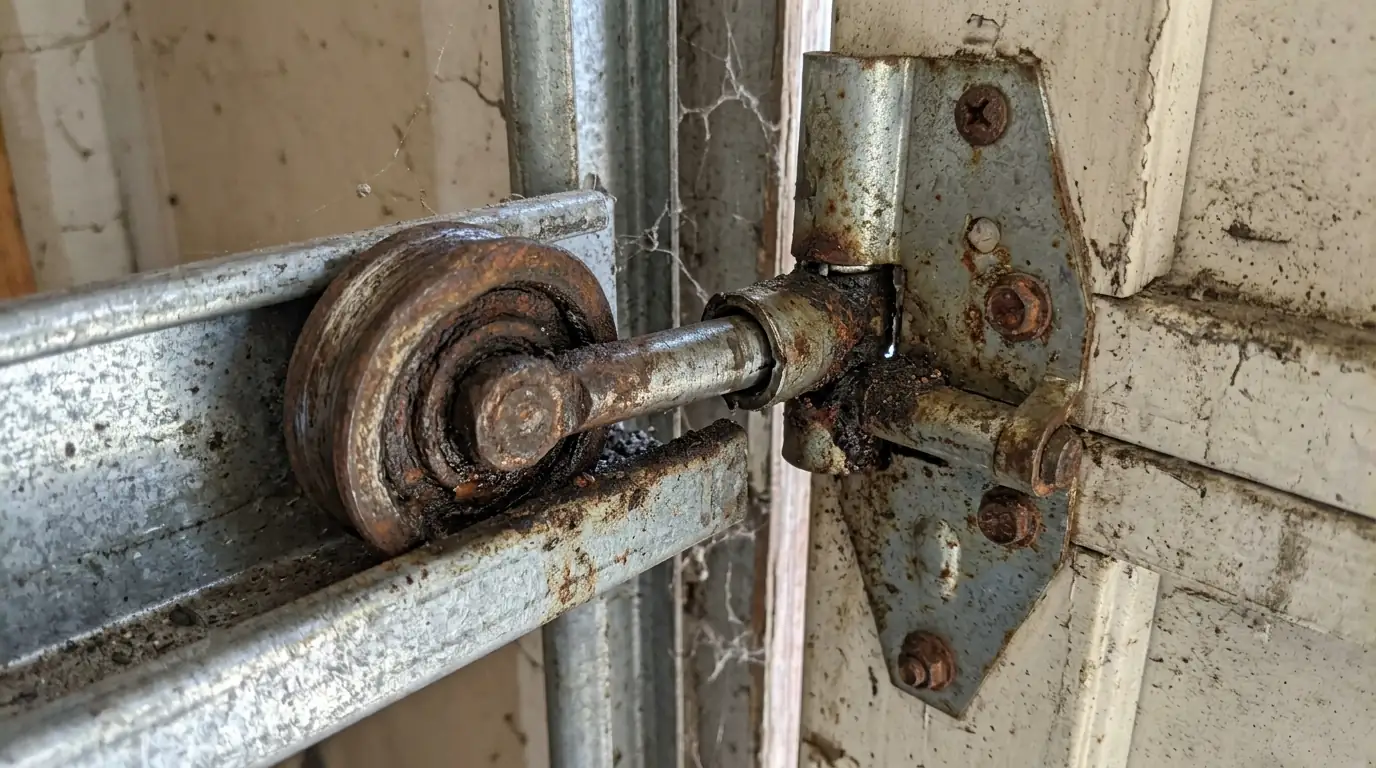
An oval wheel does not just sound bad; it hammers the track at every rotation, loosens the lag bolts, and is the single most common starting point for a door that eventually jumps its rails. A roller set is the cheap end of a chain whose expensive end is an off-track rescue.
On the job
Decades of cycles, original wheels
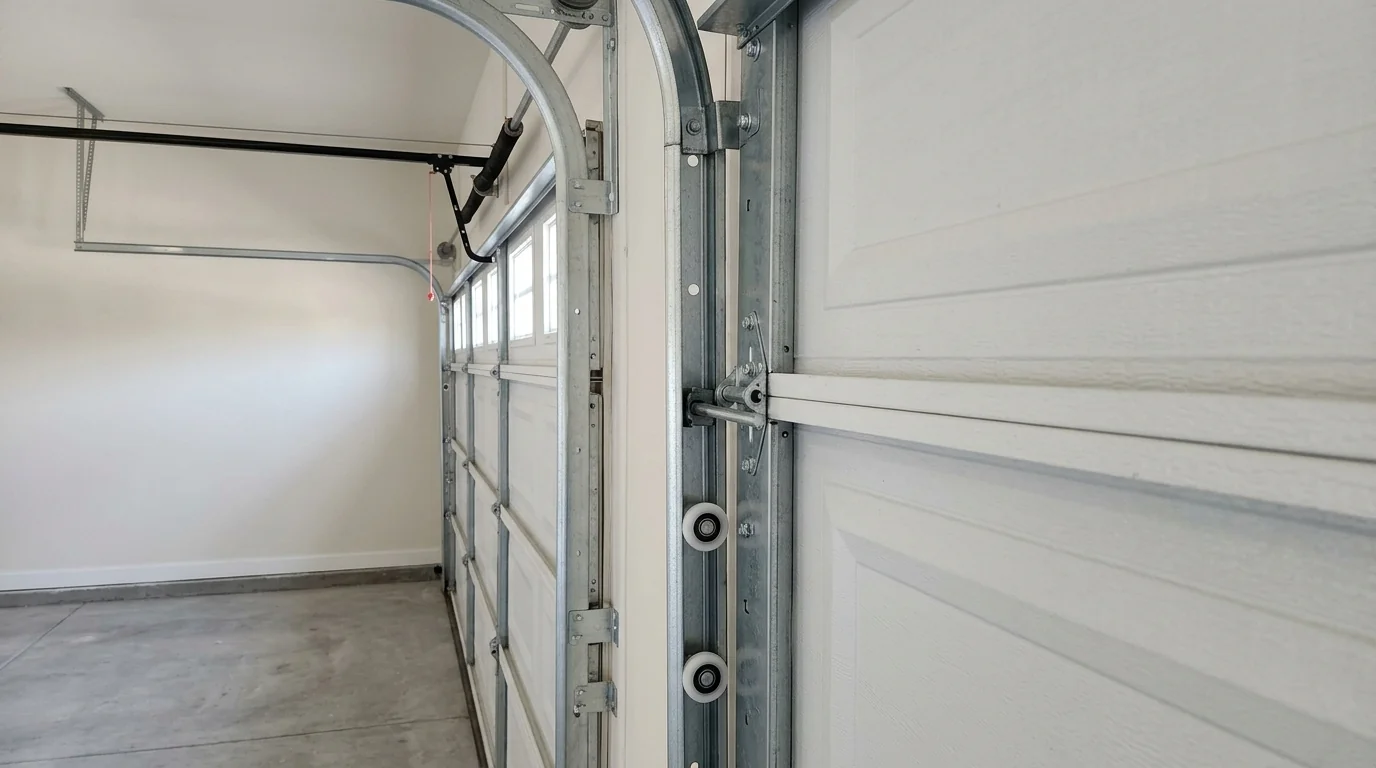
Most of this county's doors are still riding their factory rollers: the median San Diego County home was built in 1980, and open steel bearings were the default for decades after. Forty years of daily cycles wears those wheels oval long before owners connect the morning grind to a ten-dollar part. It is the quietest-value visit on our board, and in older coastal garages the salt-dried bearings make the upgrade even more audible.
What roller replacement costs
A full roller set sits comfortably at the low end of HomeAdvisor's $150 to $400 typical-repair band, below its $250 average on most standard doors. Bundled with a tune-up it is cheaper still per part. What nudges the number:
Questions callers ask about this job
A standard four-section door carries ten to twelve, including the top fixtures that are easy to miss from the floor. We replace the full set; mixing one new wheel into eleven tired ones just moves the noise.
Quality sealed-bearing nylon is rated in the tens of thousands of cycles, which on a typical family door is decades. The sealed bearing is the point: no annual lubrication ritual, no grit working into open races.
If the wheels are still round, yes, and a tune-up does exactly that. Once a roller is flat-spotted or the bearing wobbles, lubricant only quiets the countdown. The grind returns in weeks.
The side rollers, cautiously, for a handy owner. The bottom rollers, never: the bottom brackets they thread are under full spring tension. Since the pro visit is quick and inexpensive, most people sensibly buy the hour.
If the shake is wheel-shaped, completely. If the shake survives new rollers, the track geometry or balance is the real patient, and the same visit diagnoses that rather than leaving you guessing.