Cable replacement swaps both lift cables, resets them on their drums, re-squares the door, and finds the reason the cable failed, which is usually a worn bottom bracket, a rusty strand working loose, or spring tension gone off balance. Replacing only the failed side leaves a new cable yoked to a stretched one and the door climbing crooked again within months.
What the visit covers
- Both lift cables replaced with correct-gauge aircraft cable
- Cable drums inspected for grooving and reset in sync
- Bottom brackets, the anchor points under full tension, checked and replaced if worn
- Door leveled and squared in the opening
- Track alignment checked where the slack cable let the door wander
- Balance and safety test to finish
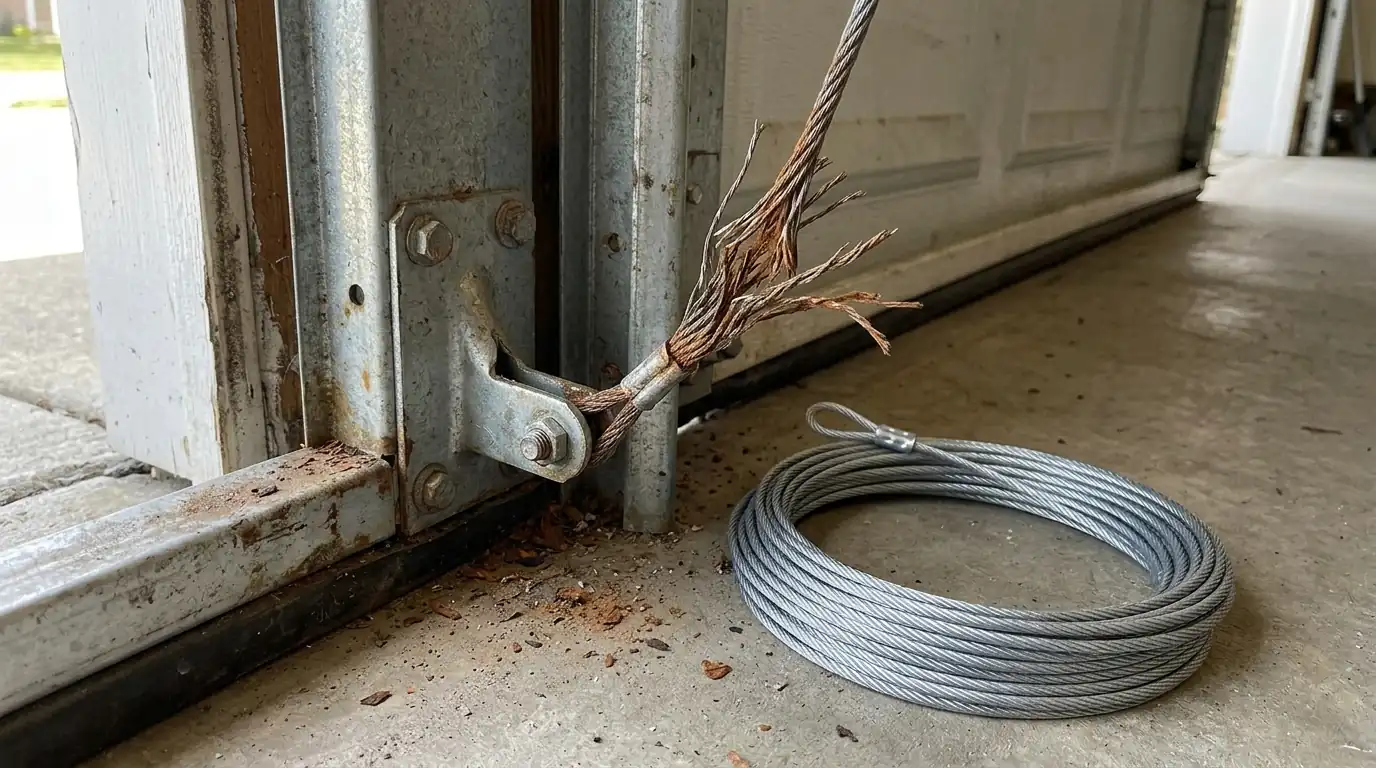
Frayed strands and rust
Cables fail a few strands at a time, and a fuzzy, bristled section is the warning. Closer to the coast, salt air finds the bottom few inches first, where the cable meets the bracket. Caught at the fray stage this is one of the cheapest preventive fixes on the door; caught at the snap stage it usually brings track or section damage along.
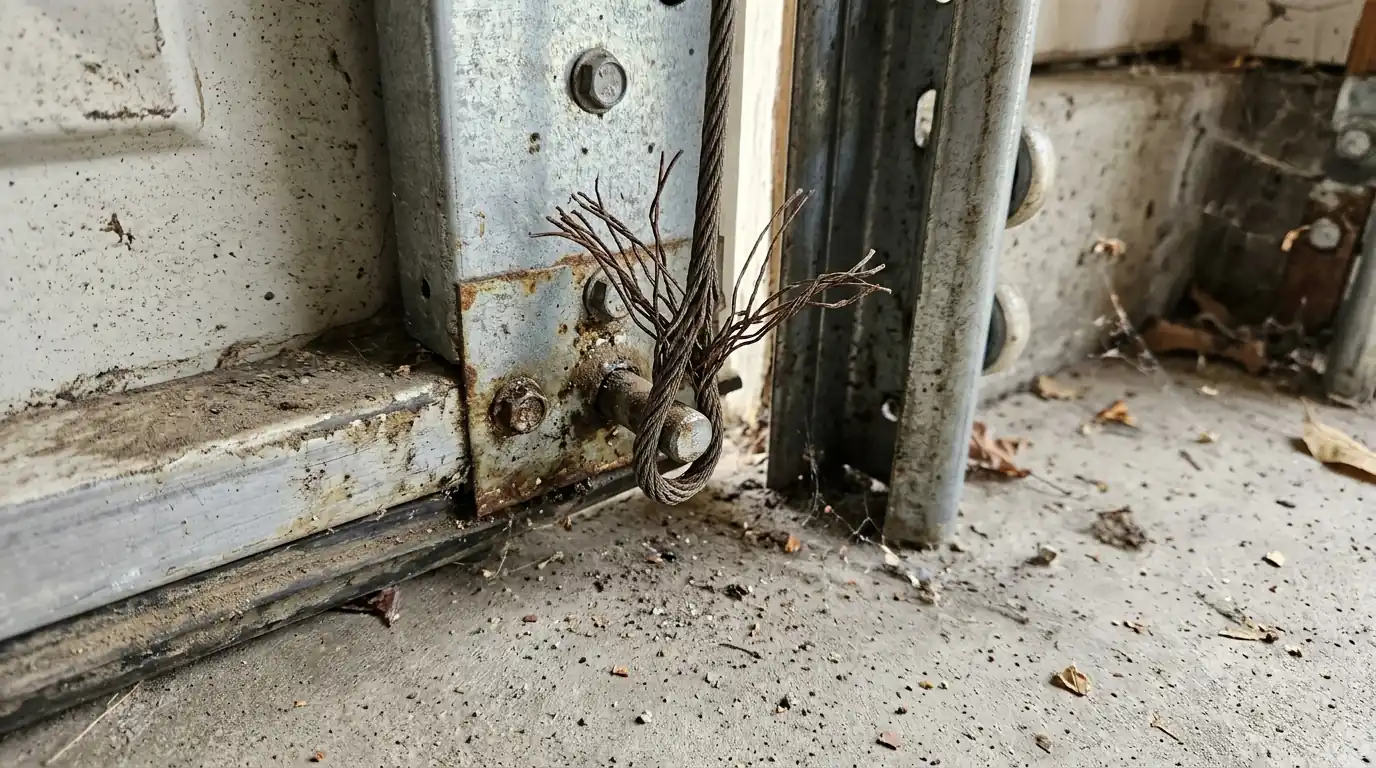
A cable that jumped the drum
Slack from a binding roller or an obstruction can let a cable walk off its drum and wrap the torsion shaft. The door tilts hard and wedges. The fix is unloading tension safely, unwinding the mess, rewinding both drums in sync and clearing whatever caused the slack, because a rewound cable with the same bad roller jumps again.
Why the bottom bracket matters
The bottom bracket is the only part of the door under full spring tension when the door is closed, which is why it carries warning stickers. If yours is cracked or rusted, we replace it during the cable job rather than bolting new cable to a failing anchor.
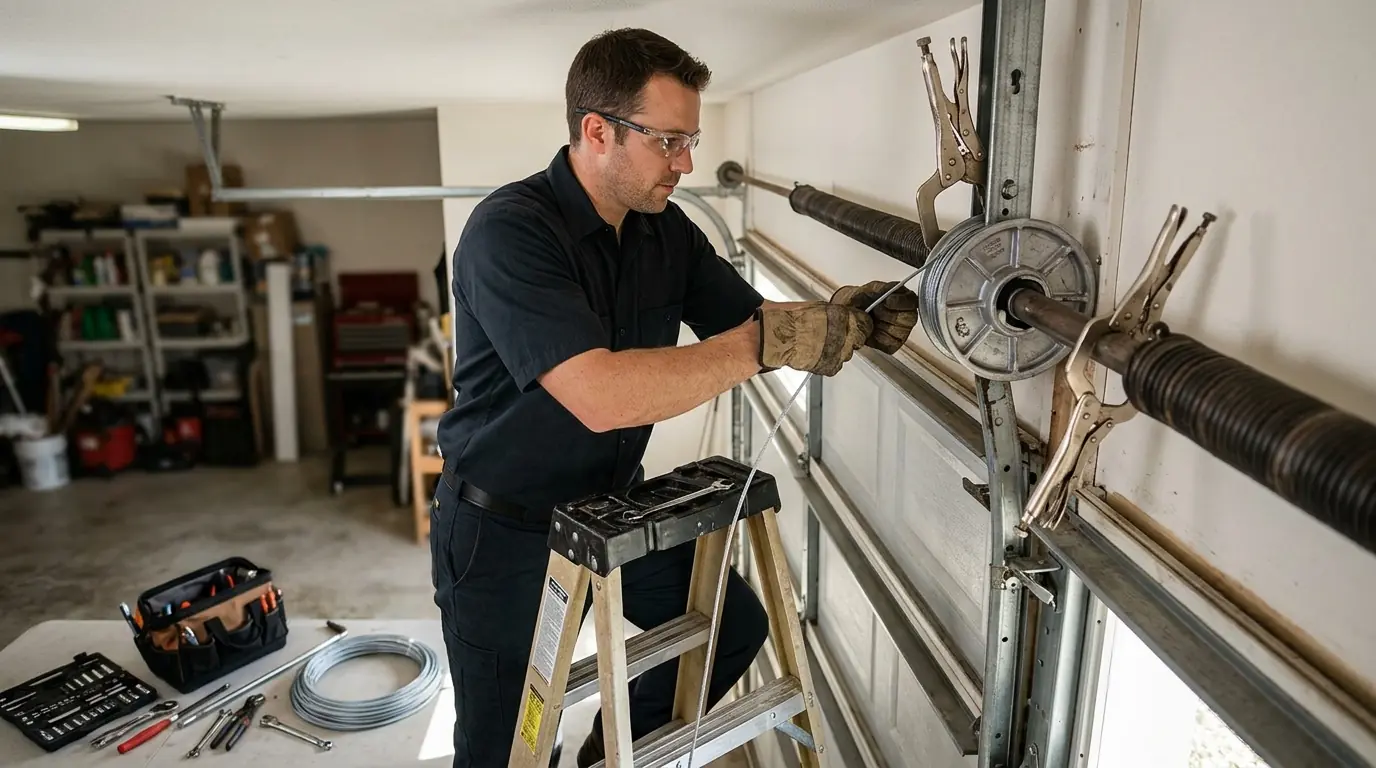
On the job
Salt air and forty-year-old steel
San Diego's mix works against cables from two directions: inland, the county's 1980-median housing stock means original cables with decades of cycles on them; near the water, salt air corrodes strands at the bottom brackets years ahead of schedule. Coastal service experience here consistently shows rust-driven cable and hardware failures that inland garages postpone, so beach-adjacent homes should treat a fray as urgent rather than cosmetic.
What cable replacement costs
Cable jobs sit at the affordable end of garage door work, inside HomeAdvisor's typical $150 to $400 repair band and usually below its $250 average when the cables are the only casualty. The ticket grows with what the failing cable dragged down with it:
Questions callers ask about this job
Stop. Every crooked cycle grinds rollers against track and loads the good cable with both sides' work. Leave it where it sits and call; a cable visit is quick, a derailed door is not.
Same age, same mileage, same corrosion. A new cable paired with a stretched one pulls the door unevenly, and the survivor's failure is already close. Pairs keep the door square and the ticket single.
The cables connect to the spring system, and the bottom brackets are under full tension with the door closed. Releasing that wrongly is how garage injuries happen. This one belongs with the springs in the leave-it category.
Inland, a decade or more is normal; within range of the marine layer, inspect yearly after year five. The fray always starts at the bottom few inches, so that is where to look.
Finding why is the job. A cable rarely dies alone; a dragging roller, a grooved drum or an unbalanced spring usually killed it, and leaving the cause in place schedules the next failure.