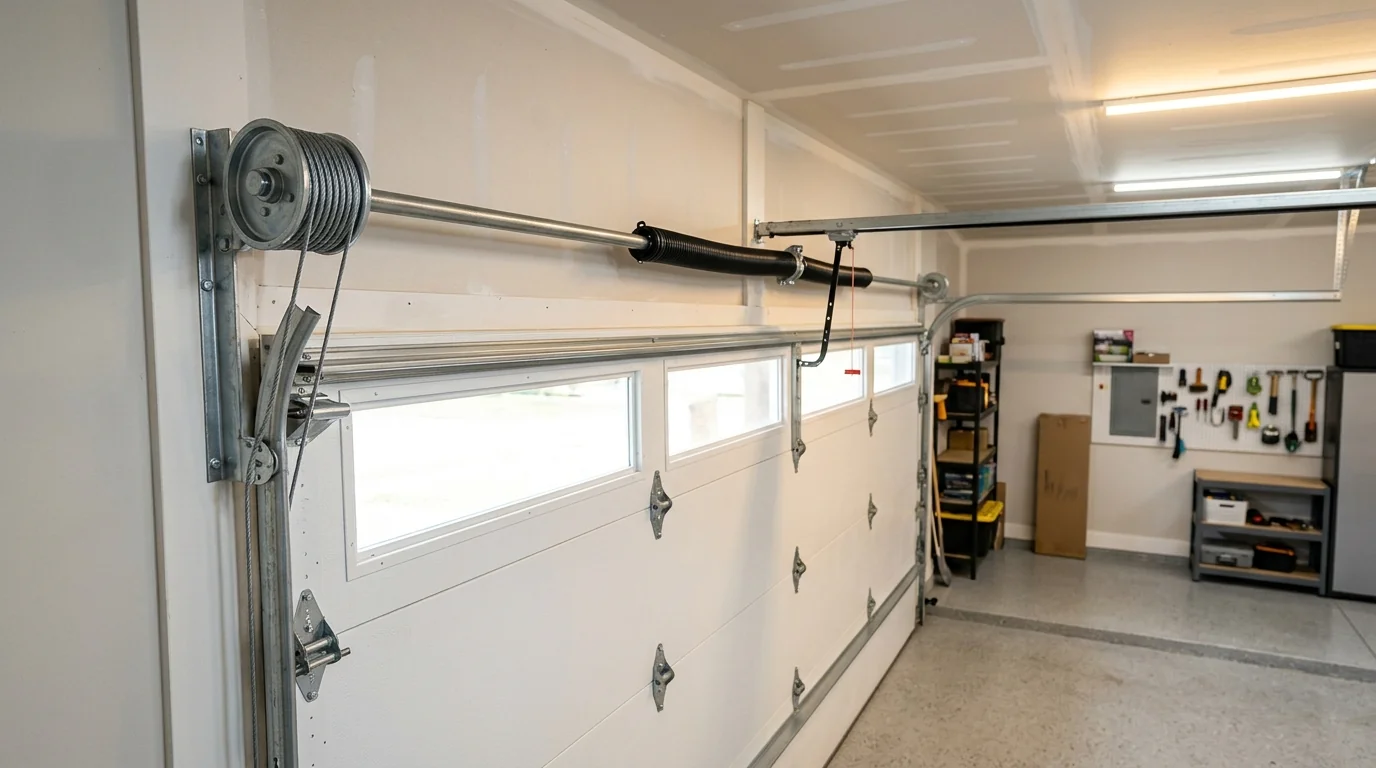
An extension-to-torsion conversion removes the extension springs, pulleys and cables running along the horizontal tracks and installs a torsion spring assembly on a shaft above the door, with new drums, bearings and cables. Torsion springs are sized to the door's weight, give more even lift, and keep a broken spring on its shaft instead of loose in the garage.
What the visit covers
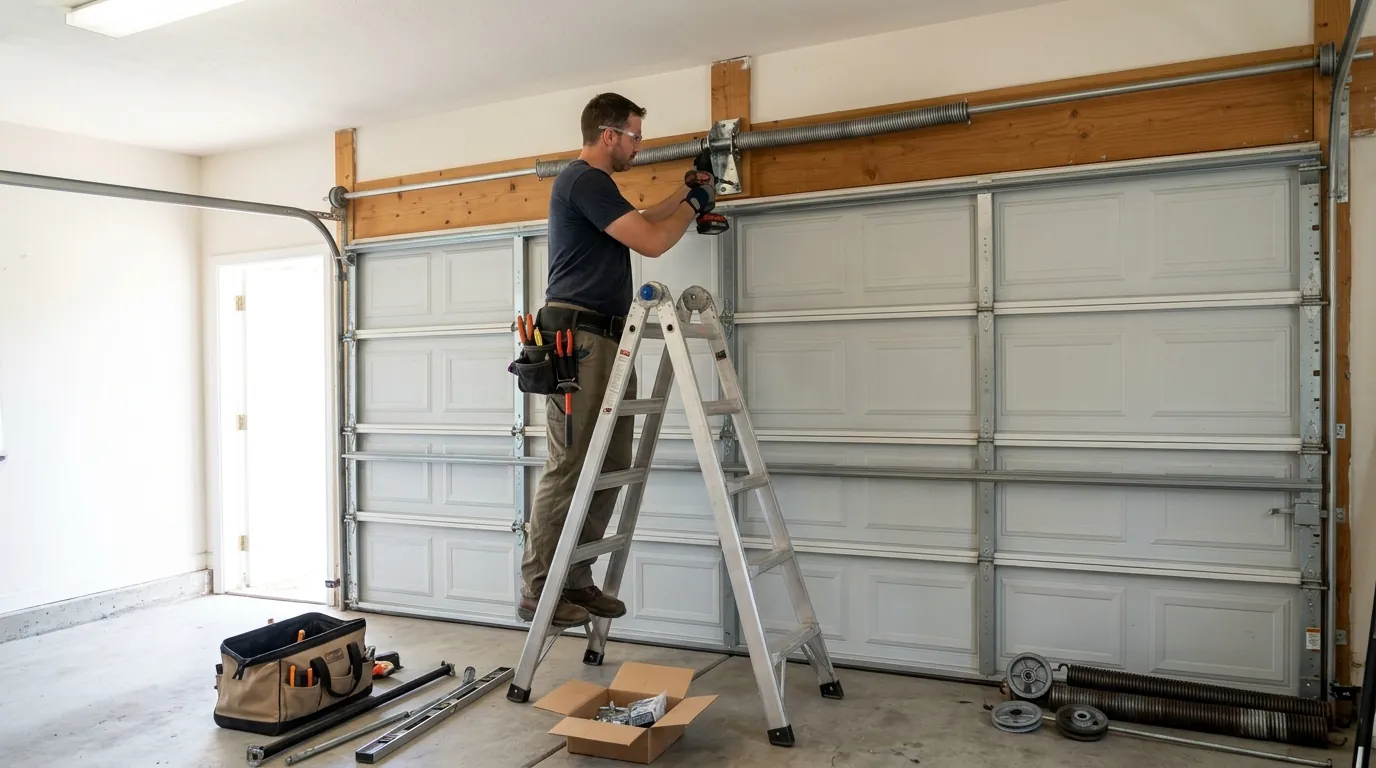
- Door weighed so torsion springs are sized correctly
- Extension springs, pulleys and old cables removed under control
- Center bracket and end bearing plates mounted to solid framing
- Torsion shaft, springs, drums and new cables installed
- Door balanced and opener re-set for the new system
- Full safety and reverse test before handover
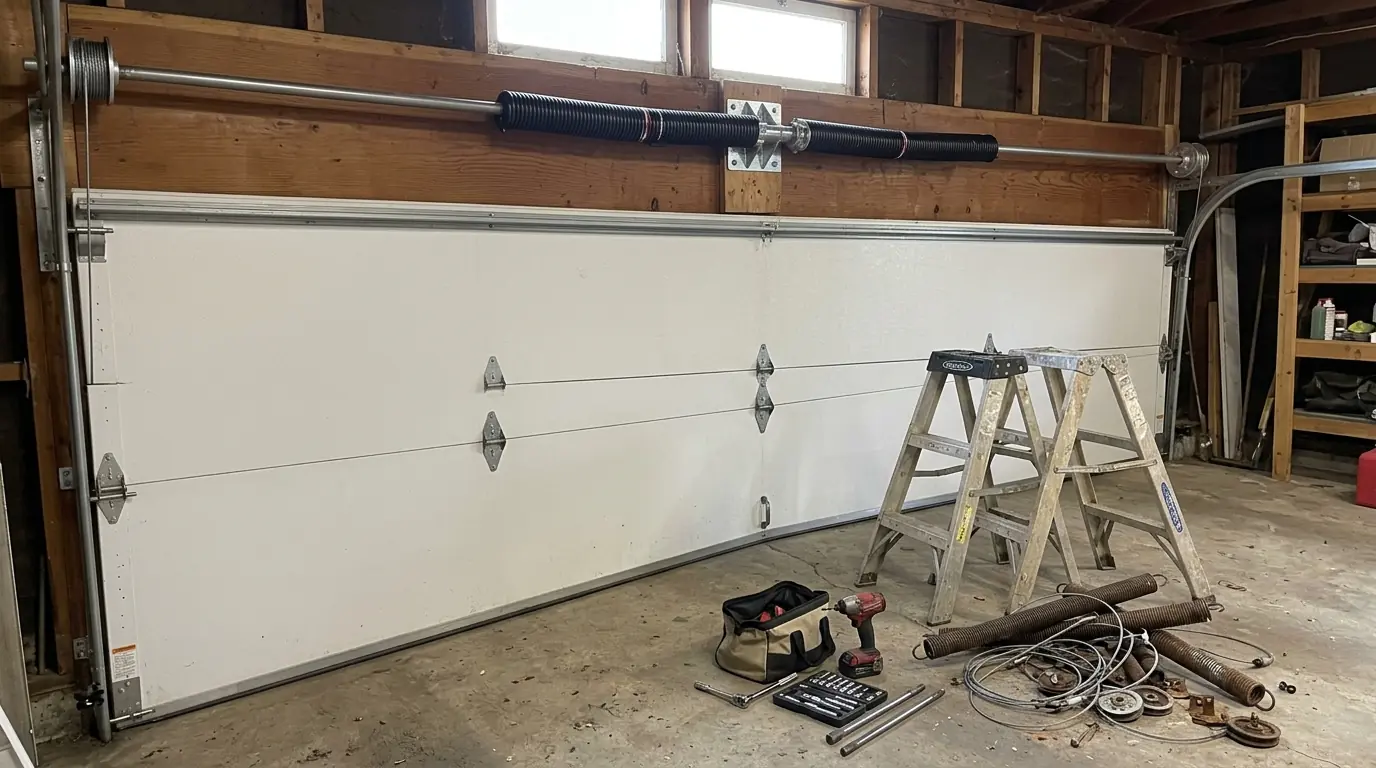
Counterbalance rebuilds
The conversion rebuilds the whole counterbalance: shaft, springs, drums, cables and bearings, sized to your door's measured weight. The result is a door that lifts evenly from both sides rather than relying on two separate stretch springs that age at different rates. Most owners notice the smoother, quieter travel immediately.
Containment on old extension setups
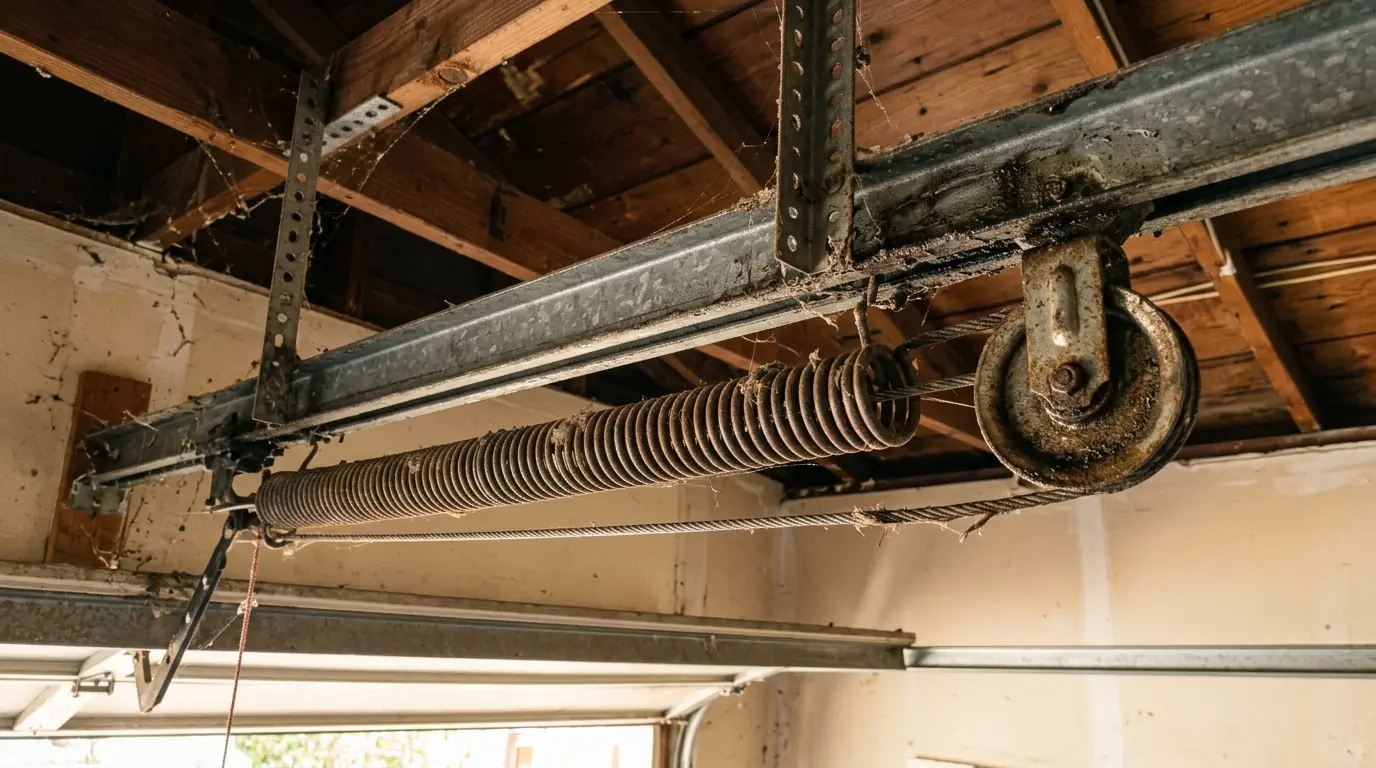
When an extension spring breaks without a containment cable threaded through it, the loose pieces can fly across the garage. If you are not ready for a full conversion, adding containment cables is the minimum fix. A torsion system goes further: a broken torsion spring stays wrapped around its shaft.
Openers after the swap
A torsion system also opens up opener choices. Wall-mount jackshaft openers need a torsion shaft to drive, so a conversion is often the first step for owners who want the ceiling clear for storage or a quieter operator.
On the job
A common upgrade on older San Diego doors
Extension springs were standard on many doors installed decades ago, and San Diego's housing is older than it looks: 71 percent of the homes that sold in the county's main market in 2024 were more than 30 years old. Many of those garages still run their original stretch springs, often without containment cables. When one breaks, a conversion is usually a better investment than replacing a pair of extension springs that will need replacing again.
What a conversion costs
A conversion costs more than a standard spring swap, which Angi's published range puts at $150 to $350 for typical jobs, because it adds a shaft, drums, bearings, brackets and cables along with the springs. The quote at the door depends on:
Questions callers ask about this job
You do not have to until they fail. But when one breaks, replacing both extension springs is only slightly cheaper than converting, and the conversion gives smoother travel, better balance and safer containment for years.
Most are. The assembly needs a little headroom above the door and solid framing to mount to, which we check on the first visit.
They should. A containment cable through each spring keeps a broken spring from flying loose. If yours have none, adding them is an inexpensive stopgap.
Yes. We re-set its force and travel limits for the new balance. A torsion system also makes a wall-mount opener possible if you want one later.
Usually two to three hours, including removing the old springs, installing the new assembly and testing.