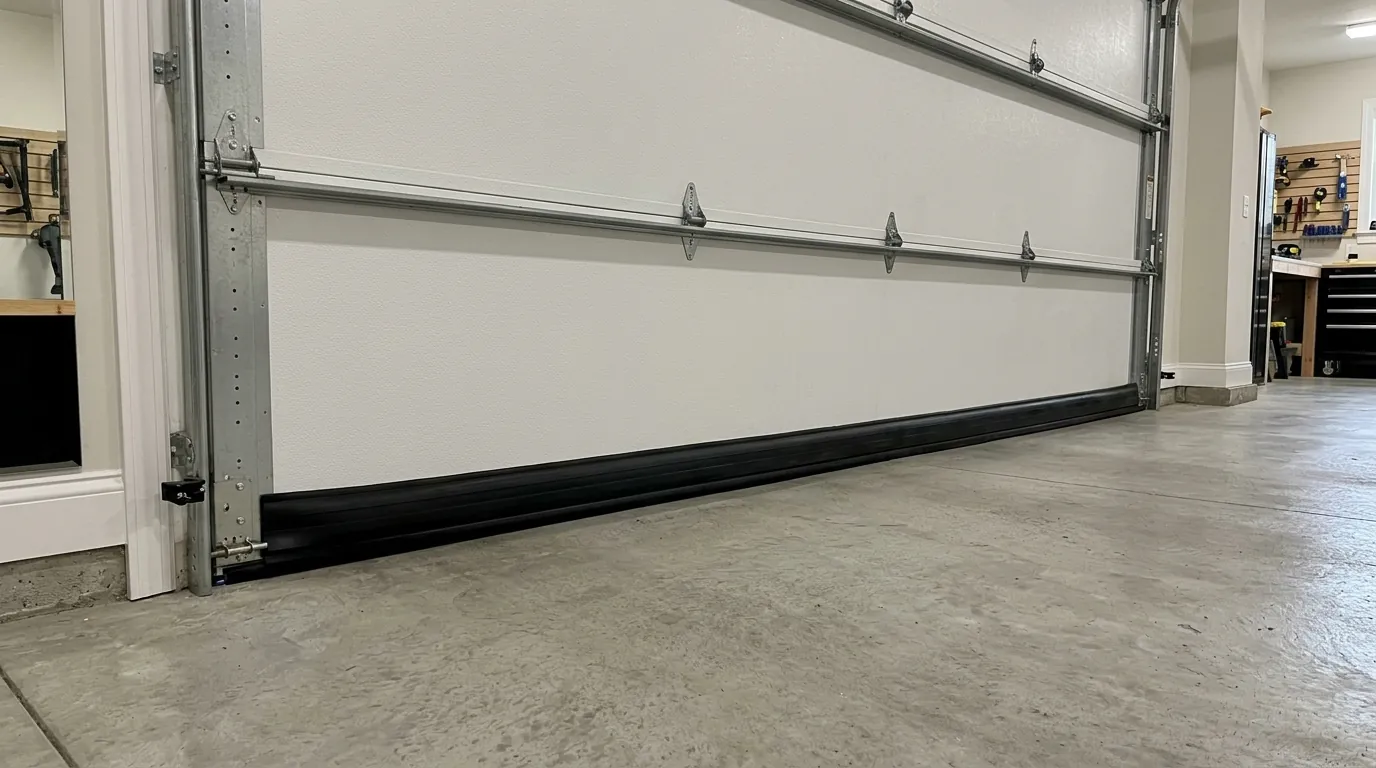
Weather seal replacement swaps the worn rubber along the bottom of the door and the vinyl stops along the jambs and header, and can add a threshold to the floor where the slab is uneven. The goal is a door that lands on a continuous seal with no daylight showing. Correct sizing matters, because a seal that is too thick can make the opener think the door hit something.
What the visit covers
- Bottom seal profile matched to the door's retainer
- Corroded or bent aluminum retainers replaced where needed
- Jamb and header stop seals replaced along the full opening
- Threshold seals added for sloped or uneven slabs
- Opener close limit and force re-set after the new seal
- Daylight check with the door closed before we leave
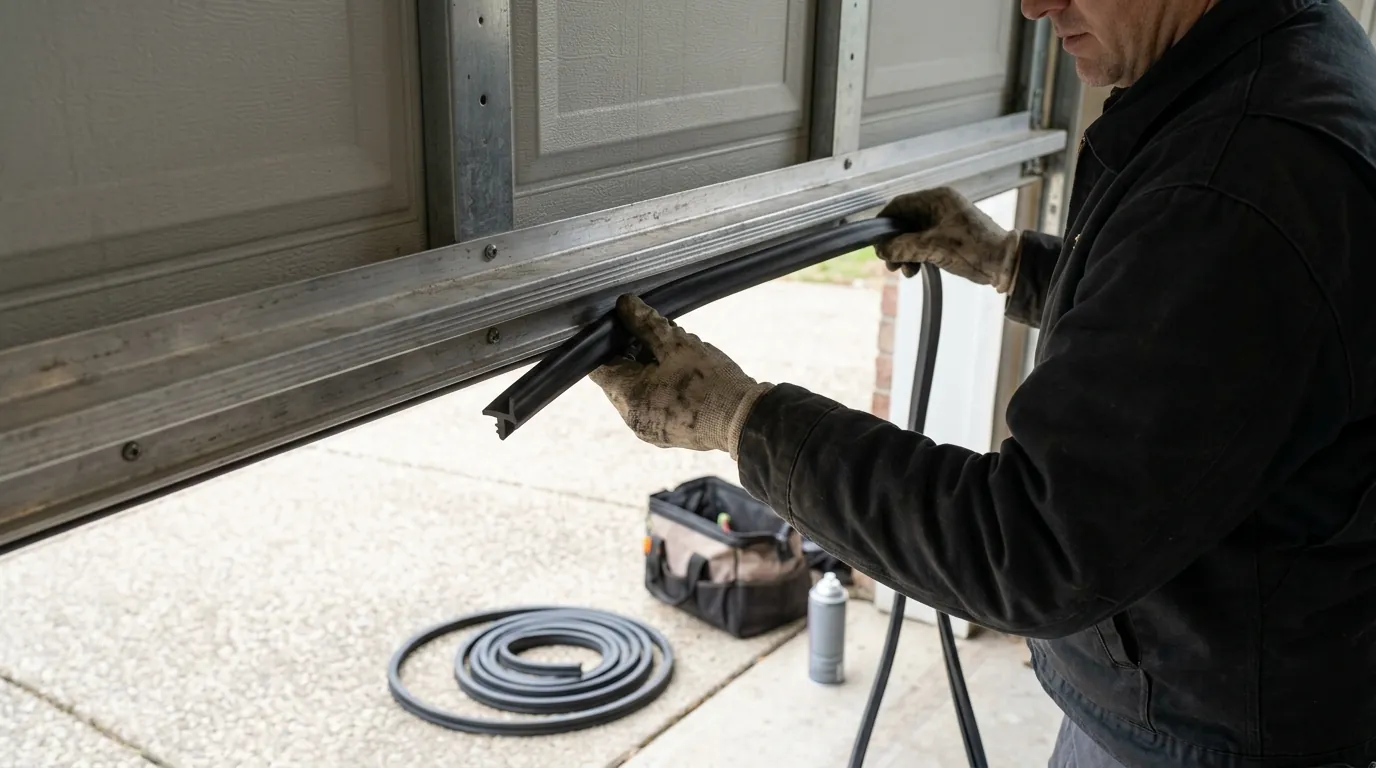
Bottom rubber and retainer
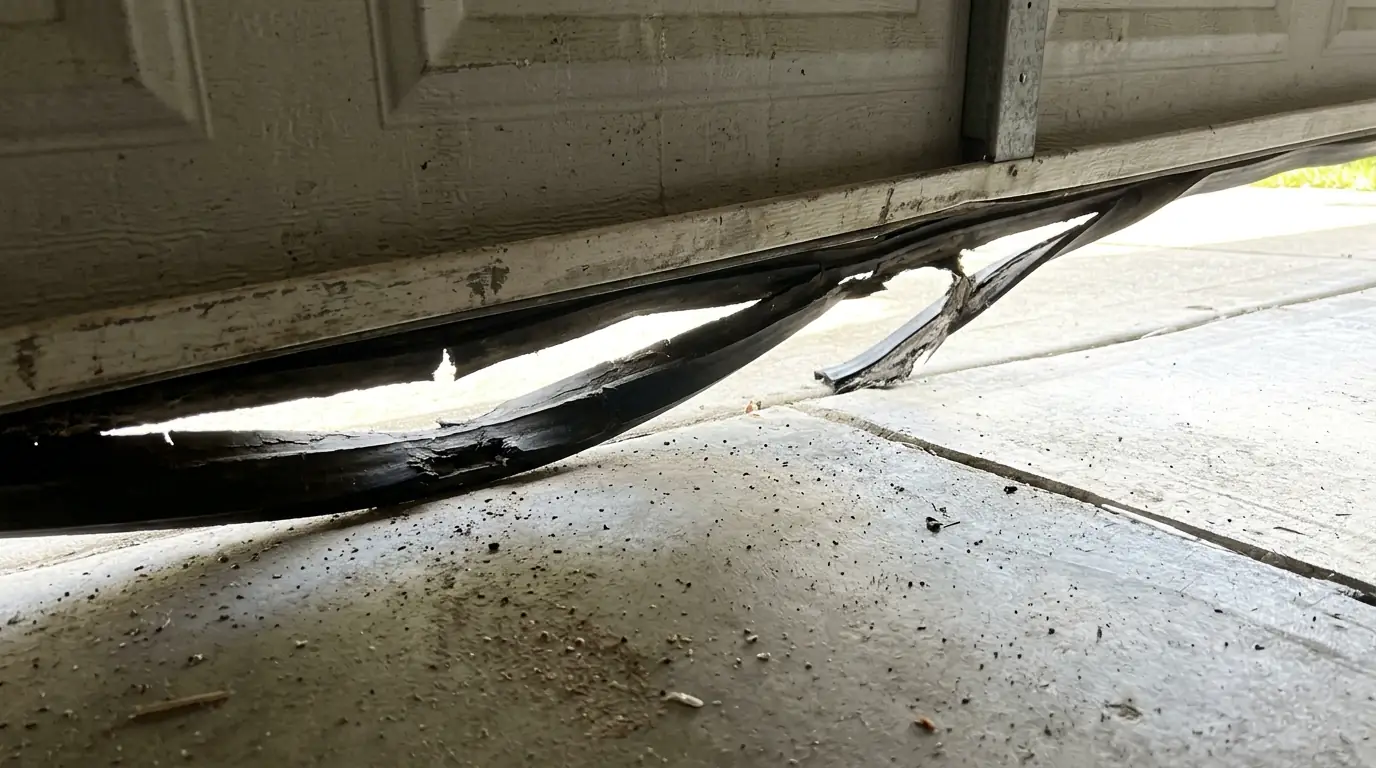
The bottom seal does the hardest work, flexing against concrete every time the door closes. Sun bakes it hard, and once it cracks or tears it stops sealing. We match the profile, T-style, bulb or beaded, to the aluminum retainer on your door, and replace a retainer that has corroded or bent so the new rubber holds.
Jamb and stop seals
The vinyl stops nailed along the jambs and header seal the sides and top of the door. Over time they shrink, crack and pull away. New stops are set so they press lightly against the door face when closed, sealing the gap without dragging on the door as it travels.
Garage thresholds
If the garage slab has settled or sloped, no bottom seal can bridge the gap. A threshold seal bonded to the floor gives the door a raised line to land on, which is especially useful where rainwater runs toward the garage.
On the job
Salt, sun and sand on the seals
San Diego's garage doors face different stresses depending on where they sit: salt air near the coast, stronger sun and heat inland, and milder conditions between, as local garage service experience across the county reflects. Rubber and vinyl react to all of it. Inland, sun-facing doors bake their seals stiff; near the water, salt corrodes the aluminum retainers that hold the bottom rubber. Either way, a seal that cracked years ago has been letting in dust and debris ever since.
What seal replacement costs
Seal replacement sits at the low end of garage door work, typically below the $250 average repair HomeAdvisor reports within its $150 to $400 range. The ticket depends on how much of the perimeter needs new material and whether retainers or a threshold are added:
Questions callers ask about this job
Close the door and look for daylight along the bottom and sides. Cracked, flattened or missing rubber, leaves blowing in, or water at the threshold after rain are all signs.
A good bottom seal helps a great deal. Where the slab slopes toward the garage, adding a threshold usually solves the rest.
Yes, if it changes where the door lands. We reset the opener's close limit and force so it closes fully onto the new seal without reversing.
Closing the gap under and around the door removes the easiest entry point for insects, rodents and lizards, which is one of the most common reasons people call.
Several years in most conditions, less on sun-facing doors and near the coast. Checking them at each yearly tune-up is the simplest way to stay ahead.