A carriage-house garage door is a sectional overhead door styled to look like a pair of swinging stable doors. Overlays create the board pattern, decorative strap hinges and handles finish the illusion, and windows in the top section complete it. Underneath, it runs on the same springs, track and opener as any other door, so you get the character without the daily swing.
What the visit covers
- Overlay pattern, color and window layout chosen at your driveway
- Decorative hinges and handles placed to sell the swing-door look
- Weight checked, since overlays add mass the springs must carry
- Track, springs and seals installed new
- Opener paired, or upgraded for a heavier door
- Old door hauled away
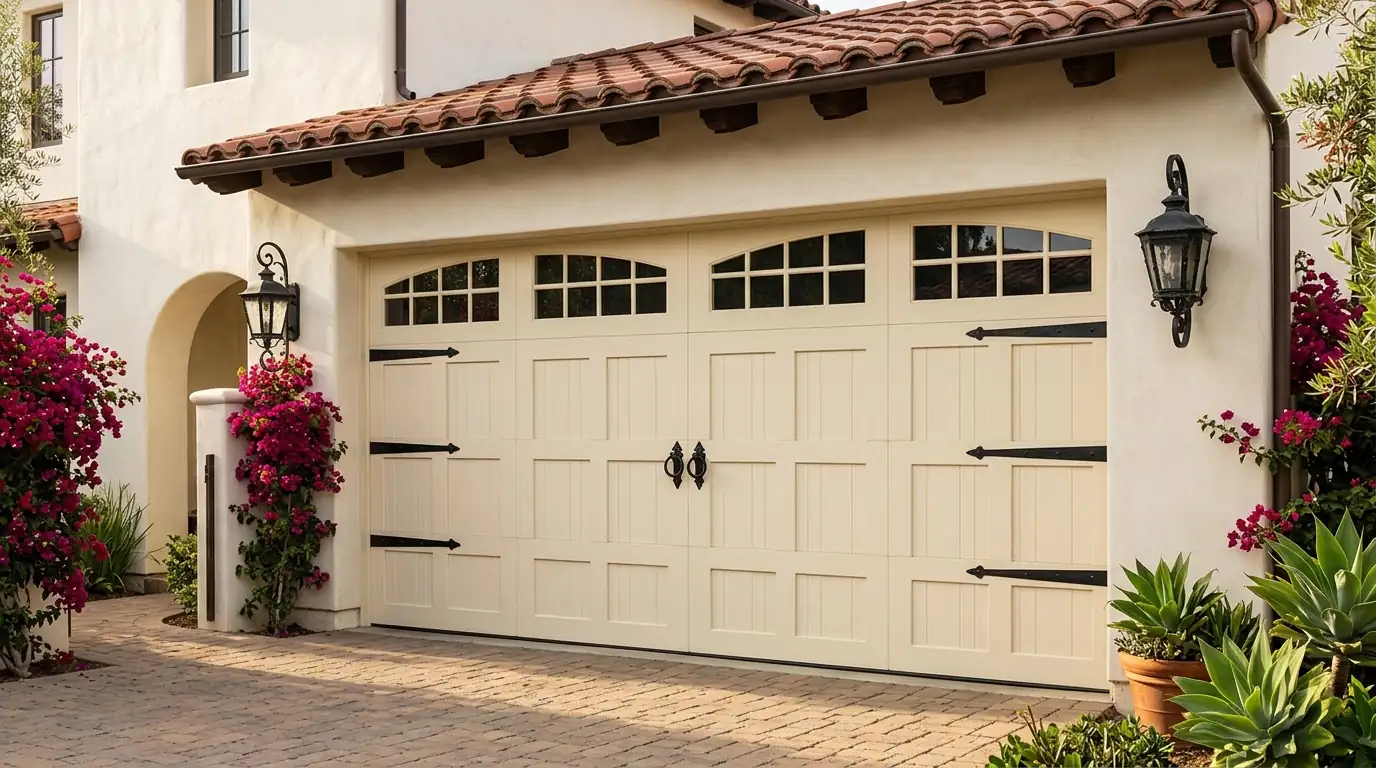
Steel carriage-style panels
Steel carriage doors use an embossed or overlay face on a steel base, often insulated and sometimes woodgrain-finished. They deliver most of the look at a moderate weight with little maintenance, which is why they are the most common carriage choice on San Diego tract and stucco homes.
Decorative hinge and handle kits
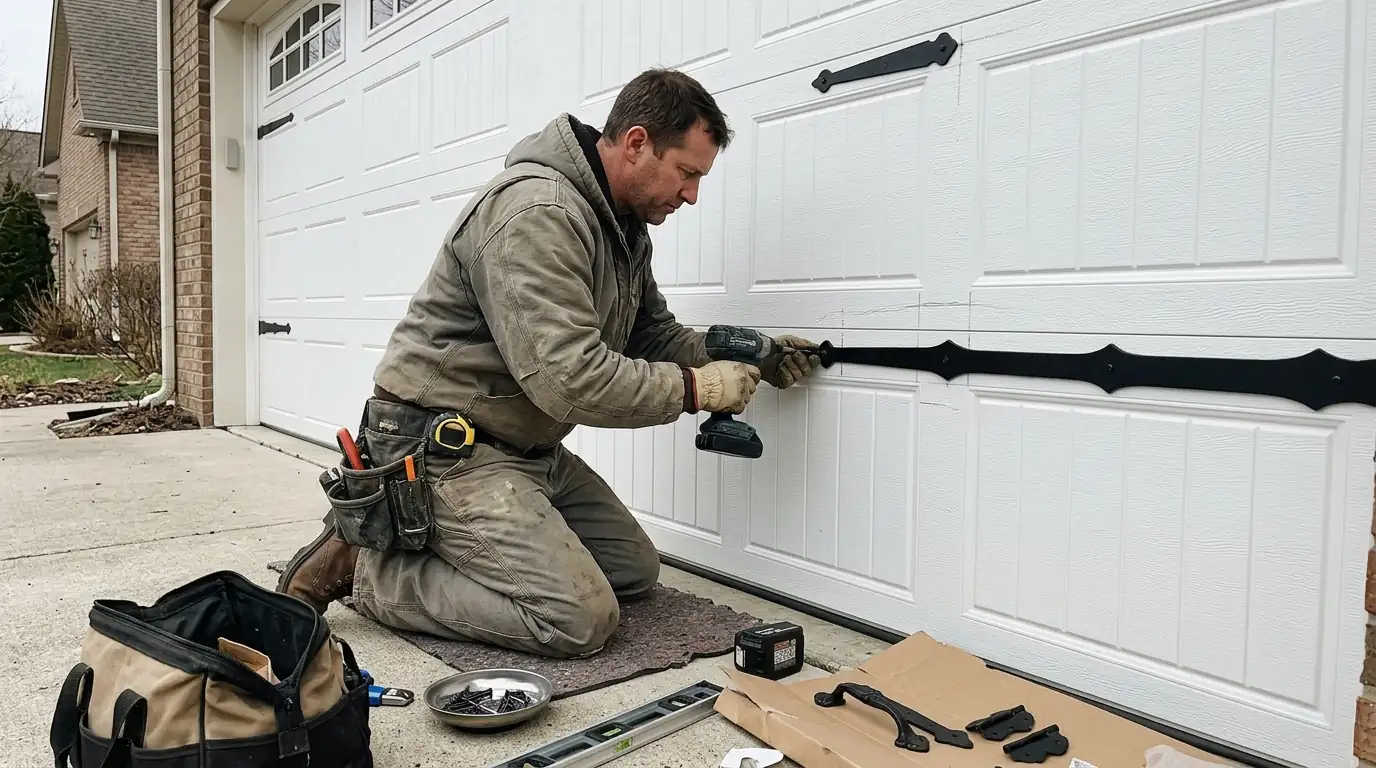
Hardware is what makes a carriage door read as one. Strap hinges at the meeting edges, ring or spade pulls at the center and clavos studs all suggest a door that swings even though it lifts. We place them so they look right with the door closed and never interfere with the sections folding past each other on the way up.
Arched and square-top designs
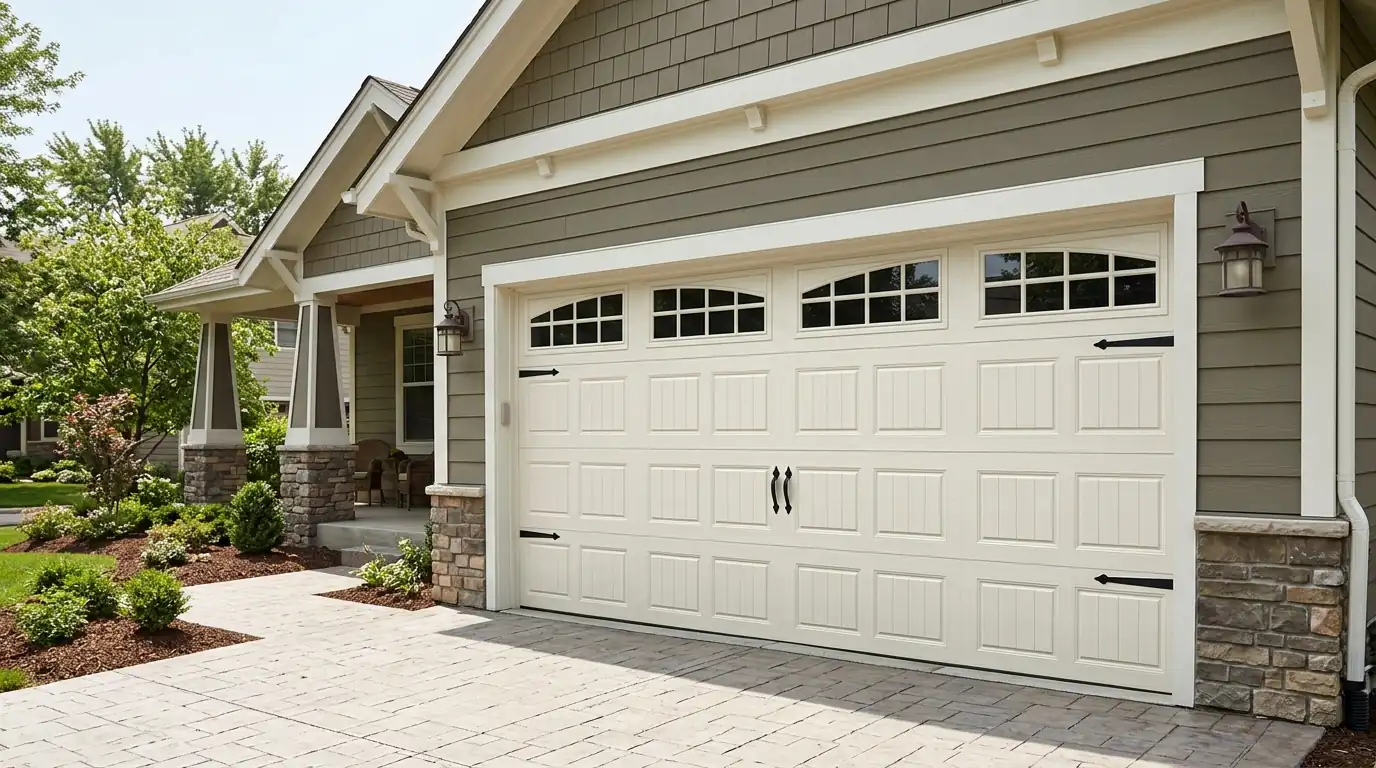
An arched top section or arched window line can echo the arched entries common on Spanish and Mediterranean-style homes; a square top with a simple light row suits Craftsman and farmhouse looks. We study your front elevation before recommending either, because the door should match the house rather than the brochure.
On the job
A natural fit for the mid-century streets
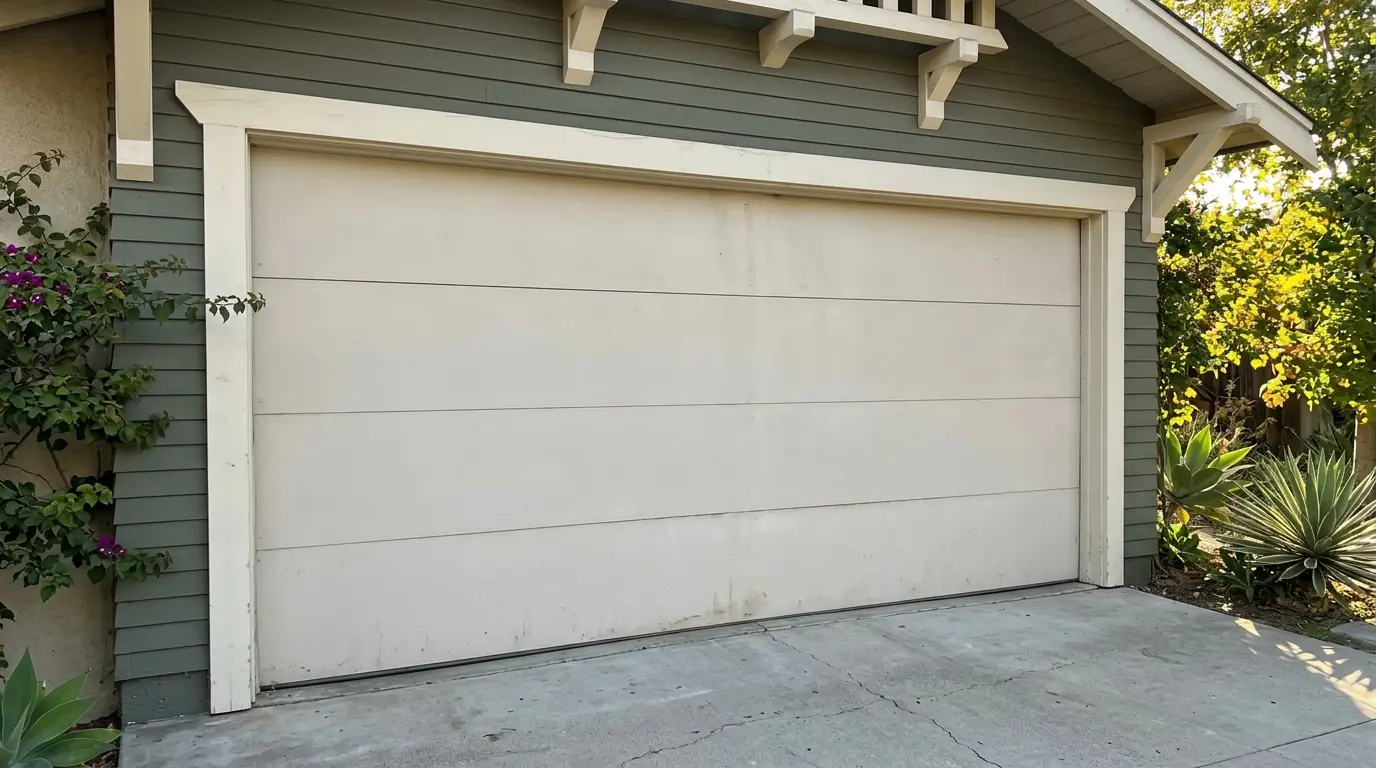
More than a quarter of San Diego's housing went up between 1940 and 1969, and many of those streets still have proportions and detailing that suit a carriage-style door. Where a one-piece tilt-up still swings out over the driveway, a carriage-style sectional is often the most natural replacement: it keeps the vintage character while removing the clearance problem and the pivot-spring hazards of the original door.
What a carriage house door costs
Carriage doors fall within the general replacement spectrum, HomeAdvisor's $400 to $10,000 range with about $1,500 typical, but they tend to price above a plain steel door of the same size because of overlays, hardware and windows. What moves them:
Questions callers ask about this job
These do not; they lift overhead like any sectional door and run on a standard opener. True swing-out carriage doors exist, but they need driveway clearance and cannot use a conventional opener, which is why the lift-up style dominates.
Hardware adds little; overlays and wood add more. We size the springs to the finished door's actual weight, so the door stays balanced and the opener is not overworked.
Often, with a simpler overlay and minimal hardware. On very contemporary homes a glass or flush steel door may suit better, and we will say so.
Steel is lighter, lower-maintenance and less expensive; real wood looks richest up close and needs regular refinishing. Composite overlays sit in between.
Yes. Decorative hinge and handle kits can dress a plain door. They will not create overlays, but they noticeably change the look for a small cost.