Wood garage doors are built from solid wood or wood overlays on a frame, and they are heavier and more maintenance-intensive than steel. Real wood suits Craftsman, Spanish and custom homes where texture matters at close range. Because of the weight, springs and openers must be sized for the door. If the upkeep gives you pause, woodgrain steel or composite doors deliver much of the look with less work.
What the visit covers
- Species, pattern and finish discussed for your exposure
- Door weight confirmed so springs and opener are sized correctly
- Sealing guidance before and after installation
- Track, springs and hardware installed new
- Opener paired or upgraded for the added weight
- Old door removed and hauled away
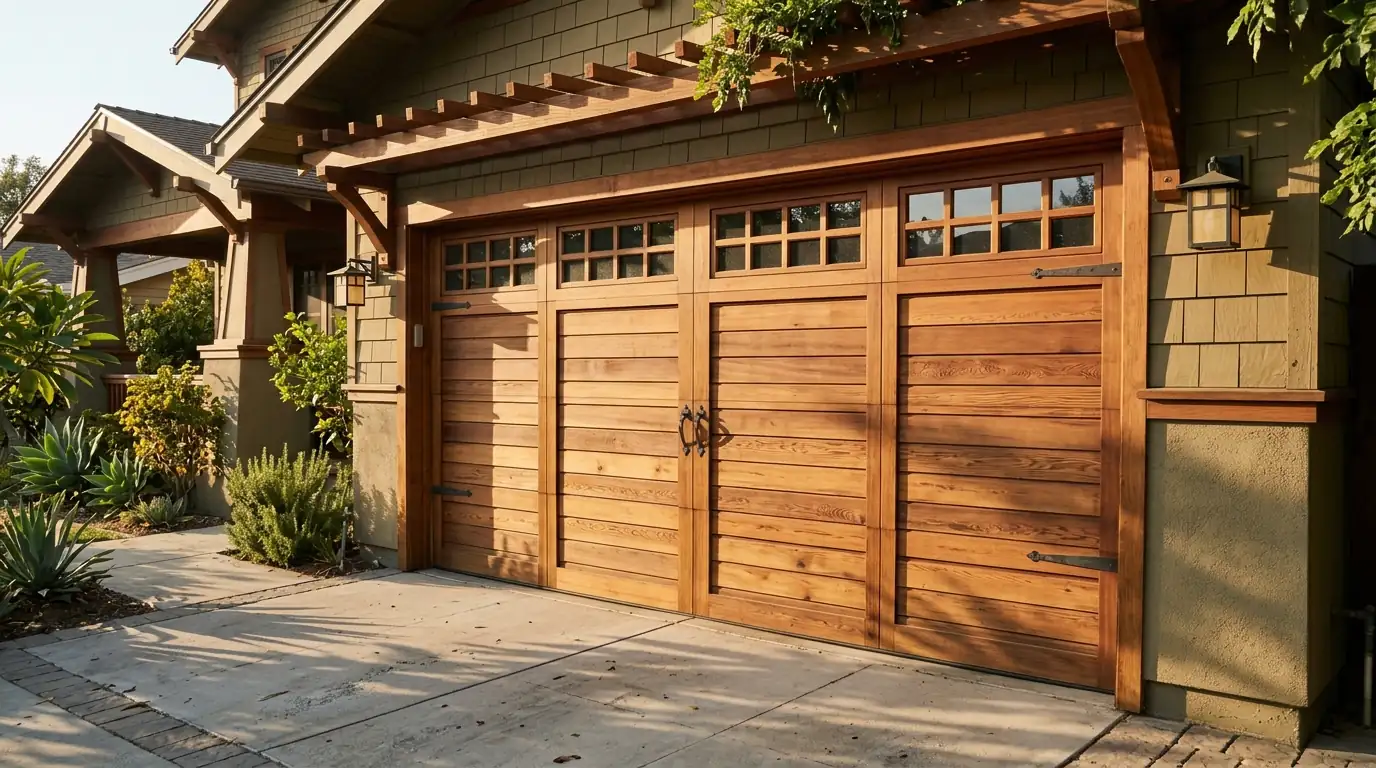
Cedar and redwood overlays
Western red cedar and redwood resist decay better than many species and take stain beautifully. Overlay construction lays boards over a stable core, which helps the door resist warping while showing real grain at the curb. They are popular on Craftsman and custom homes where the door is seen up close.
Refinishing-ready stain-grade doors
Stain-grade doors arrive ready for your chosen finish. That finish is what protects the wood, so it has to be applied correctly on every face, edges included, and renewed on a regular schedule, more often on sun-facing walls. We explain the routine before you choose, because a neglected wood door ages quickly.
Faux-wood alternatives
Woodgrain steel and composite doors mimic the look with far less maintenance. They will not match real cedar at arm's length, but from the street many are convincing. For owners who want warmth without a refinishing calendar, they are the practical middle ground.
On the job
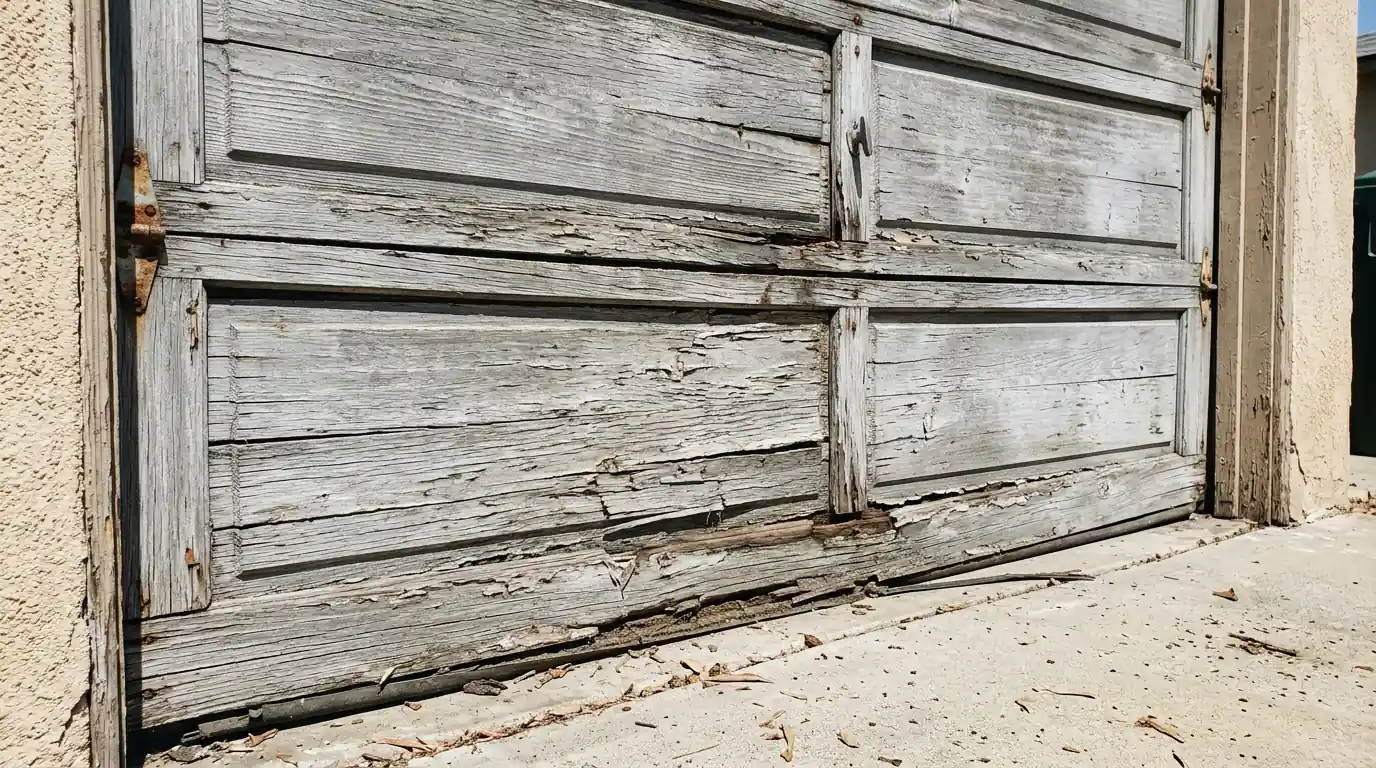
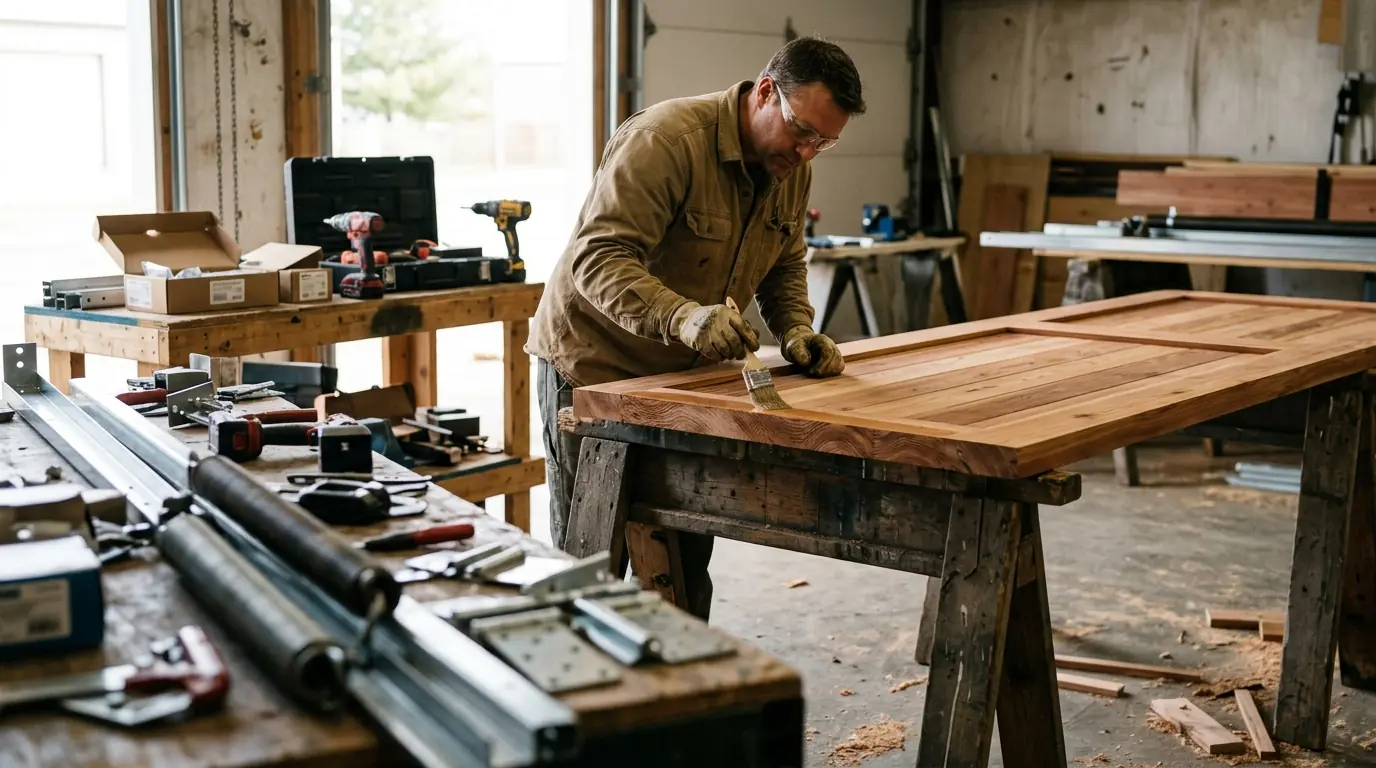
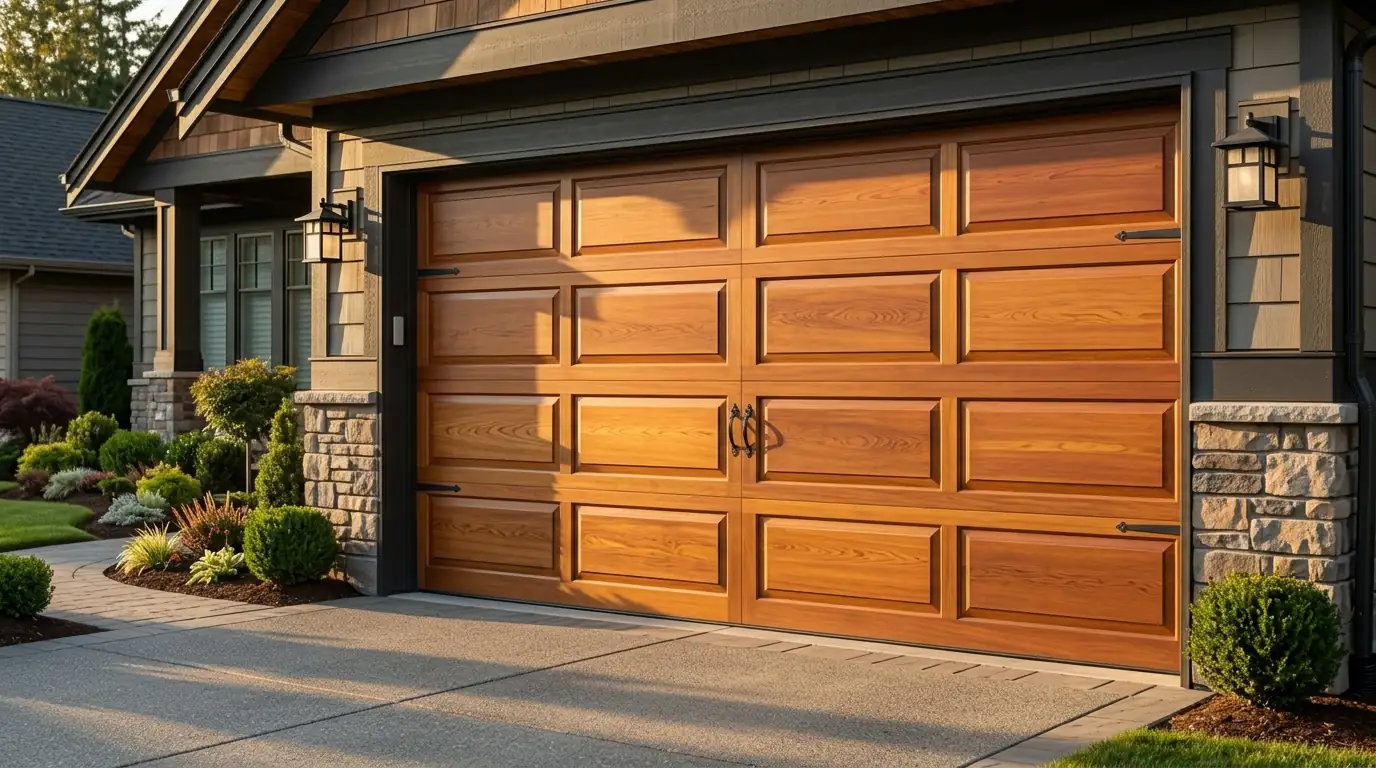
Wood in a mix of sun and sea air
San Diego garage doors face different conditions by distance from the coast: salt air near the water, gentler exposure in central neighborhoods, and stronger sun and heat inland, as regional service experience shows. Wood responds to all of it. Coastal moisture and salt test the finish, inland sun breaks it down faster on west and south faces, and either way the protective coat is what keeps the boards sound. A wood door here is a maintenance commitment, which we say plainly up front.
What a wood door costs
Real wood typically lands toward the upper end of the replacement market: HomeAdvisor's figures run from $400 to $10,000 with roughly $1,500 typical, and Angi's numbers cited by Bob Vila center near $2,500. Solid and custom wood doors commonly price above both averages. The drivers:
Questions callers ask about this job
It depends on exposure and the finish used. Sun-facing doors need attention more often than shaded ones. Watch for fading, dry patches or water no longer beading; that is the signal to refresh before the wood itself weathers.
Possibly. Wood doors can weigh considerably more than steel. We size springs to the actual door so the opener only steers, and confirm your opener is rated for it.
Quality construction, proper sealing on all faces and regular maintenance keep movement in check, and overlay designs on a stable core help further.
Woodgrain-finish steel or composite doors. They deliver much of the look with simple washing as the main upkeep.
Often, depending on the damage. Rotted bottom sections, failed joints or warped panels may be repairable or may point toward replacement. We look first and give you both options.