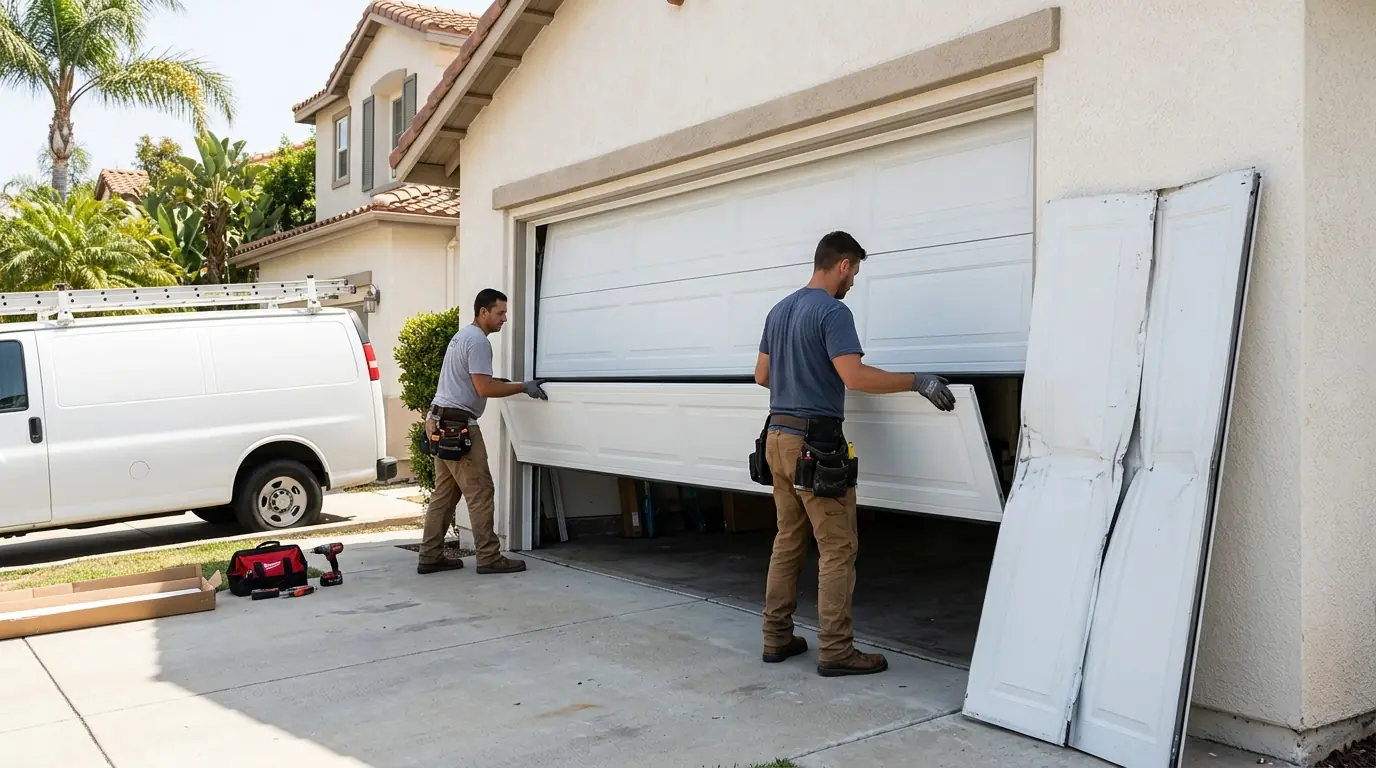
Panel replacement swaps a damaged section for a matching new one: same profile, gauge, insulation and finish where the door is still in production. The visit includes checking that the hit did not travel, because a creased panel sometimes hides bent hinges, roller stems or track behind it. When the honest math favors a whole new door, we show that number too and let you decide.
What the visit covers
- Make and model identified from the door's section stamps
- Replacement section matched for profile, color and insulation
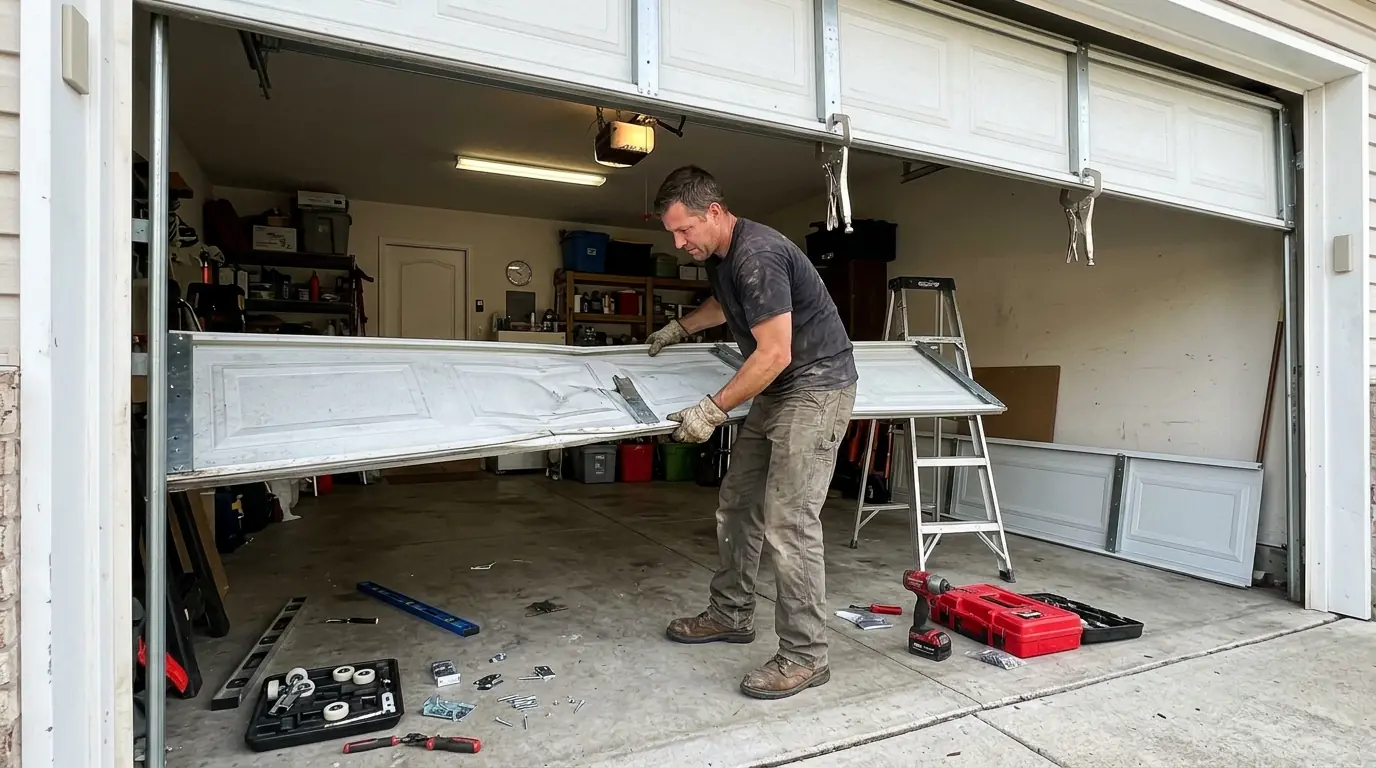
- Damaged section removed with the door safely supported
- Hinges, struts and roller stems transferred or replaced
- Adjacent sections inspected for stress the impact passed along
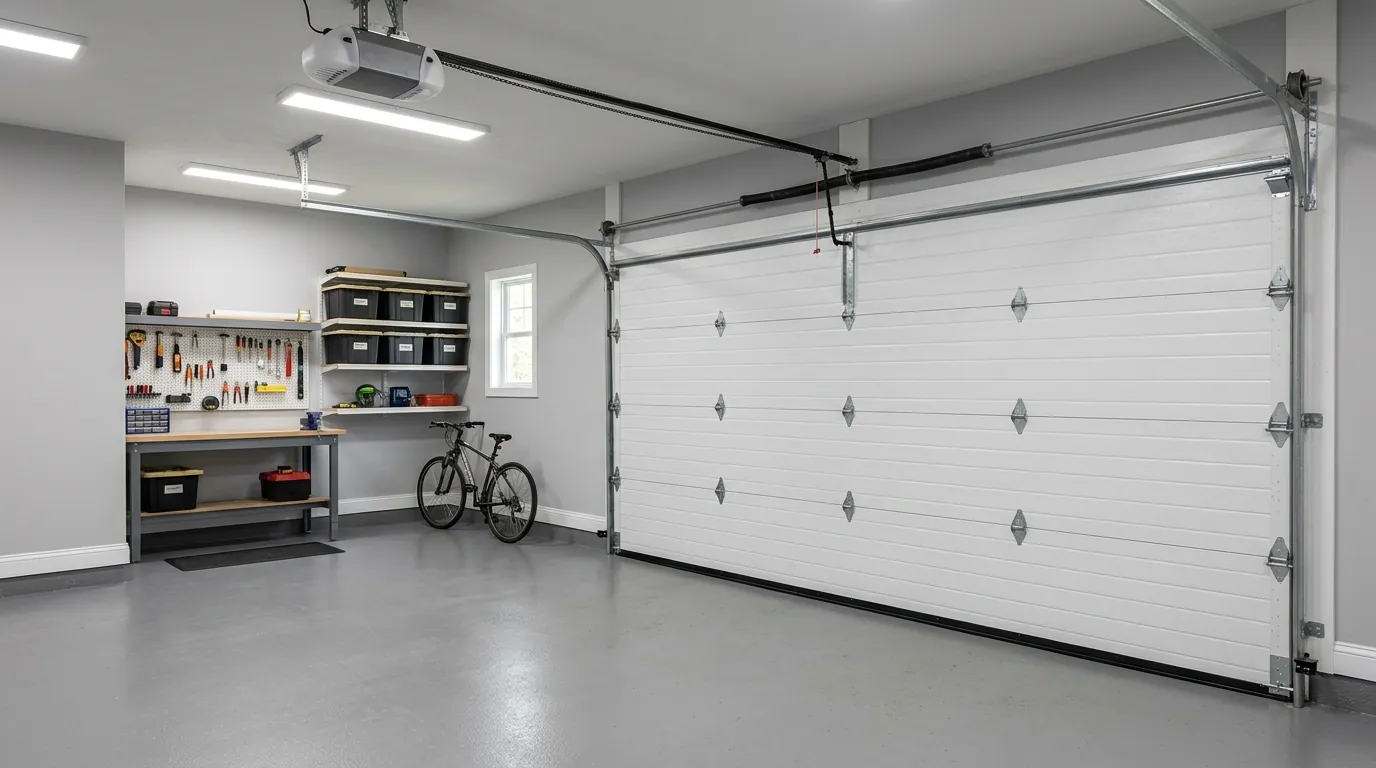
- Alignment, balance and safety test on completion
Impact damage
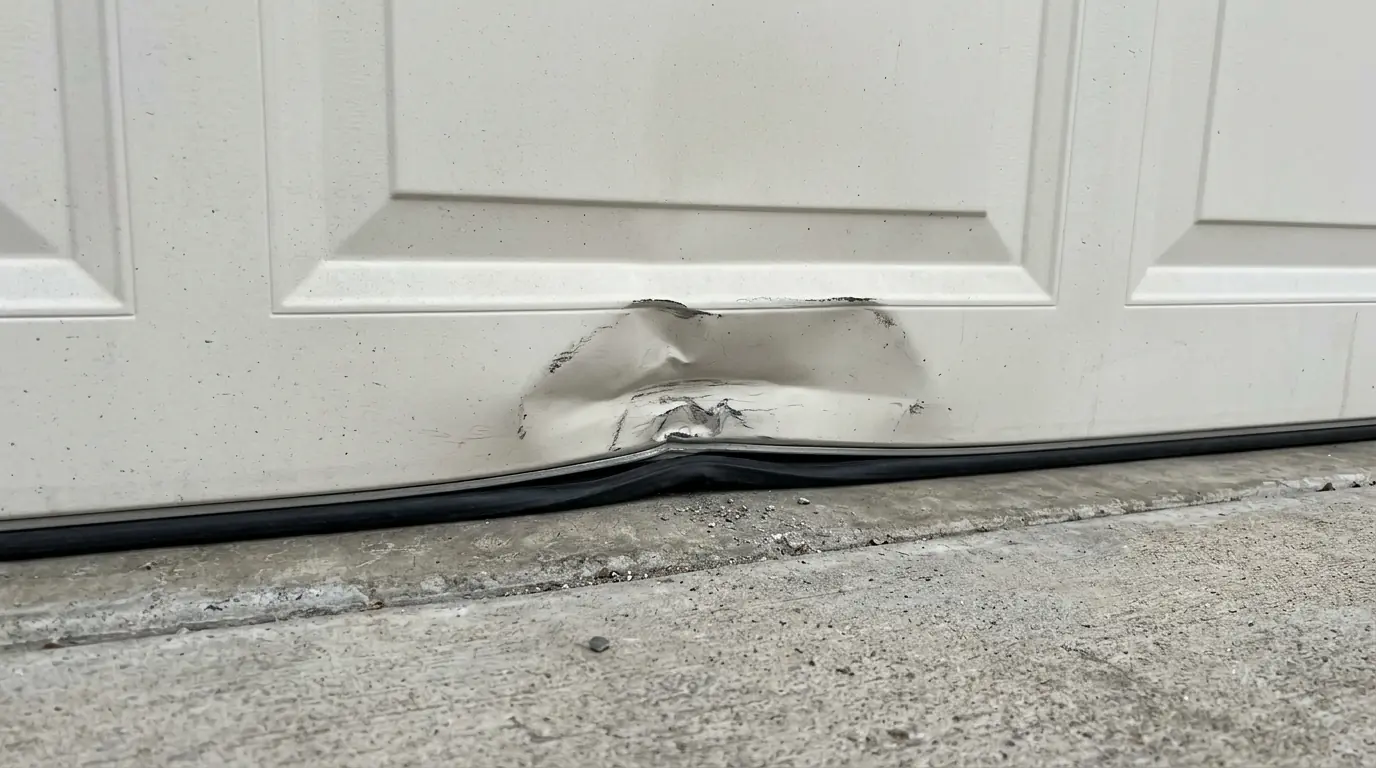
Driveway taps hit the bottom section, basketballs and bikes hit the middle ones. Cosmetic dents in steel skins can often wait; creases that fold the section's rigidity cannot, because every cycle flexes the fold and the crack spreads to the neighbors. One timely section beats three later ones.
Sun-side fade and matching
South and west faces in this climate fade, so a factory-fresh panel on a ten-year-old door can read half a shade off on day one. We tell you before ordering, match against the manufacturer's current chart, and where the gap would be obvious, pricing a repaint of the full door or leaning toward replacement is the straighter advice.
Discontinued doors
Makers retire profiles, and an orphaned door narrows the options: compatible sections from surviving production runs, salvage stock, or the replacement conversation. We search before we conclude, and plenty of discontinued doors in this county are running today on correctly matched compatible sections.
On the job
Why section swaps are a San Diego staple
With the median county home built in 1980 and 71 percent of homes sold in 2024 over 30 years old, most local doors are long into careers where one section has taken a hit but the system around it is sound. Replacing that one section keeps a structurally healthy door working, and in the mid-century neighborhoods where tilt-up doors still swing, the same visit is often where the sectional-conversion conversation starts instead.
What panel replacement costs
A single in-production section typically lands between HomeAdvisor's $250 average repair and the low end of its $400 to $10,000 full-replacement spread, which is exactly the gap that makes section swaps worthwhile. The variables:
Questions callers ask about this job
Yes, and it is the most-replaced section on any door, taking both the bumper taps and the ground moisture. If your model is current, a matched bottom section with new bottom seal is a routine visit.
On a newer door, closely. On a sun-faded one, we check the real gap against current factory finishes and tell you before ordering rather than after installing. Honest previews beat two-tone surprises.
A shallow cosmetic dent in a flat area, often yes. A crease across the section's ribs, no; that fold is a hinge the panel was never designed to have, and it works itself larger every cycle.
We check rather than assume: hinges, stems, track plumb and the neighboring sections' rigidity. A section swap that ignores a bent stem re-books itself within the month.
Multiple damaged sections, rust-through at the skins, or a discontinued door with no compatible stock. We put both numbers side by side; on a close call you will hear which one we would pick at our own house.