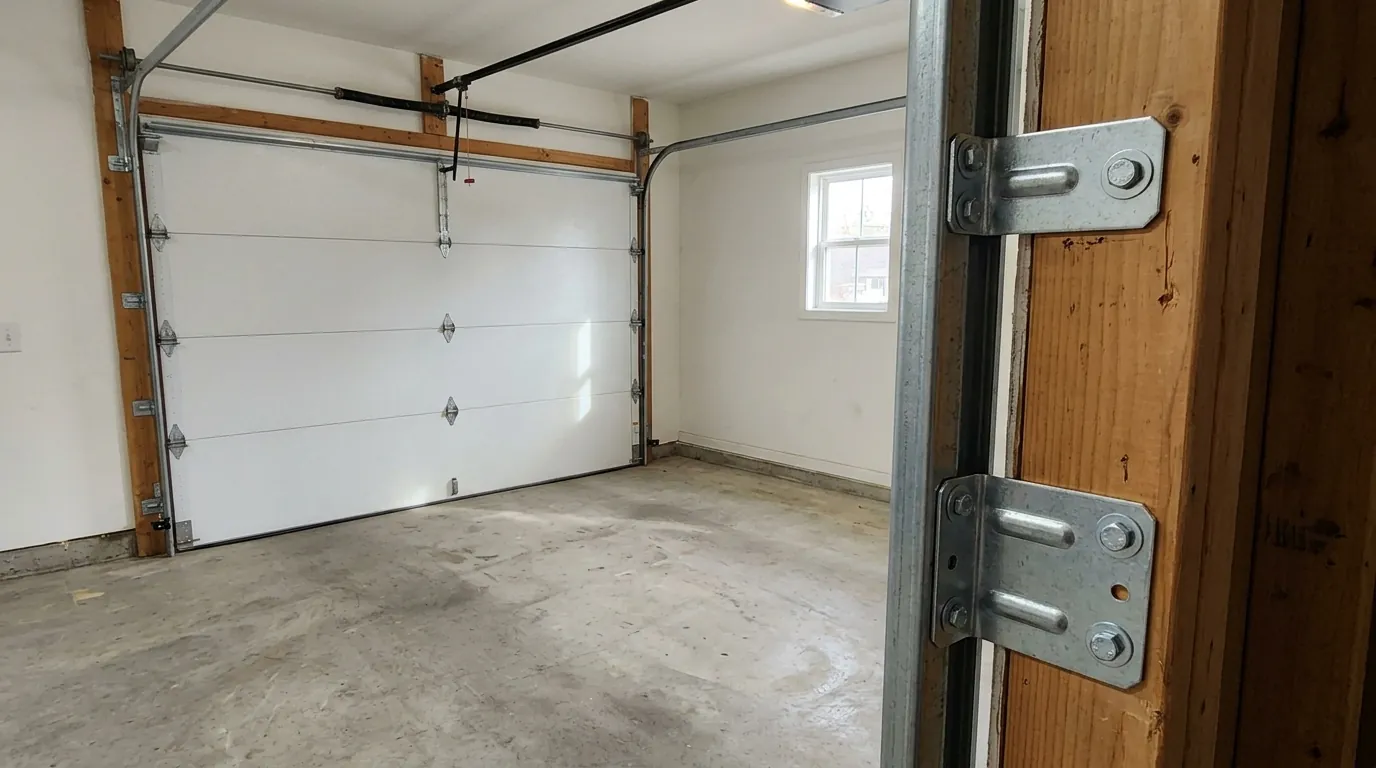
Track repair restores the geometry the door rides on: verticals plumb, horizontals level and properly supported, curves smooth, and the gap between track and door even top to bottom. Minor bends get straightened in place; kinked or rust-pitted runs get replaced, because a roller crossing a flat spot pounds the whole door every single cycle.
What the visit covers
- Both track runs checked for plumb, level and spacing
- Dents and minor bends cold-straightened in place
- Kinked or corroded sections replaced with matching-profile track
- Loose lag bolts and track brackets refastened into sound framing
- Horizontal track rear hangers checked and reinforced
- Roller fit verified through the full travel after adjustment
Bent and dented rails
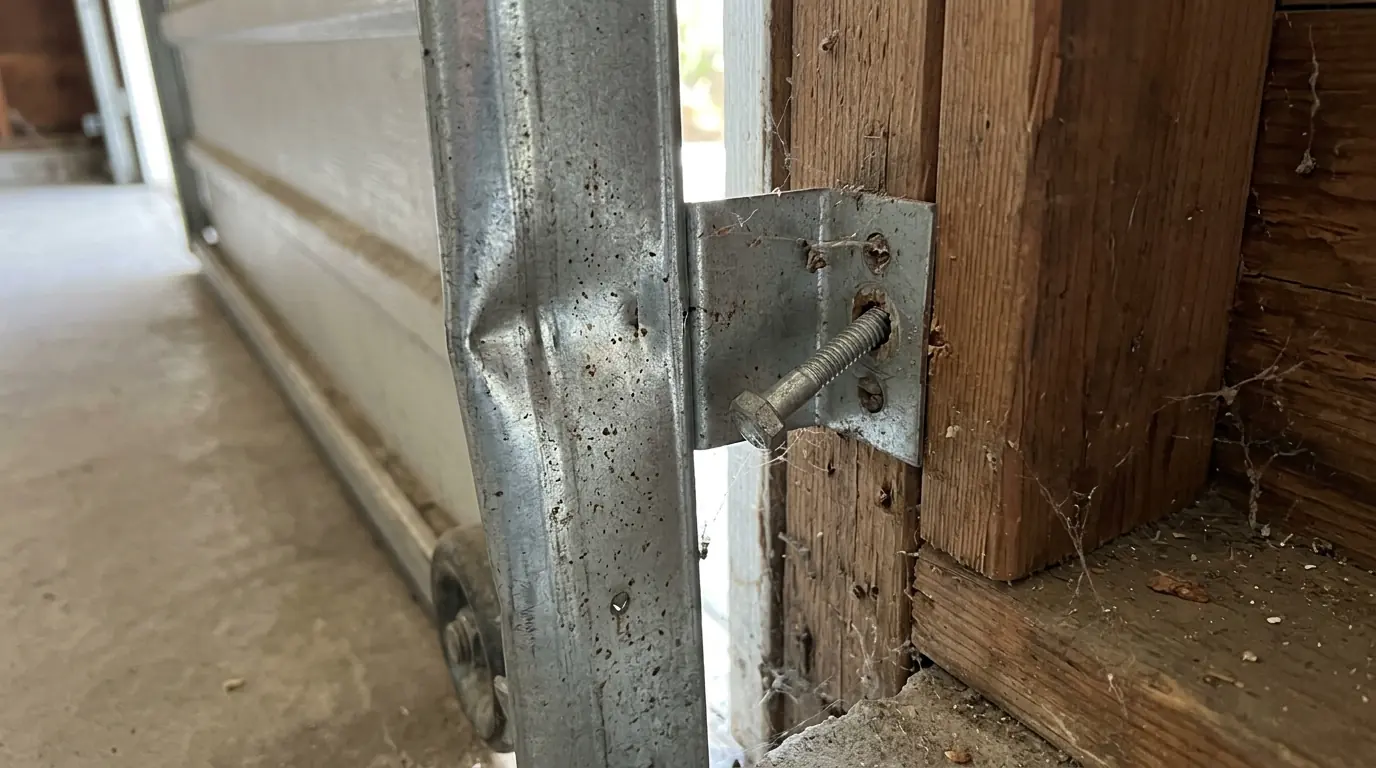
A ladder leaned on the track, a trash bin shoved past it, a car mirror clipping the vertical: small hits leave dents a roller must climb over forever after. Most single dents straighten in place with the right tools. A crease or kink is different; steel folded that far will not hold shape, and that section gets replaced.
Alignment and spacing drift
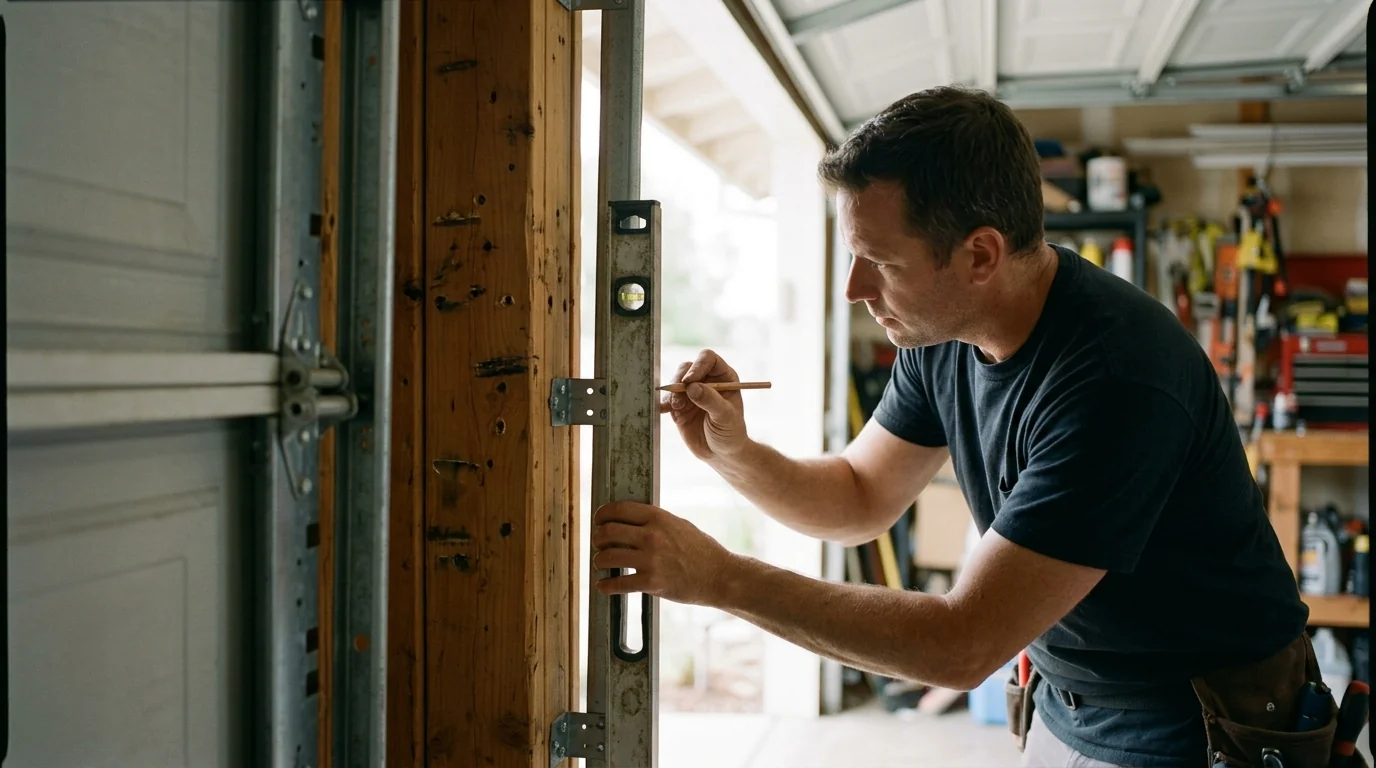
Track does not have to be hit to go wrong. Years of vibration back the lag bolts out of the jamb, the verticals lean, and the door starts binding at the same height every run. Re-plumbing, re-gapping and refastening into solid wood is a precision job with an outsized payoff: doors routinely run years younger afterward.
Rust along the coast
Within reach of the marine layer, track rusts from the inside of the curve where moisture sits. Surface rust cleans up; pitting that flakes under a thumbnail means the rail's thickness is going, and replacement beats watching a roller punch through mid-travel.
On the job
Old framing, moving targets
Track anchors are only as good as the lumber behind them, and with San Diego County's median home built in 1980, plenty of jambs have taken four decades of lag-bolt vibration, stucco repairs and the odd termite adventure. Add the city's 1940s-60s stock, over a quarter of its housing, where original wood framing has moved with the seasons, and re-fastening into sound material becomes as important as straightening the steel itself.
What track repair costs
Track work spans HomeAdvisor's typical $150 to $400 repair band: refastening and straightening at the low end, replacing a vertical pair in the middle, full track-set replacement above it. Priced at the door before work, moved by:
Questions callers ask about this job
Almost certainly. A repeatable bind at one height is the signature of a dent, a spread, or a bracket working loose right there. It is also the cheapest stage to fix it at.
Mild bends straighten properly and permanently; steel is forgiving once. Kinks, creases and repeat bends in the same spot have work-hardened and will not hold, which is when we say replace and mean it.
No, and it is a common own-goal. Grease in the track collects grit and makes a grinding paste. Lubricate rollers, hinges and springs; keep the track clean and dry.
Yes. Track profiles and radii vary by maker, and a near-match spliced in years ago explains a lot of mystery binds. We replace the odd section with correctly matched profile and the symptom goes with it.
Usually. Straightening, refastening and standard replacement rail are truck-stock work. Full-set replacements on oversized doors occasionally book a return with the longer rail.