Glass garage doors use aluminum section frames holding glass panels, typically tempered for safety. Frame finishes range from clear anodized to black and custom colors, and glazing ranges from clear to frosted, tinted and reflective. They weigh more per square foot than steel, so springs, track and opener are sized for the actual door. We help you balance light, privacy and heat gain for how you use the space.
What the visit covers
- Frame finish and glass type chosen for light and privacy
- Weight calculated so springs and opener are sized correctly
- Bottom seal and perimeter weatherstrip suited to aluminum frames
- Track and hardware installed new
- Opener paired or upgraded for the heavier door
- Old door removed and hauled away
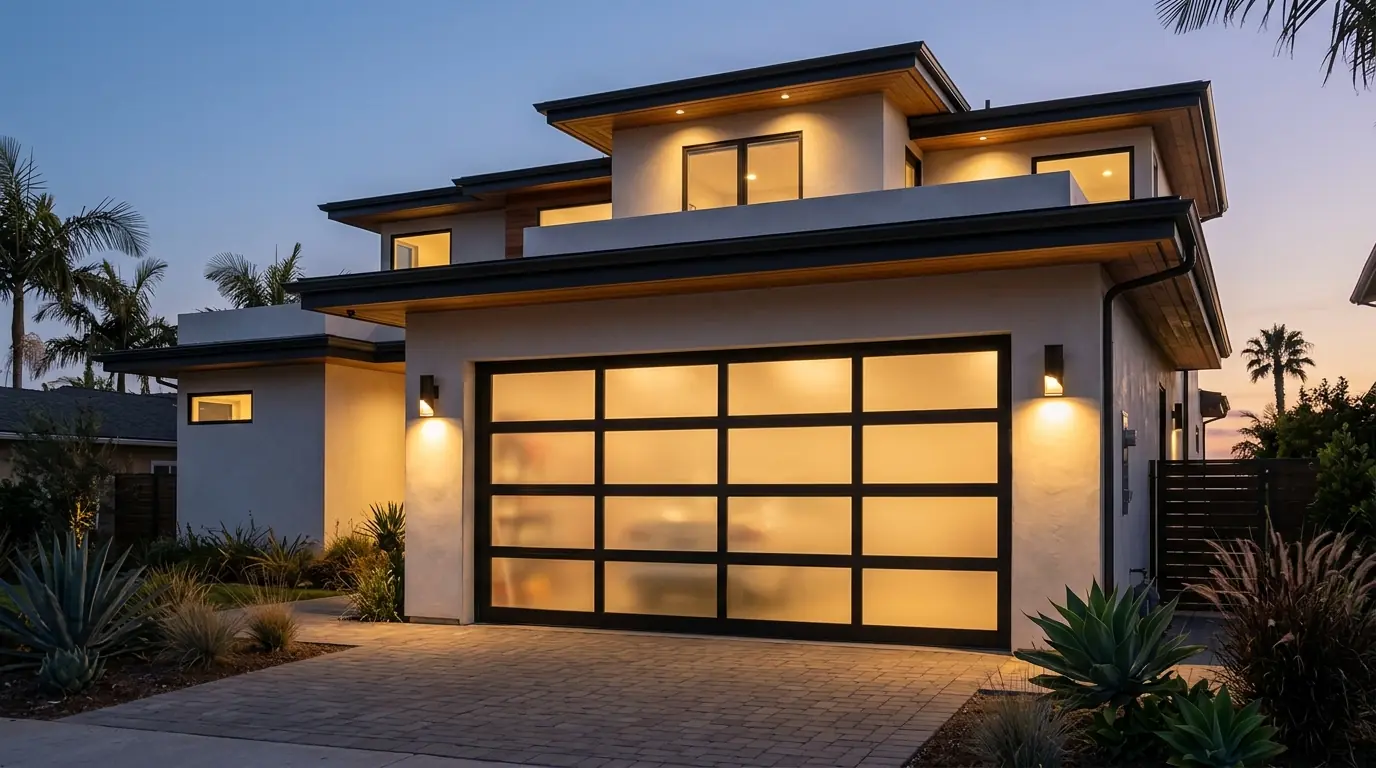
Full-view anodized frames
Clear or dark anodized aluminum is the classic full-view look: slim rails, large lites and a finish that resists corrosion well. Powder-coated colors let the frame match window trim or a contemporary palette. We review frame profiles in person, because the visual weight of the rails changes the whole facade.
Frosted and tinted glazing
Clear glass shows everything inside the garage; frosted or satin-etched glass passes light while blurring the view, and tinted or reflective glass cuts glare and heat on sunny faces. Many owners mix them, privacy glass on the lower sections and clear above eye level. The glazing controls privacy more than any other decision on this door.
Patio and indoor-outdoor openings
The same doors open a patio, a garden studio, a converted garage gym or a dining room wall to the outdoors. Those installs need attention to weather sealing, headroom and where the door stores overhead. We look at the full opening and the room behind it before recommending a configuration.
On the job
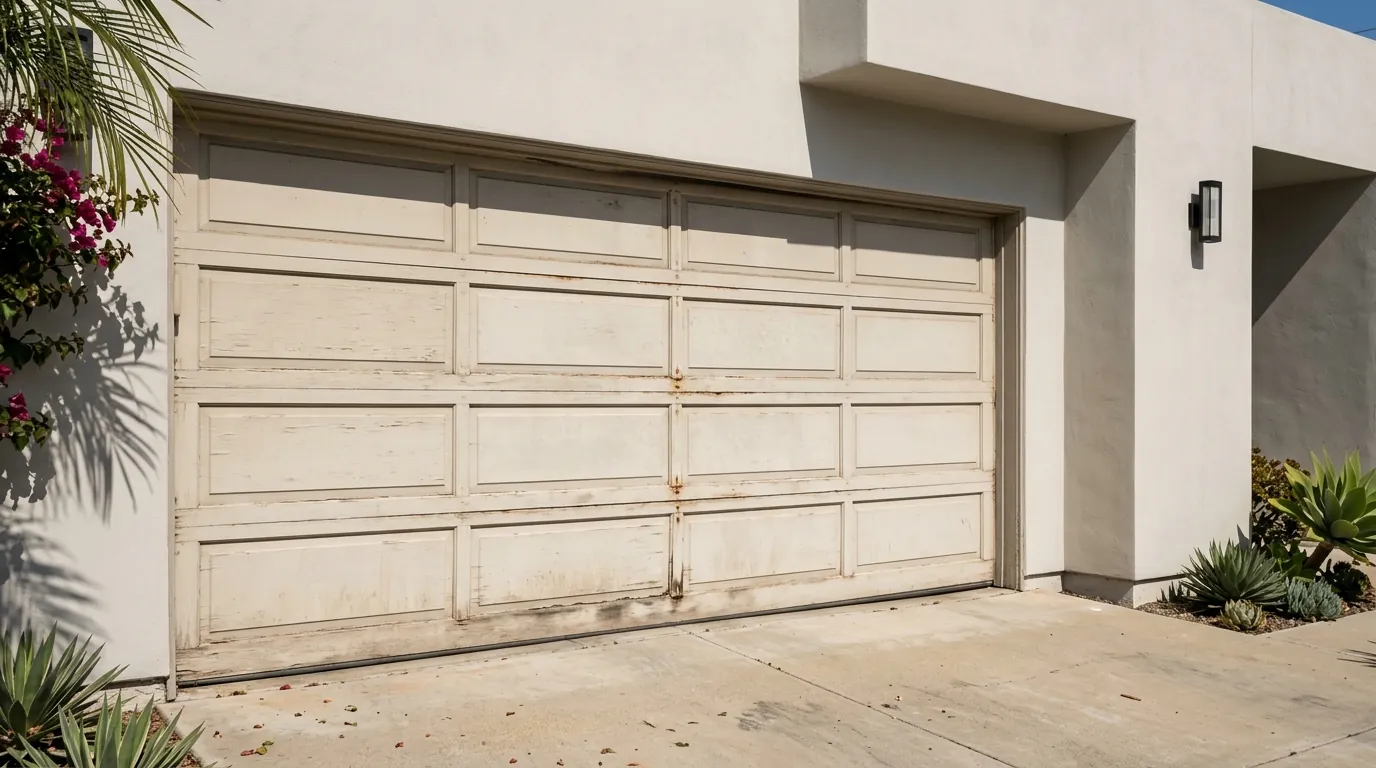
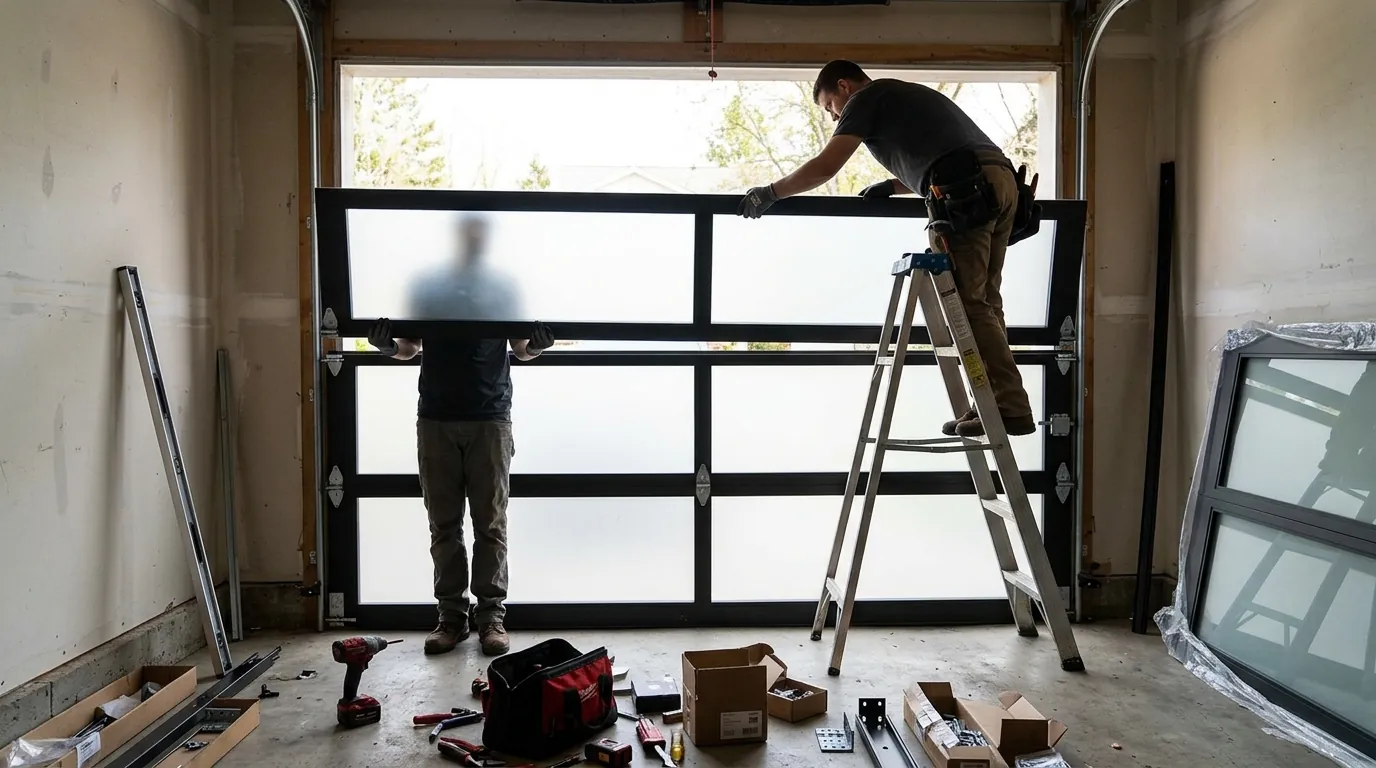
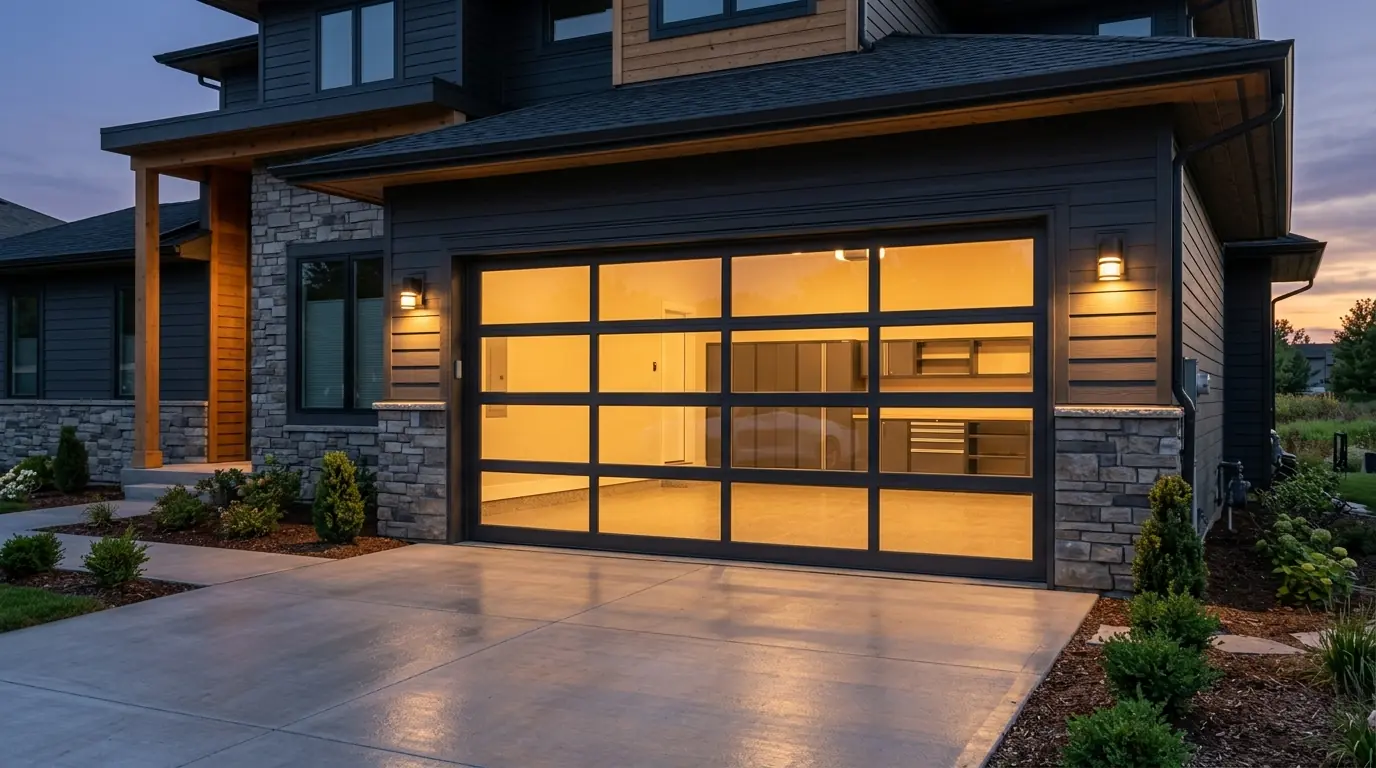
Glass doors and San Diego's microclimates
Garage doors here face different conditions depending on distance from the water: salt air on the coast, milder exposure in the central neighborhoods, and stronger heat and sun inland, as regional garage service experience reflects. Aluminum frames handle coastal air better than bare steel, though hardware and seals still need suitable materials. Inland, a west-facing glass door can heat a garage quickly, which makes tinted or insulated glazing worth discussing before you order.
What a glass door costs
Glass and aluminum doors usually sit in the upper half of HomeAdvisor's $400 to $10,000 replacement range, above typical steel doors of the same size, because of the frame system and the glass. Your total depends on:
Questions callers ask about this job
Residential glass doors typically use tempered glass, which breaks into small pieces rather than sharp shards. Laminated glass is available where extra security or impact resistance is wanted.
With clear glass, yes. Frosted, satin-etched or tinted glazing lets light in while blocking a clear view, and many owners combine privacy glass below with clear above.
They can on sunny exposures. Tinted or reflective glass helps, and insulated glazing reduces heat transfer further. We check which way the door faces before recommending.
Aluminum resists corrosion better than raw steel, especially with anodized or quality powder-coated finishes. Rinsing the door periodically still helps in salty air.
Sometimes, if it is strong enough and has battery backup. Glass doors are heavier, so we check the opener's capacity before reusing it.