High-speed doors use lightweight fabric or flexible curtains that roll up rapidly, often with soft bottom edges and designs that release from their guides on impact and re-feed automatically. They reduce air exchange and keep traffic moving at openings that cycle constantly. We size them to the opening, cycle count and environment, and service curtains, motors and controls.
What the visit covers
- Opening, traffic pattern and cycle count assessed
- Door type matched to environment, including cold storage
- Activation devices chosen for the traffic
- Safety sensing installed and tested
- Curtains, motors and controls serviced
- Impact recovery checked after installation
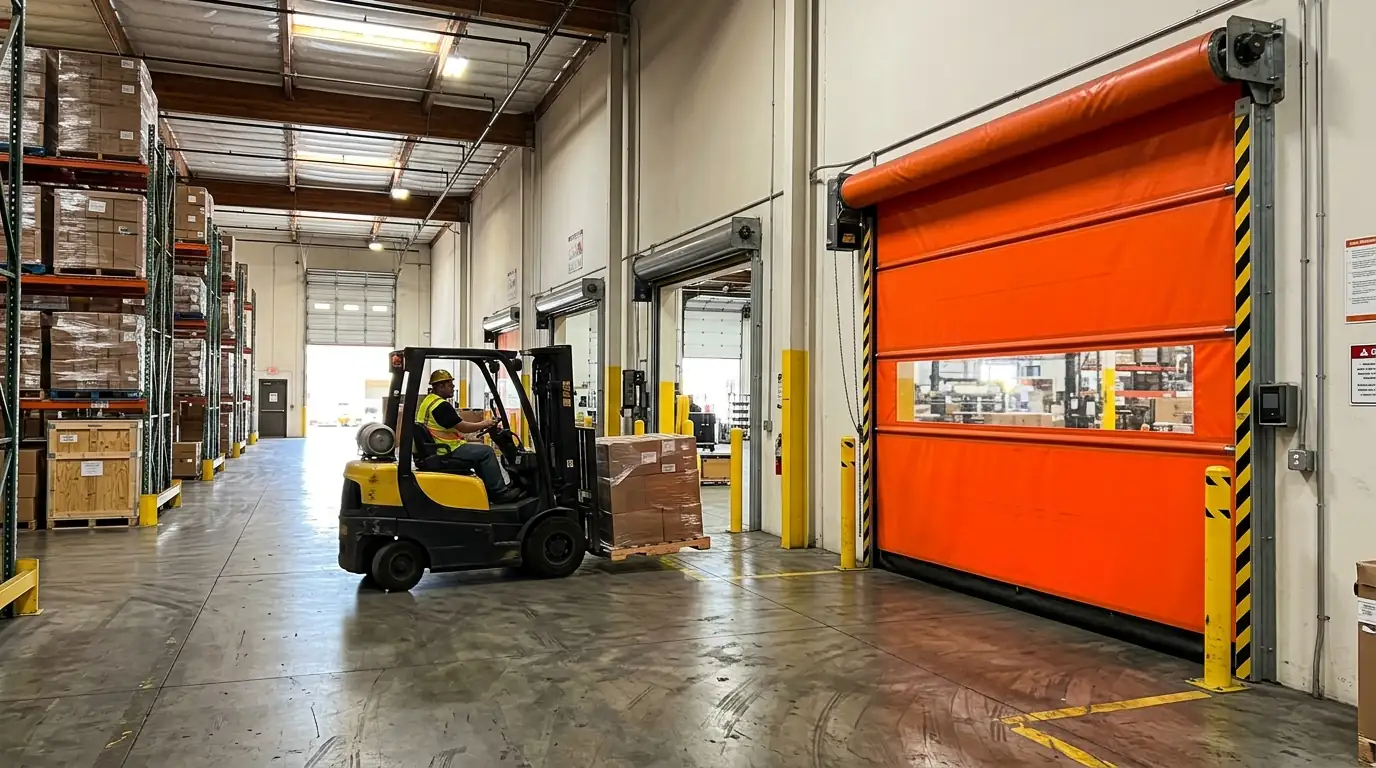
Fabric roll-up doors
Fabric roll-up doors are the standard high-speed choice for interior traffic lanes and exterior openings with frequent forklift crossings. Many have soft edges and breakaway designs that let the curtain pop out of its guides on impact and re-feed on the next cycle, which saves damage and downtime.
Cooler and freezer doors
Cold storage doors need insulated or specialized curtains and heaters or seals that keep ice from forming. Fast cycling limits warm-air intrusion, reducing frost and the load on refrigeration equipment.
Cycle-count planning
The number of cycles per day drives door choice and maintenance. We look at traffic patterns and recommend activation methods, such as motion sensors, pull cords or loop detectors, and a service schedule that fits the count.
On the job
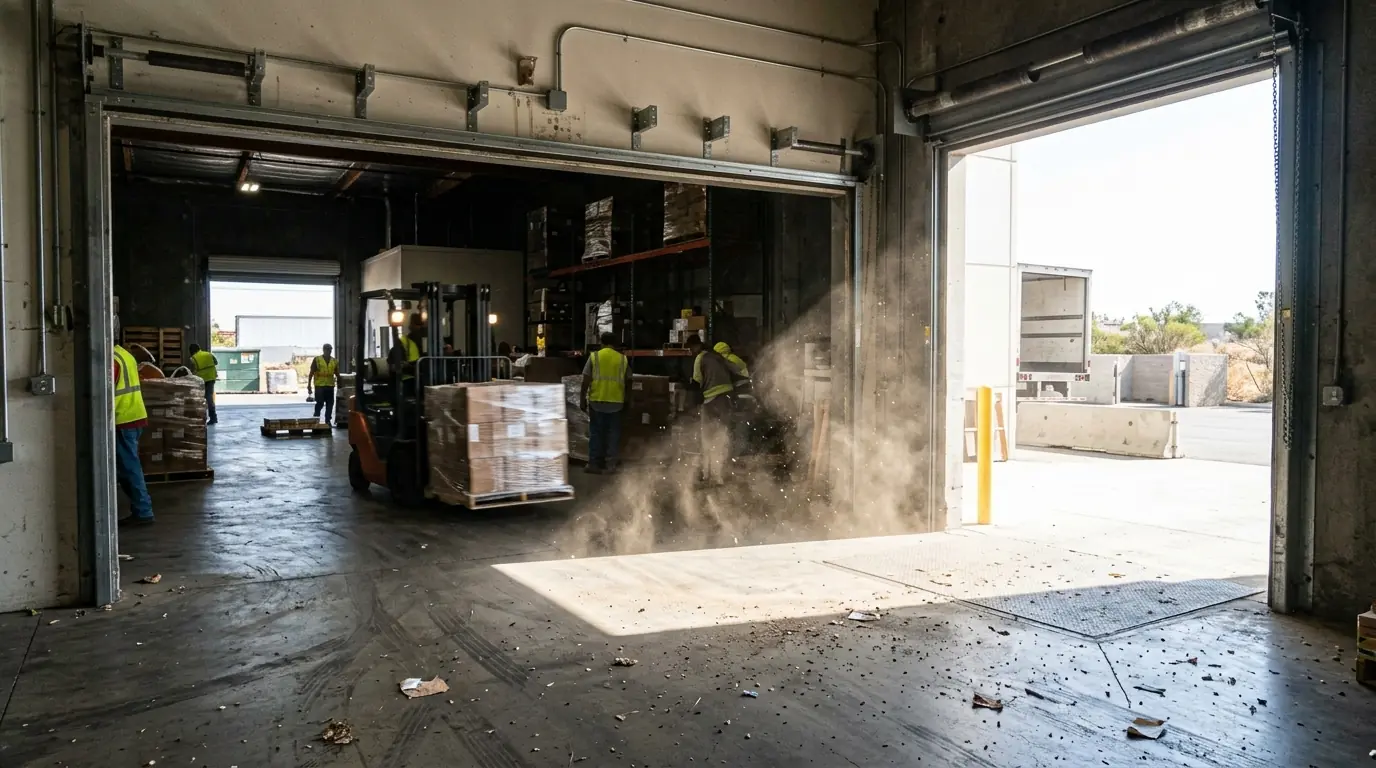
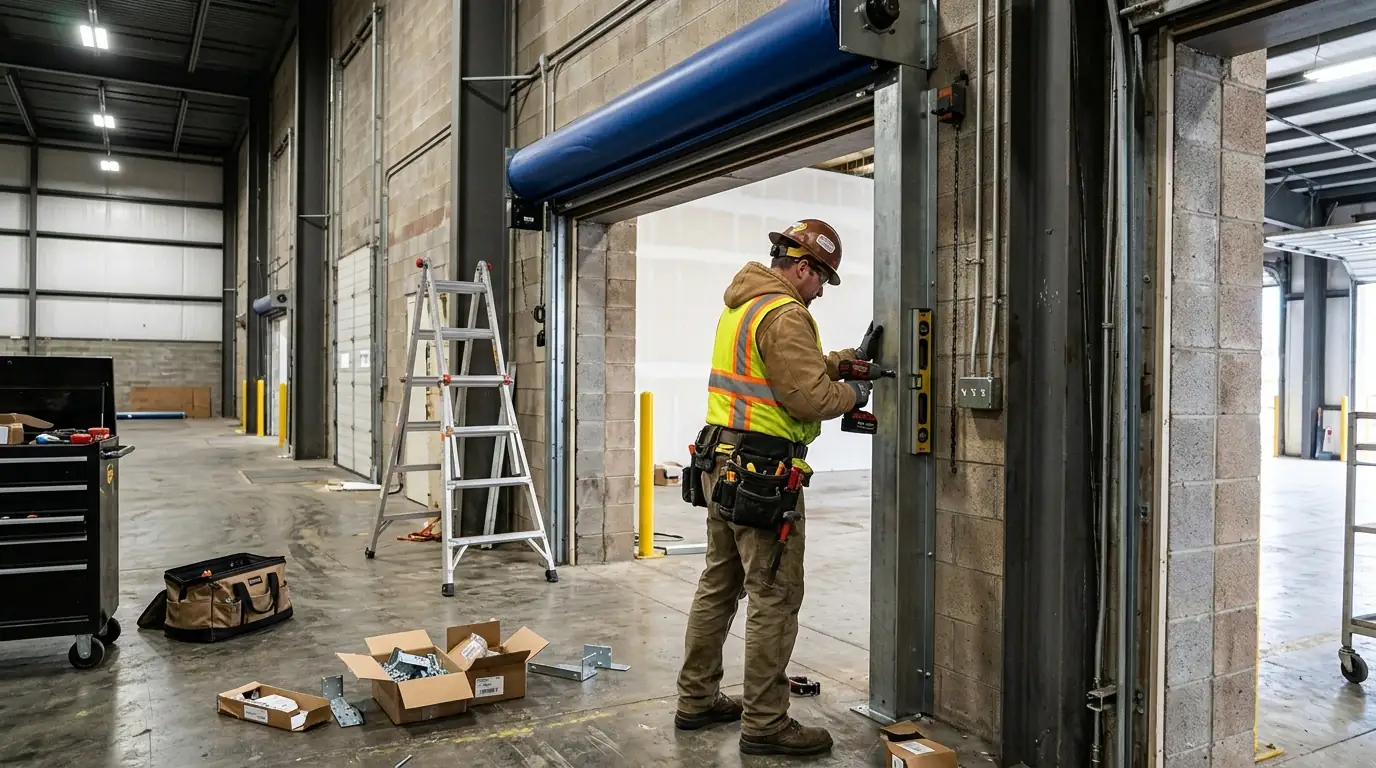
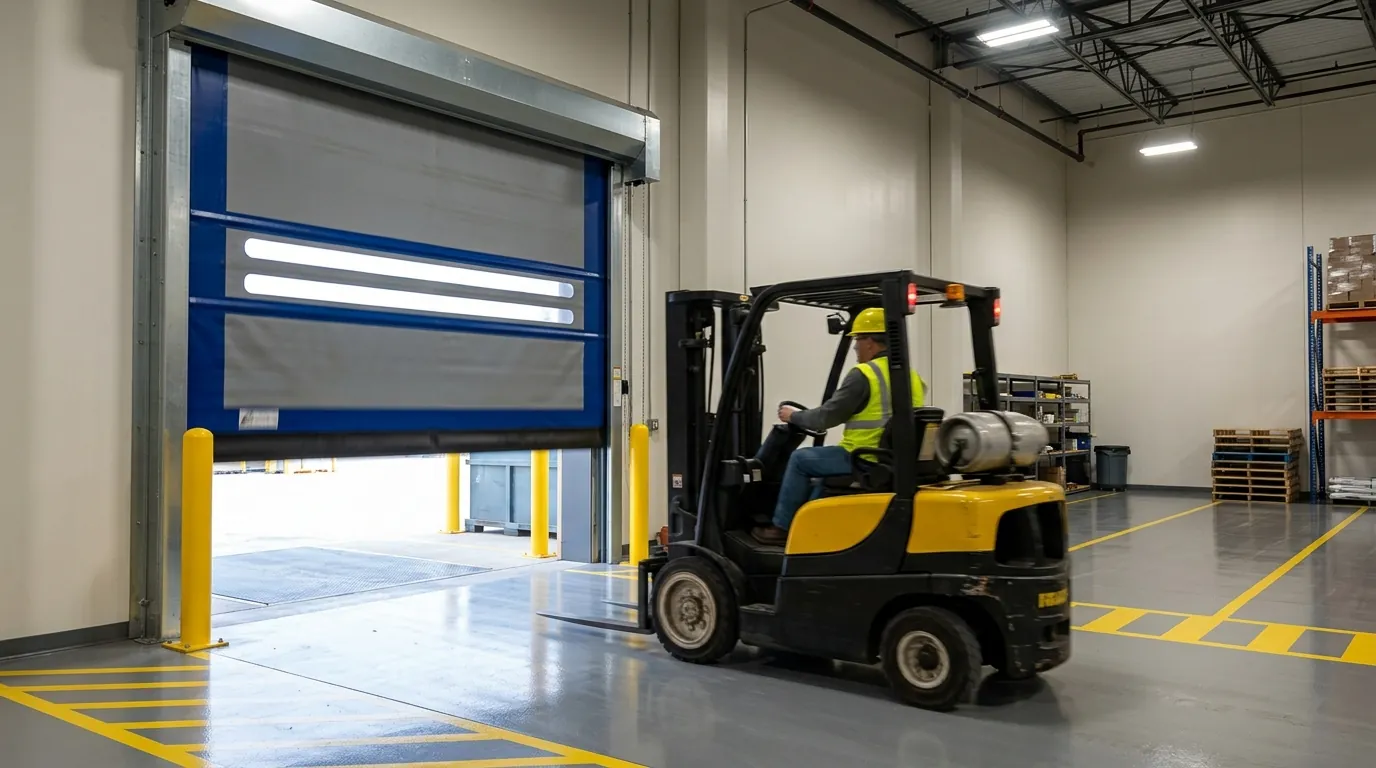
Where high-speed doors pay off
With about 213 million square feet of industrial space countywide and total vacancy near 9.4 percent in mid-2026, San Diego landlords and tenants are fitting out buildings for new uses, from distribution to life-science support space. Openings between warehouse zones, cold rooms and clean areas are where high-speed doors earn their cost, because a door that cycles in seconds keeps both the air and the forklifts moving.
How high-speed doors are priced
High-speed doors are specified to the opening and the environment, so we quote after a site visit. Service and repairs are priced after diagnosis. The main factors:
Questions callers ask about this job
They are designed to open and close in seconds, much faster than a conventional sectional or rolling door.
Many fabric designs release from their guides on impact and re-feed automatically on the next cycle, avoiding a service call for minor bumps.
Yes, with designs built for cold storage that limit air exchange and frost build-up.
They run many more cycles, so regular checks of curtains, sensors and drives keep them reliable.
Often, depending on the opening and use. We assess traffic and environment first.