A tune-up services the whole door system in one pass: rollers, hinges, bearings and springs lubricated; lag bolts, hinge screws and track brackets tightened; cables and bottom brackets inspected; spring balance checked; and opener force, travel and photo-eye reversal tested. Anything that is wearing toward failure gets named and priced, but nothing is replaced unless you say so.
What the visit covers
- Rollers, hinges, bearings and springs lubricated with the right product
- Lag bolts, hinge screws and track brackets tightened
- Cables, drums and bottom brackets inspected for fraying and rust
- Spring balance checked with the opener disconnected
- Opener force, travel limits and photo-eye reversal tested
- Worn parts listed and priced, replaced only with your approval
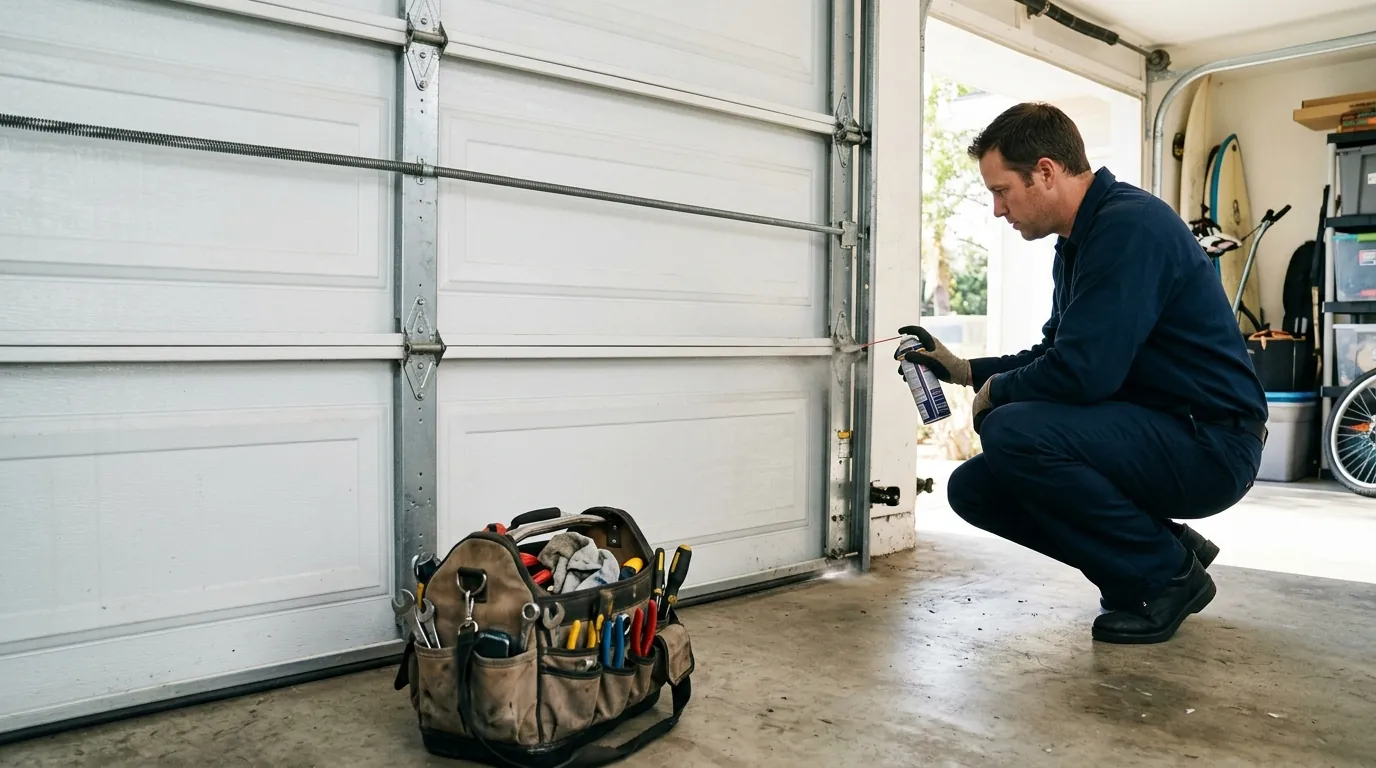
Lubrication and hardware tightening
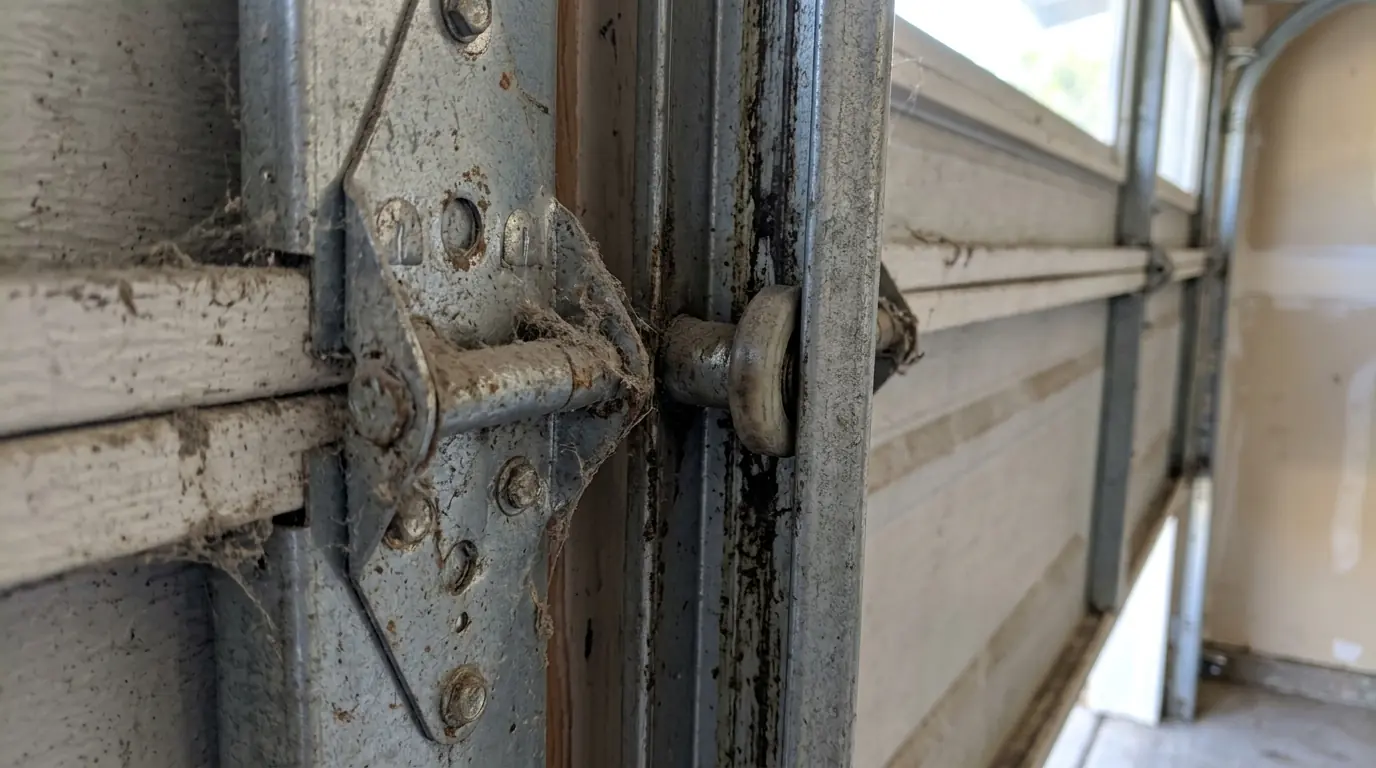
Every opening shakes the door a little, and over a year that vibration walks screws and lag bolts loose. The tech tightens every fastener in the system and applies a garage-door lubricant to rollers, hinges, bearings and the springs themselves. The track stays clean and dry, because grease there only collects grit.
Balance and force testing
With the opener disconnected, the door should stay put at waist height. If it creeps down or flies up, the springs have drifted and the opener has been quietly carrying the difference. Restoring balance and resetting the opener's close force is the single most valuable step of a tune-up, because it protects both the motor and anyone standing under the door.
Quieting a noisy door
Squeaks, rattles and the morning grind usually come from dry bearings, loose hinges and tired rollers. Most of that noise disappears with lubrication and tightening alone. If it does not, the tech tells you which parts are the source, often the rollers, and what a quiet-running upgrade would cost.
On the job
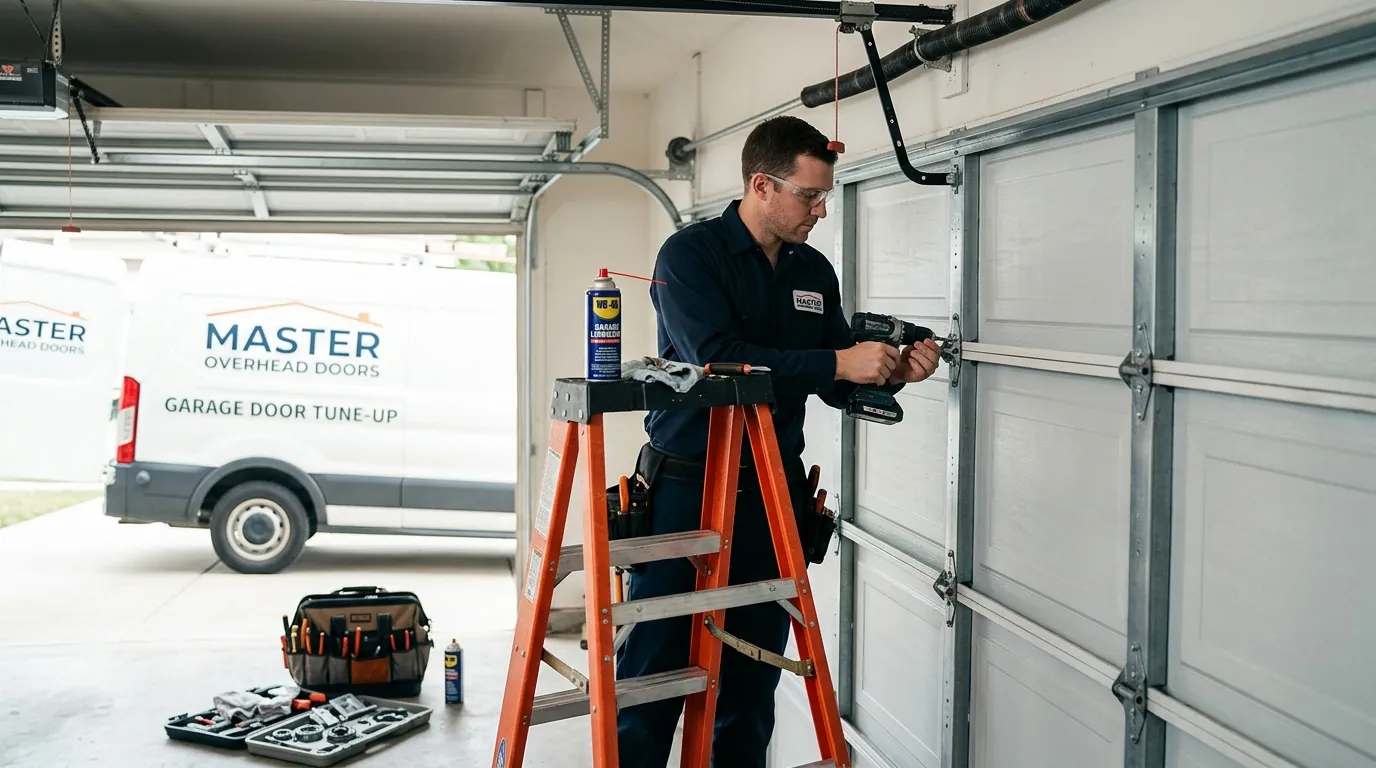
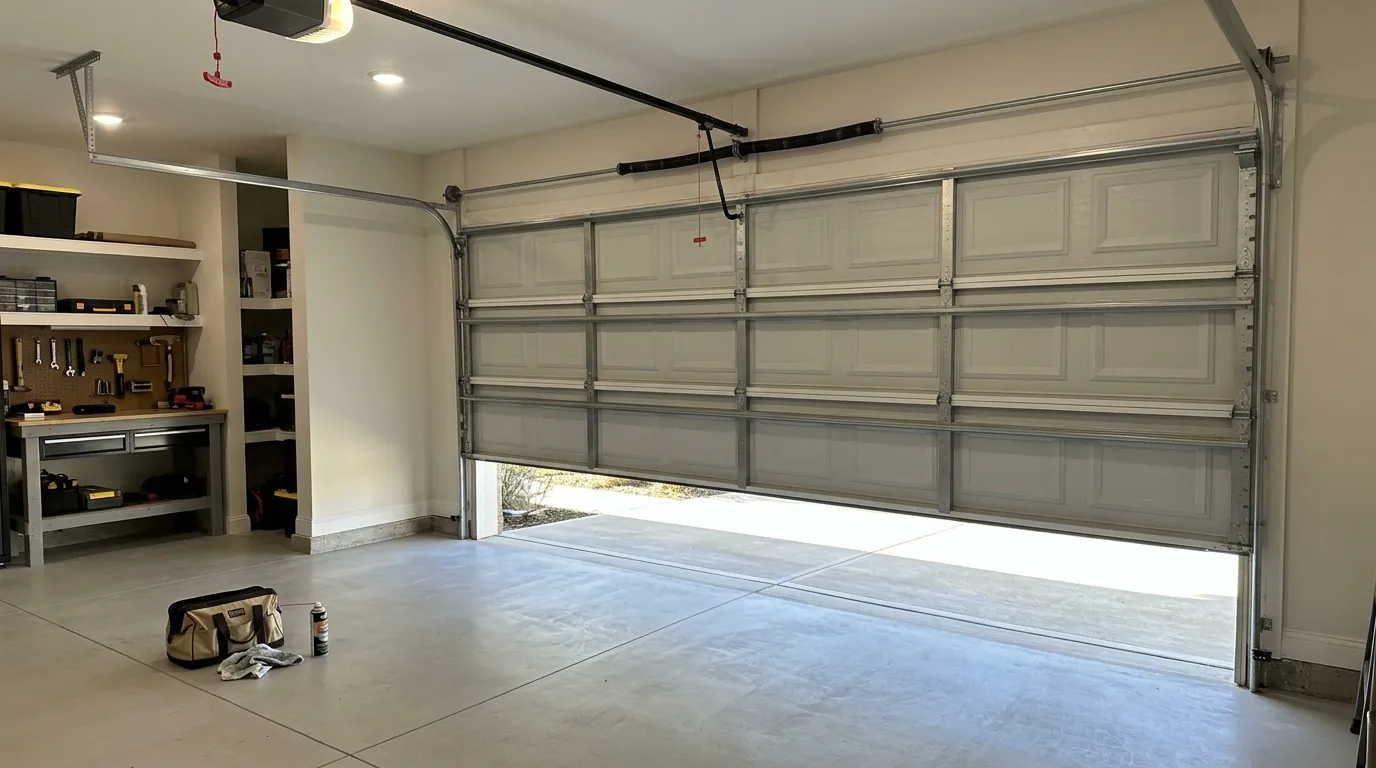
Forty years of cycles adds up
Roughly one in five homes across the San Diego metro dates from the 1970s, and the county's housing as a whole skews older than its fresh stucco suggests. On doors that age, the springs, rollers and bearings have run tens of thousands of cycles. A yearly tune-up is how those doors keep running quietly instead of announcing their age with a snapped spring on a weekday morning, and in coastal neighborhoods it is also the visit that catches rust on cables and brackets early.
What a tune-up costs
A tune-up is priced below a typical repair ticket, which HomeAdvisor puts at $150 to $400 nationally with about $250 average. Most households spend far less on a yearly service than on a single spring or cable failure caught too late. The price shifts with:
Questions callers ask about this job
Once a year suits most homes. A door that runs many times a day, or one close to the coast, benefits from a visit every six months.
Yes, between visits, as long as it is a garage-door or silicone lubricant on rollers, hinges and springs, never grease in the track. What you cannot do safely is adjust spring tension, which is the part of a tune-up that matters most.
Very often. Most noise comes from dry bearings and loose hardware. If parts are worn beyond lubrication, the tech identifies them and quotes the upgrade.
Only with your approval. You get a list of anything worn and a price for each item before any part is changed.
Especially on an older door. Original springs and rollers are where the surprises live, and a tune-up is the cheapest way to find them before they fail.