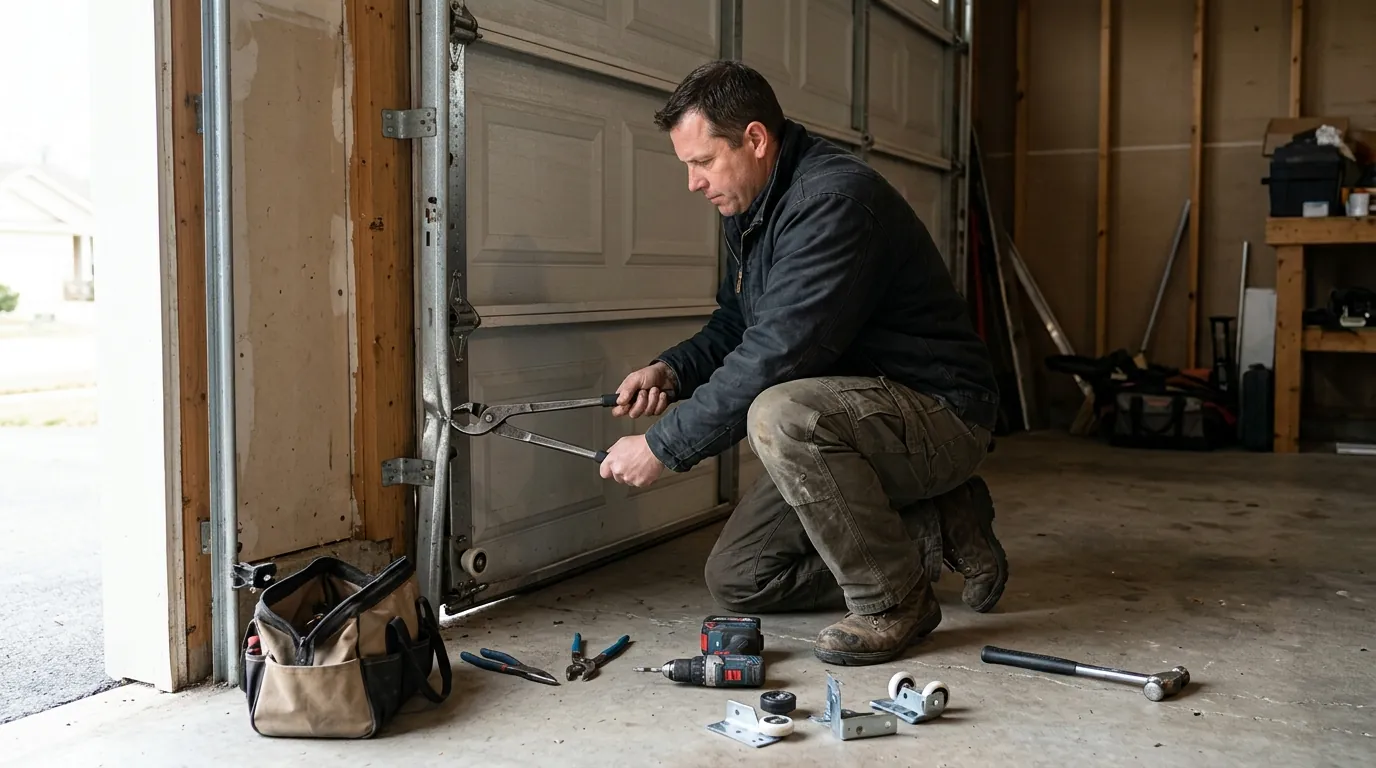
Off-track repair secures the hanging weight first, then frees the jam, straightens or replaces the damaged track, re-seats the rollers, and fixes whatever let the door derail, usually a bumper tap, a flat-spotted roller or cable slack. Done right, the door closes out the visit squared, balanced and safety-tested; done by brute force, it comes off again or comes down.
What the visit covers
- Door stabilized and clamped before any freeing work
- Rollers re-seated or replaced where they deformed in the jam
- Bent vertical and horizontal track straightened or sectioned out
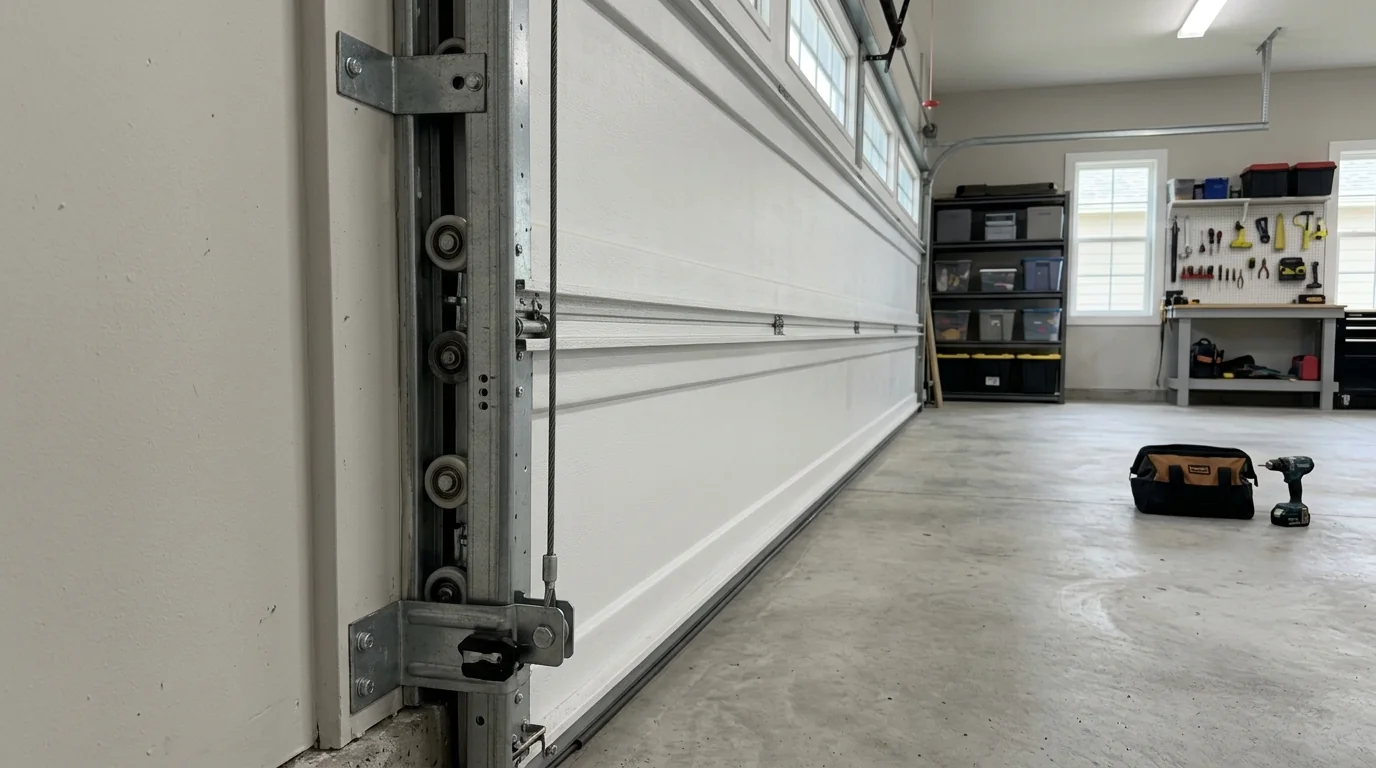
- Track re-plumbed and spaced correctly to the door
- Cables checked for the slack that often starts a derailment
- Full travel, balance and reverse testing before handover
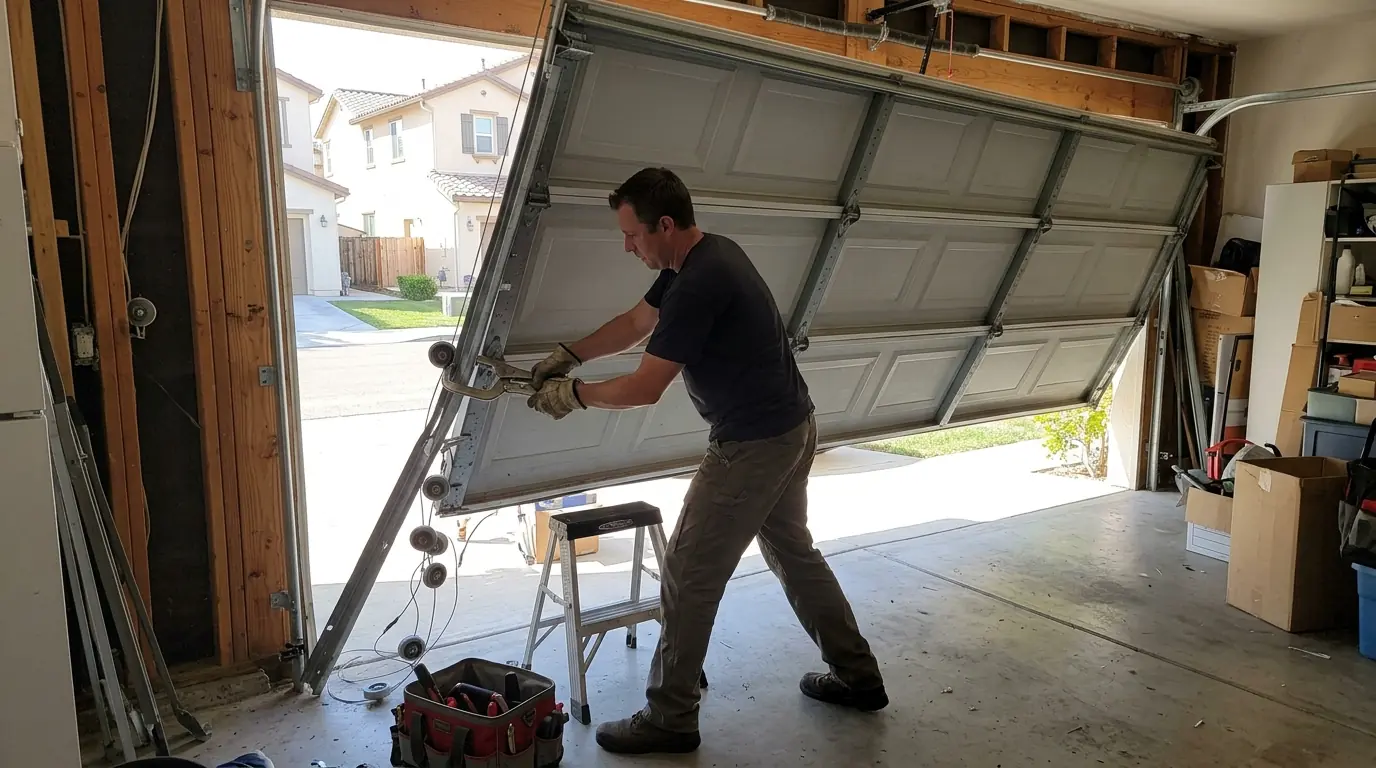
The bumper tap
The classic San Diego derailment is a car easing into a door that had not finished opening. The bottom section creases, the roller stems bend, and the door jumps the vertical track. We free it, assess whether the creased section is cosmetic or structural, and straighten or replace the track run so the panel damage does not become a weekly jam.
Worn rollers and tired track
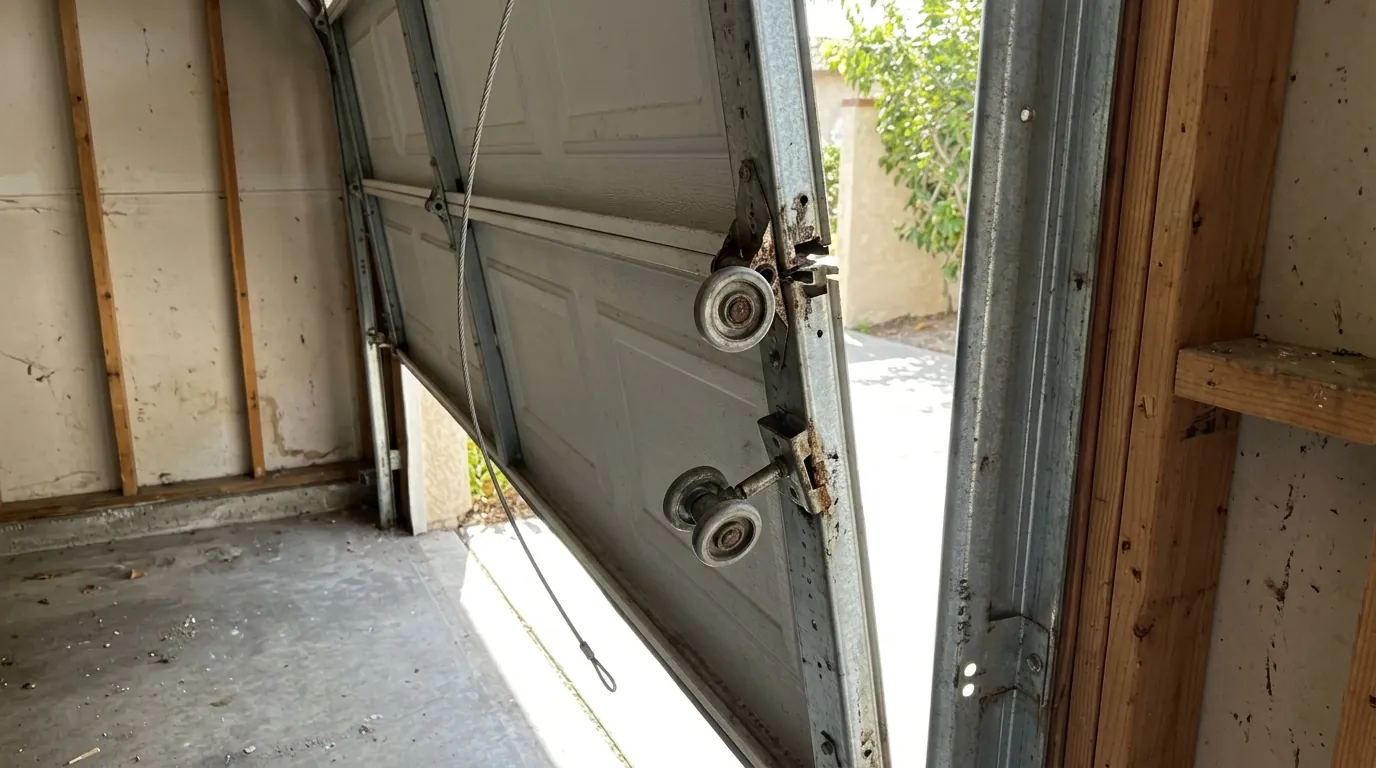
Rollers wear oval, stems wobble in their hinges, and one day a worn wheel meets a slightly sprung track curve and climbs out. These derailments announce themselves with weeks of grinding first. The fix pairs new rollers with a track alignment, because either one alone leaves the failure half-installed.
One roller out versus a full derailment
A single roller popped loose with the door otherwise seated is a quick, inexpensive re-seat. A door hanging diagonally with multiple wheels out is a controlled-lift job for two techs. Both are routine; the difference is why we ask what you see before the truck leaves, so it arrives staffed for the real situation.
On the job
Tight garages, long door careers
Much of San Diego's housing predates today's SUVs: the median home went up in 1980 and over a quarter of the city's stock dates to 1940-1969, eras of narrower garages and tighter aprons. Big vehicles in small openings produce the bumper taps that start most derailments, and the decades-old rollers common in this housing stock finish the job. It is the collision of old geometry and new cars, and it keeps this page's crew busy.
What off-track repair costs
A straightforward re-seat with minor track correction lands inside HomeAdvisor's typical $150 to $400 repair range; replacing track runs or a creased section pushes past it. The honest answer is quoted at the door after the tech sees what is bent, and these are the levers:
Questions callers ask about this job
Please do not. The door's weight is being held by the jam itself, and freeing it without clamps and a second set of hands lets several hundred pounds choose its own direction. Leave it, keep the car and the kids clear, and call.
Often less bad than it looks. If the impact was low-speed, the usual bill is track straightening, roller stems and sometimes one section, not a new door. Photos help dispatch stage the right parts.
Then it wore its way off: oval rollers, a loose track bolt pattern, or cable slack letting the door shimmy. That history is good news, because fixing the wear is cheaper than fixing a collision.
Yes, once it passes the close-out tests. We run full travel, balance and photo-eye reversal before leaving, because a door that derailed once and was merely shoved back is a door rehearsing an encore.
Usually. Off-track calls rank just behind trapped-car emergencies on the dispatch board, and track stock plus roller sizes travel on the truck.