- NFPA 80 calls for rolling fire doors to be inspected and tested at least annually.
- The requirement applies even to fire doors that are never used and stay open.
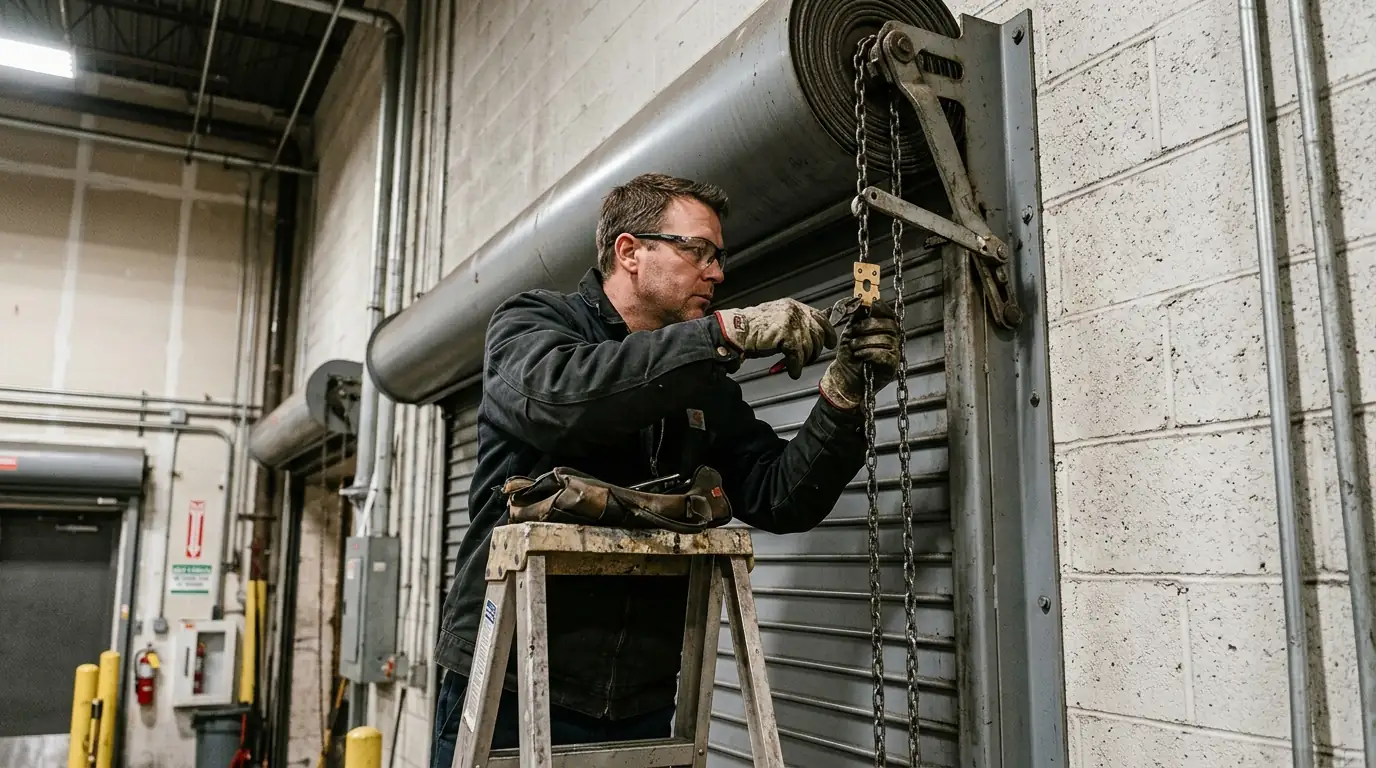
- During the annual test, rolling steel fire doors are drop-tested twice.
- Final acceptance rests with the authority having jurisdiction, usually the fire marshal.
What a rolling fire door does
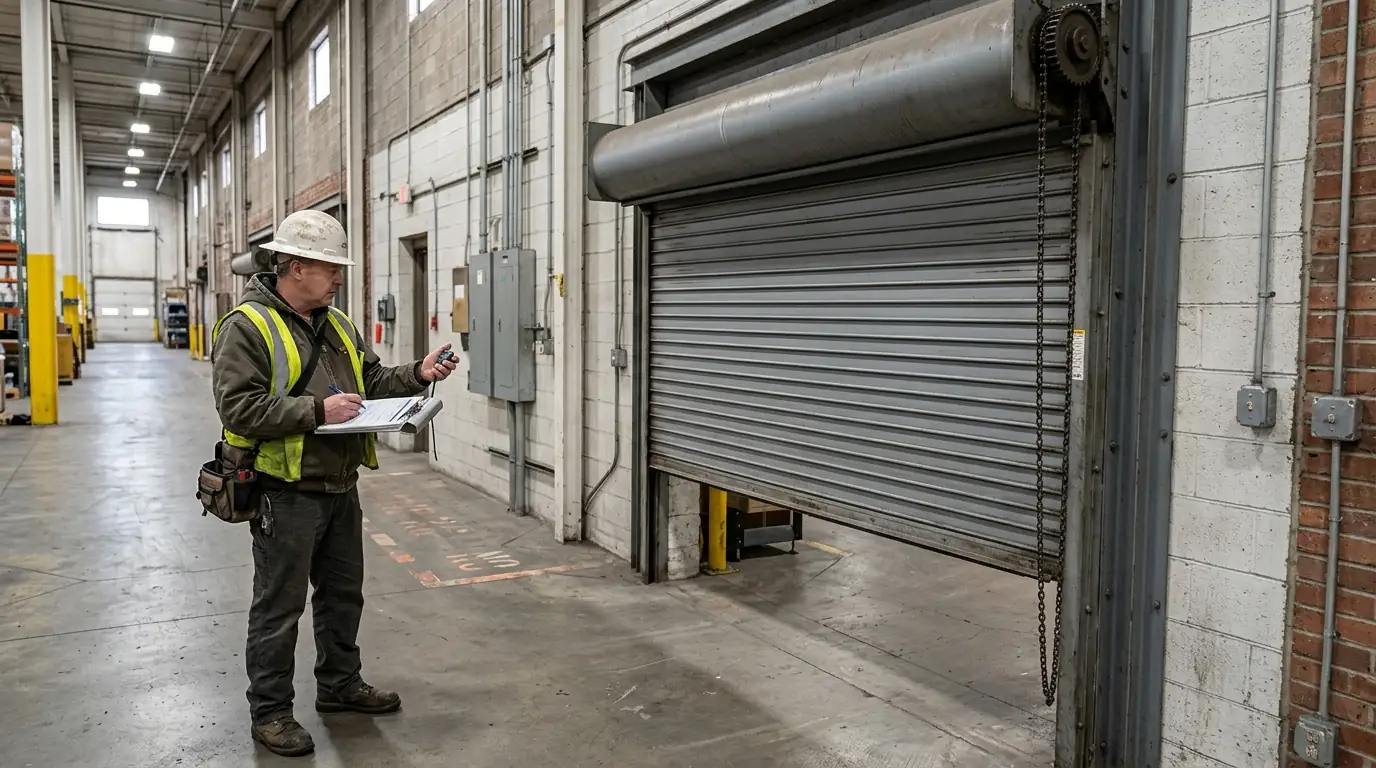
A rolling fire door stays open during normal use and closes automatically when a fusible link melts or an alarm system releases it, sealing an opening in a fire-rated wall. Because it may sit unused for years, the only way to know it will close is to test it.
What NFPA 80 requires
According to DASMA, the door industry's trade association, NFPA 80 requires fire doors to be inspected and tested at least annually, and the requirement applies to every fire door, including doors that are not used and stay open. During the annual test, rolling steel fire doors are drop-tested twice. DASMA also notes that since 2022, NFPA 80 calls for this work to be done by a trained rolling steel fire door technician, and that the final acceptance of a fire door rests with the authority having jurisdiction.
Inside a drop test
- A visual inspection of the door, guides, hood, release mechanism and label, with deficiencies corrected first.
- An operational check of normal opening and closing.
- The first drop test: the release is triggered and the door must close fully on its own.
- Reset of the door to its open position.
- A second drop test to confirm the reset was done correctly.
- Documentation of the visual, operational and drop test results.
Common reasons doors fail
- Painted, corroded or incorrect fusible links.
- Bent guides or damaged curtains that bind as the door drops.
- Governor or spring problems that let the door close too fast or not at all.
- Obstructions stored under the door or in its path.
- Modifications, such as an operator added without proper approval.
We correct what we can on the spot and quote anything larger. See our fire-rated door service.
Doors you no longer use
DASMA's guidance is clear that a rolling fire door no longer needed as a door cannot simply be left closed and forgotten. It must either be maintained as an operational fire door, with annual inspection and drop testing, or removed and the opening filled to maintain the wall's rating.
Why it matters in San Diego
San Diego County holds about 213 million square feet of industrial space, according to Kidder Mathews, plus offices, retail and mixed-use buildings, many with rolling fire doors. With industrial vacancy near 9.4 percent in mid-2026, tenants change often, and a door tested under one occupant can go untested under the next. A new lease is a good moment to check the records.
Questions readers ask
At least annually under NFPA 80, and the authority having jurisdiction may request documentation.
The second drop confirms the door was reset correctly after the first, so it will work when it is needed.
Yes. The requirement applies to every fire door, used or not, unless it is removed and the opening properly filled.
Sources
Figures on this page come from the sources below, checked on October 1, 2026. Prices are national or statewide ranges; your quote depends on the door in front of us.
- DASMA TDS 271: rolling steel fire door drop testing
- DASMA TDS 295: rolling steel fire door FAQ
- Kidder Mathews: San Diego industrial market, Q2 2026
About the author
Gilbert Dorsey edits the Door Guides for Master Overhead Doors, turning the questions callers bring to dispatch into plain-language guides. Cost figures are linked to their published sources and revisited when those sources change.