- Look at the springs before you touch the red release cord.
- Most no-open problems are power, a locked wall control, a dead remote battery or a manual lock bar.
- A motor that hums but does not move usually means a stripped gear or a broken spring.
- Never force a door that is crooked, off its track or has a loose cable.
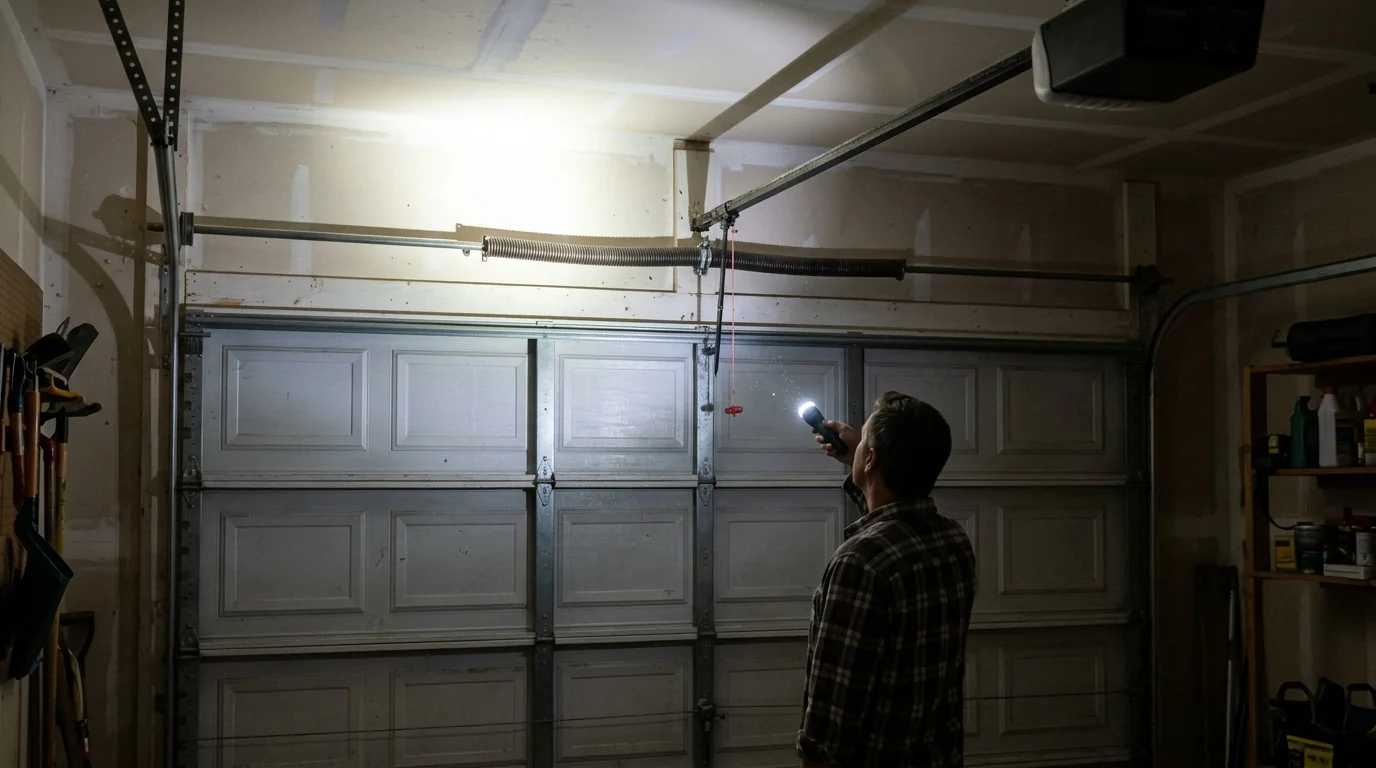
First, look up: are the springs intact?
Before anything else, look at the springs above the door or along the tracks. A torsion spring that has broken shows a clear gap in its coils. If you see one, stop: the door now carries its full weight, and pulling the manual release hands that weight to you. Leave the door down, keep everyone clear, and call. Everything below assumes the springs look whole.
Five checks you can do safely
- Power. Is the opener's light working? Check that it is plugged in, and look for a tripped breaker or GFCI outlet in the garage.
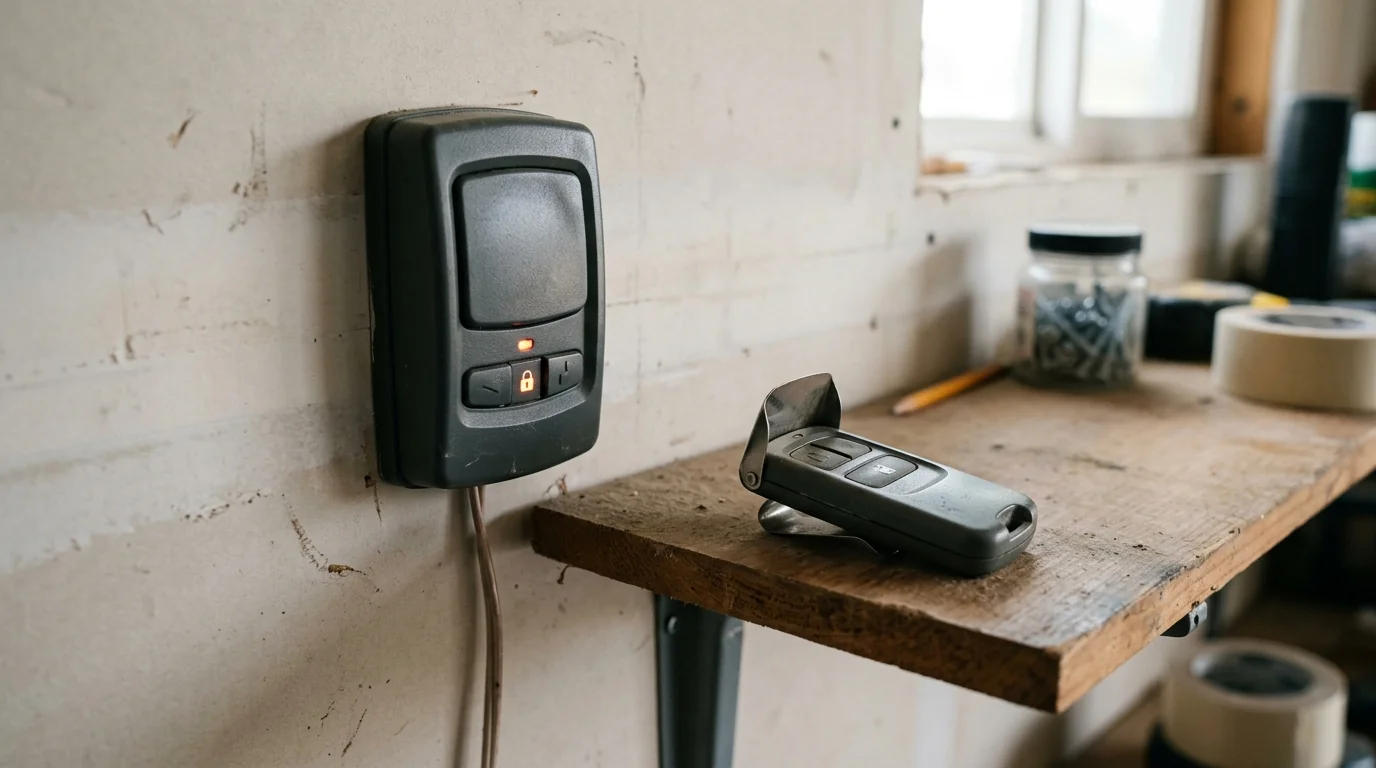
- Lock or vacation mode. Many wall controls have a lock button that disables remotes. If the wall button works but remotes do not, this is a likely cause.
- Remote batteries. Try the wall button. If it works and the remote does not, replace the remote's battery before anything else.
- Manual lock bar. Some older doors have a slide lock on the inside. If it is engaged, the opener strains and stops.
- Photo eyes. If the door opens but will not close, check that the small sensors near the floor are clean, aligned and not blocked.
What the opener's noises mean
| What you notice | Likely cause | What to do |
|---|---|---|
| Hums, door does not move | Stripped drive gear or broken spring | Check springs; if intact, call for opener repair |
| Clicks, nothing happens | Logic board, travel limit or power issue | Check power and lock mode, then call |
| Starts, then reverses | Sensors or close-force setting | Clean and align photo eyes |
| Lights blink, door stays put | Safety or error code | Note the blink pattern for dispatch |
| Loud bang earlier, now nothing | Broken spring | Leave the door down and call |
Using the manual release safely
If the springs are intact and the door is fully closed, the red release cord disconnects the door from the opener so you can lift it by hand. A balanced door should lift smoothly and stay put at about waist height. If it feels very heavy or drops when you let go, the springs are not doing their job; lower it carefully and call. Do not pull the release with the door open unless you can hold it, because an unbalanced door can come down fast.
When to stop and call
- A spring has a visible gap or a loud bang preceded the problem.
- A cable is loose, frayed or has come off its drum.
- The door is crooked, off its track or stuck partly open.
- The opener smells hot, smokes or sparks.
- A car is trapped and the door will not lift easily by hand.
These are the calls our emergency service exists for, any hour of the day.
Power outages and battery backup
Since July 1, 2019, every residential opener sold or installed in California must have battery backup. If yours was installed since then and the door will not open during an outage, the backup battery may be worn out. Older openers may have no backup at all, in which case the manual release, with intact springs, is your way out. Our battery backup page explains the options.
Questions readers ask
Usually the remote battery, or the wall control's lock mode is on. Replace the battery first, then check for a lock button on the wall control.
The safety system is reversing it, most often because the photo eyes are misaligned, dirty or blocked, or because low sun is shining into a sensor.
Only with the door closed and the springs intact. A balanced door lifts easily and stays put. If it is heavy or drops, stop and call.
Sources
Figures on this page come from the sources below, checked on October 1, 2026. Prices are national or statewide ranges; your quote depends on the door in front of us.
About the author
Gilbert Dorsey edits the Door Guides for Master Overhead Doors, turning the questions callers bring to dispatch into plain-language guides. Cost figures are linked to their published sources and revisited when those sources change.