- HomeAdvisor puts typical repairs at about $250 and typical replacements at about $1,500; Angi's figures center replacements near $2,500.
- One failed part on a structurally sound door is a repair.
- Rust-through, several damaged sections or repeat failures point toward replacement.
- In California, a new door cannot be connected to an opener without battery backup, so budget for both.
The cost gap
| Path | Typical published range | Source |
|---|---|---|
| Garage door repair | $150 to $400, about $250 typical | HomeAdvisor |
| Replacement door | $400 to $10,000, about $1,500 typical | HomeAdvisor |
| Replacement door | $1,500 to $6,000, about $2,500 typical | Angi via Bob Vila |
| Installation labor only | $200 to $500, about $350 typical | Angi |
The gap is large, which is why a repair should be the default when the door itself is sound. The question is when the door is no longer sound.
Signs a repair is the right call
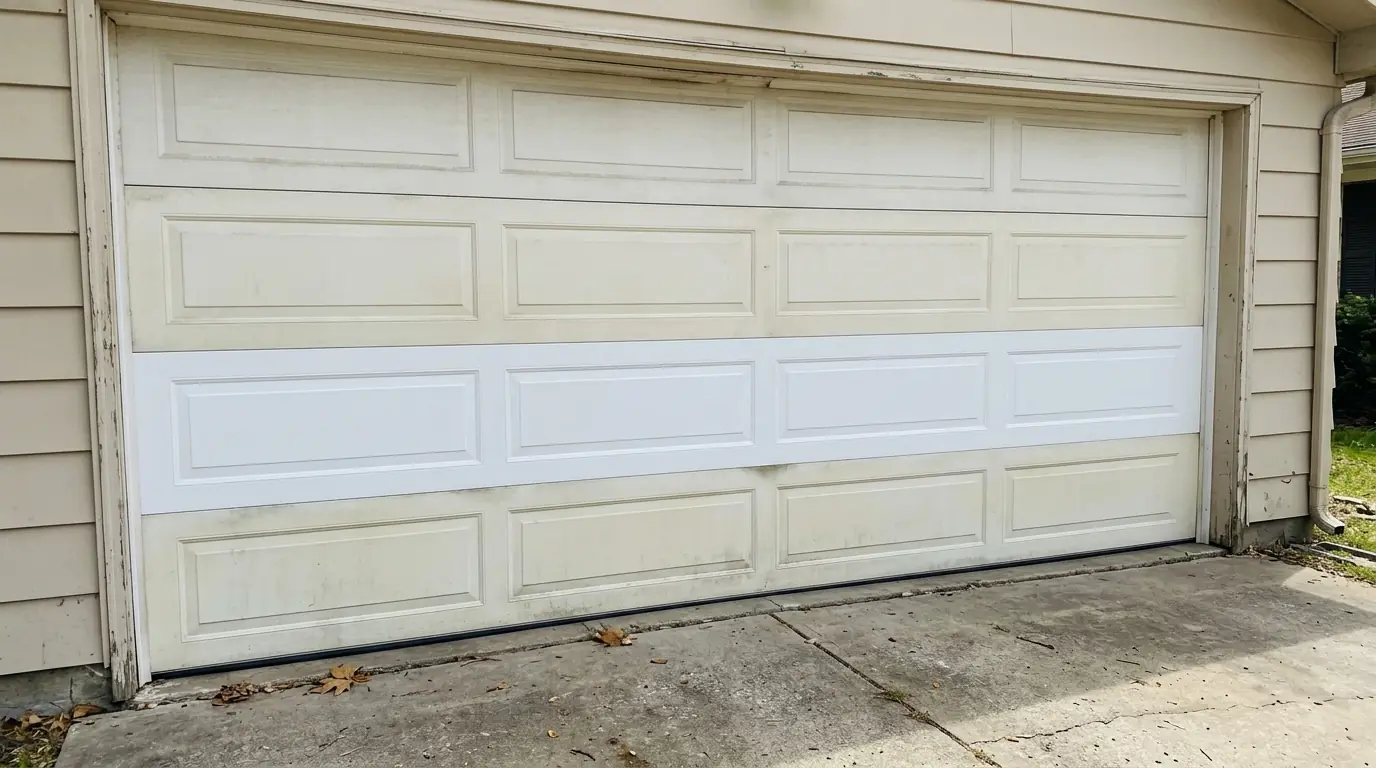
- A single failure: a spring, a cable, a roller set, a bent track section or one dented panel.
- The sections are solid, with no rust-through or cracking across several panels.
- It is the first significant failure in years.
- You still like how the door looks on the house.
Signs it is time to replace
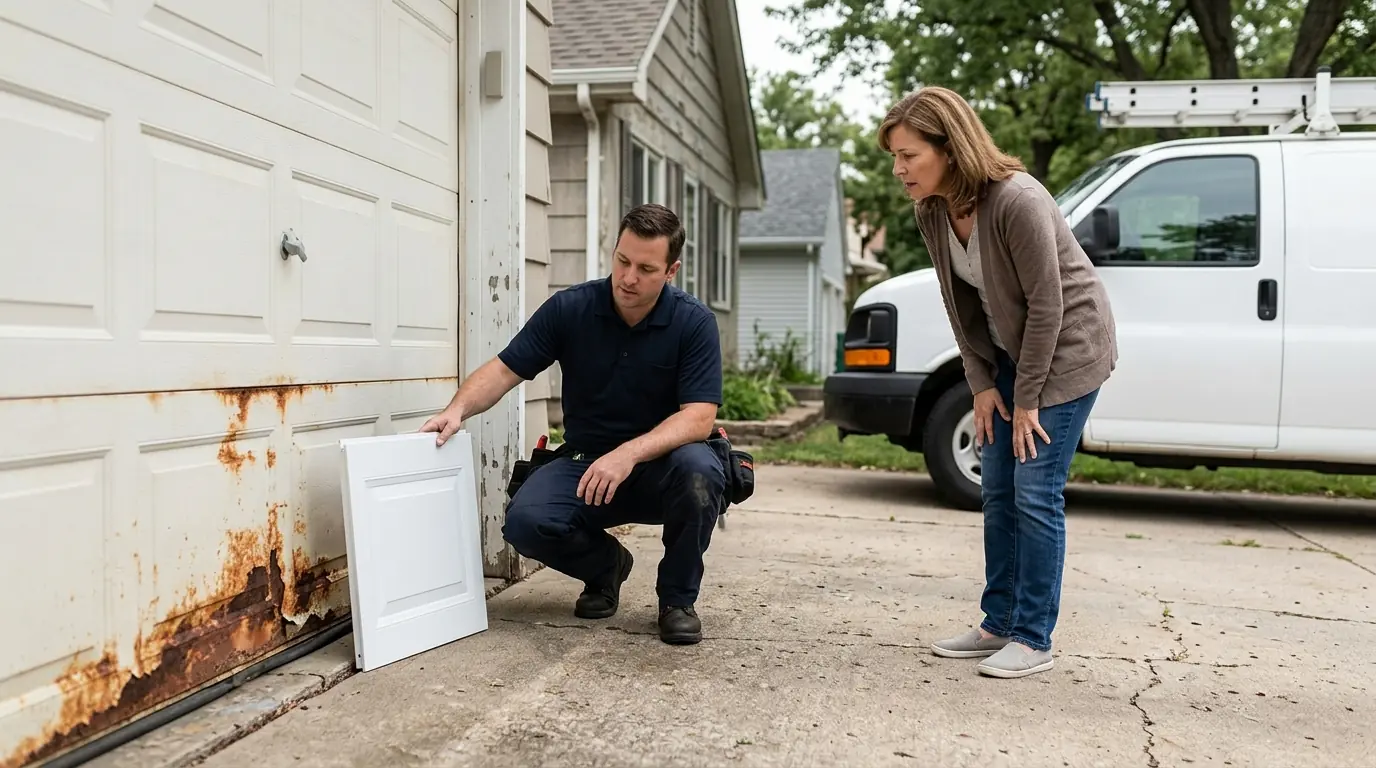
- Rust has eaten through the skin, often at the bottom section.
- Several sections are cracked, creased or delaminating.
- Repairs keep stacking up: the third cable or second spring set in a short span.
- The door is a discontinued model and replacement parts no longer exist.
- It is a one-piece tilt-up whose pivot hardware has failed.
For tilt-up doors, the realistic path is a conversion to a sectional door rather than another repair.
The opener question
California's SB 969 has required battery backup on residential openers sold or installed since July 1, 2019, and it bars connecting a replacement door to an opener that lacks it. If your opener predates the law, replacing the door usually means replacing the opener too. That is worth knowing before you compare numbers, because it changes the total.
What San Diego's housing age means
In 2024, 71 percent of homes sold in San Diego were more than 30 years old, according to a Redfin analysis reported by Axios, and over a quarter of the city's housing dates from 1940 to 1969. Many of those homes still have original or second-generation doors. Some are perfectly sound and only need hardware; others are past the point where repair money makes sense. An honest inspection is the only way to tell.
A simple way to decide
Ask three questions. Is the structure of the door sound? Is this the first real failure in years? Do you still like how it looks? Three yeses mean repair. Two noes usually mean replace. When it is close, we price both and tell you which we would choose at our own house. Start with our repair service or read about new door installation.
Questions readers ask
Often, yes, if the sections are sound. Age alone is not the deciding factor; condition is.
A new door improves curb appeal and daily function. We do not quote resale figures, but most owners notice the difference immediately.
If your door model is still produced, usually yes. Past one or two damaged sections, replacement tends to win the math.
Sources
Figures on this page come from the sources below, checked on October 1, 2026. Prices are national or statewide ranges; your quote depends on the door in front of us.
- HomeAdvisor: garage door prices and repair costs
- Bob Vila: garage door replacement cost
- Angi: garage door installation cost
- California SB 969 bill text (LegiScan)
- Axios San Diego: the age of homes sold in 2024
- NeighborhoodScout: San Diego housing by year built
About the author
Gilbert Dorsey edits the Door Guides for Master Overhead Doors, turning the questions callers bring to dispatch into plain-language guides. Cost figures are linked to their published sources and revisited when those sources change.